REVIEW · SAVANNAH
1-Hour Bonaventure Cemetery Golf Cart Guided Tour in Savannah
Book on Viator →Operated by Wise Guys Historical Tours · Bookable on Viator
One hour is enough when you ride. This Bonaventure Cemetery golf cart tour turns a huge Savannah landmark into an easy, story-filled loop, with comfortable golf carts doing most of the work. I also like the small-group feel, so you get time for real questions—though the one-hour format means you’ll cover highlights, not every single path.
Bonaventure is famous for ornate graves and symbols, and the guide helps you read what you’re seeing instead of just passing by it. I’m especially into the way stops focus on details like carved figures and the meaning behind placement, so the cemetery feels less random and more understandable. You’ll still do a little walking at select points, but the pacing is gentle.
If you want Savannah culture without committing to a long trek, this is a strong fit. It also works well for families with kids who want the experience without turning it into a marathon.
In This Review
- Key highlights
- Why a golf cart works so well at Bonaventure
- Your 1-hour route: what you can realistically cover
- What the guide actually does for you (not just where you go)
- What to look for while you roll past graves
- Comfort, pace, and small-group limits (maximum 10)
- Price and value: what $38 buys you in real experience
- Weather, timing, and getting the most out of your hour
- Who should book this golf cart tour (and who might not)
- Should you book the Bonaventure Cemetery golf cart tour?
Key highlights

- A 1-hour highlights loop that keeps Bonaventure from feeling overwhelming
- Maximum 10 travelers, so the guide can answer questions instead of rushing
- Storytelling that explains symbolism, including meaning and placement on tombstones
- Golf cart comfort for tired feet, plus easy listening while you roll through the grounds
- Guides like Marcia, Brandon, Erin, and Bailey bring energy to the history and architecture
Why a golf cart works so well at Bonaventure

Bonaventure Cemetery covers a lot of ground, and without help it’s easy to feel like you’re just wandering. The golf cart changes the whole experience because you can keep your eyes up and your pace calm, while the guide steers you toward the best-known and most interesting sights.
I like the simple logic here: you don’t need to “power walk” to get value. You can enjoy the atmosphere—the trees, the heavy-feeling stillness people associate with cemeteries—while learning what to notice. One review note that a golf cart is ideal with bad knees, and that matches what you’d hope for: less strain, more time paying attention.
The best part is that the guide doesn’t just list locations. You’re taught how to look—how symbols, architecture, and even the way things are positioned can add meaning. That turns the cemetery from scenery into a guided “read” you can follow right from the seat.
You can also read our reviews of more guided tours in Savannah



Your 1-hour route: what you can realistically cover

This tour is built around one stop: Bonaventure Cemetery, in about 1 hour. That short window is a feature, not a flaw. It’s designed for first-timers who want the essentials fast, plus enough time to hear the stories behind what you’re seeing.
You’ll spend most of the hour on the cart as the guide takes you through the grounds. The experience is paced so you can stop at key spots, then move on without losing the flow. Several reviews call out that you could probably spend all day exploring, and the cart keeps the tour focused enough to finish while you’re still fresh.
Here’s the trade-off: because Bonaventure is huge, you’ll only see a portion. If your goal is total coverage—every monument, every corner—you’ll need a longer visit or a second pass. But if your goal is orientation plus highlights with context, one hour is a strong match.
Also keep in mind that the tour is “good weather” dependent. If conditions are poor, you’ll be offered a different date or a full refund, which matters when you’re planning around Savannah’s seasonal swings.
What the guide actually does for you (not just where you go)

The guide is the heart of the experience, and the reviews make that clear again and again. People praise how the stories connect the cemetery’s visual language—artwork, architecture, and symbols—to the people buried there.
What you’ll get is more than trivia. Guides explain things like symbol meanings and placement, and they point out how those choices affect what the tombstone communicates. One review specifically highlights learning why certain symbols are positioned the way they are, and that’s the kind of detail that makes a cemetery feel legible instead of random.
Energy matters too. Many recent experiences name guides such as Marcia, Erin, Bailey, and Brandon, and the common thread is enthusiasm plus strong storytelling. Some guides even bring thoughtful extras—one review notes blankets were provided, which is a nice comfort upgrade when the weather feels cool under the trees.
And yes, the tone tends to stay respectful while still being lively. Several reviews mention humor and “fact-filled” storytelling, which can be surprisingly helpful in a setting that can otherwise feel heavy or stiff. You’ll get answers to questions rather than being herded along.
What to look for while you roll past graves
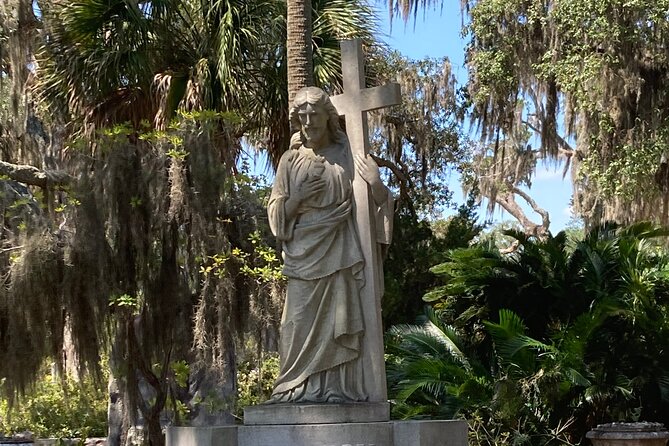
When you’re on a cart, you have an advantage: you can watch for patterns. Use the hour to scan for the kinds of details your guide highlights.
Here are a few things that repeatedly come up in the experiences people loved:
- Ornate carvings and architectural features the guide points out as you pass
- Carved figures such as angels, discussed as part of the artwork on older tombstones
- Symbols where the guide explains what they might represent
- Placement details—the “where” is part of the “meaning”
The practical point is this: without guidance, you can miss the story hidden in the design. With a guide, you start to notice how the cemetery communicates through art and arrangement. That’s why people describe the tour as a must-have guide experience.
Another smart move is to ask questions when you hear something that grabs your attention. The small group size helps with this. If you’re the type who likes to understand what you’re looking at—rather than just taking photos—this tour style fits you well.
Comfort, pace, and small-group limits (maximum 10)
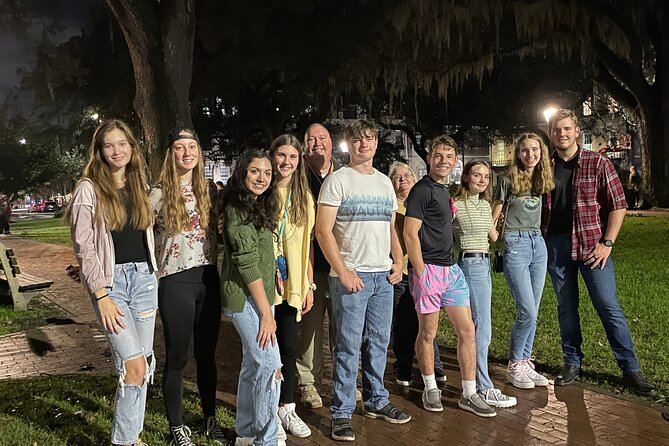
A lot of Savannah tours are either too rushed or too walking-heavy. This one hits a more balanced pace because the cart does the heavy lifting, and the stops are short enough to keep momentum.
The maximum of 10 travelers is part of the value. With smaller groups, the guide can slow down when someone asks about a symbol, a tombstone style, or a placement detail. Reviews repeatedly mention plenty of time for questions, and that’s the difference between feeling like a passenger and feeling like you’re learning.
It’s also friendly for different ages and abilities. Reviews call out that the tour works for families with kids and that it can be a compromise for people with limited mobility. If you’re visiting with someone who doesn’t want long walking tours, this is often an easier middle ground.
English is the standard language for the tour, and that matters for the storytelling portion. You want to understand the nuance, especially when you’re being taught how to interpret architectural details and symbolic placement.






Price and value: what $38 buys you in real experience

At $38 per person for about 1 hour, the price can look “small” or “fair,” depending on how you plan to tour Savannah. The best way to judge it is by what you’re buying: guidance that helps you see the cemetery correctly.
If you DIY Bonaventure, you’ll likely spend time trying to figure out what matters. You can look up info on your phone, but that doesn’t replace having a guide point at specific features and explain the symbolism on the spot. This tour compresses that learning into a short session, which is exactly what you want on a time-limited trip.
There’s also an efficiency benefit. One hour is enough to get your bearings and catch a lot of the cemetery’s most meaningful “readable” details. Reviews mention that it would take much longer to find everything shown in that hour, which is a nice reality check: the guide helps you avoid dead time.
Add the operational value too: the experience uses a mobile ticket, and the stop is right at the cemetery. In a place where getting oriented can eat up time, this kind of simple setup makes the tour feel easy to start and hard to regret.
Weather, timing, and getting the most out of your hour

The tour requires good weather. That’s not just a technical note—it affects comfort under trees, lighting for tombstone details, and whether the route feels pleasant. If you’re booking for a specific day, check the forecast close to departure.
Timing is also smart to consider. On busy Savannah days, the one-hour focus can be a win because you’re not trying to compete with long lines and slow transit between sights. One detail worth noting: on average, people book about 18 days in advance, which suggests it’s popular enough to plan ahead.
What you can do to get more out of the hour:
- Go in with a “learning” mindset, not just a photo checklist
- Listen for the guide’s explanations of symbolism and placement
- Ask questions when something doesn’t make sense to you
- Wear layers if the temperature swings, since the cemetery has a cooler feel under the canopy
If you’re a first-timer, this tour acts like a foundation. After it, you’ll usually know what to look for if you return on your own.
Who should book this golf cart tour (and who might not)

I think this tour is a great match if you:
- want a high-quality orientation to Bonaventure in a short time
- prefer a guided focus over wandering
- have limited mobility or just don’t want lots of walking
- enjoy history when it’s told clearly, with humor and momentum
It may be less ideal if you’re the type who needs maximum time in one place. Bonaventure is vast, and the hour is designed for highlights. If you want to linger at everything, bring a longer self-guided plan into your day.
A final thought: the reviews average 4.9 out of 5 with about 1,371 reviews and recommend it at an 98% rate. That kind of consistency usually means the core promise lands for most people—easy pace, strong guide storytelling, and clear value for the time you spend.
Should you book the Bonaventure Cemetery golf cart tour?
Yes, if you’re visiting Bonaventure for the first time and you want the cemetery to make sense quickly. This is the kind of experience where the cart is practical, but the real value is the interpretation—especially when you’re learning what symbols and placement mean.
If you have the time to do only one guided cemetery experience in Savannah, I’d lean this way. It’s short, organized, and human-scale thanks to the small-group limit, with guides like Marcia, Erin, Bailey, and Brandon bringing stories that turn a haunting place into something you can actually understand.