REVIEW · SAVANNAH
Savannah Stroll: Guided Sightseeing & History Walking Tour of Savannah
Book on Viator →Operated by Savannah Walks · Bookable on Viator
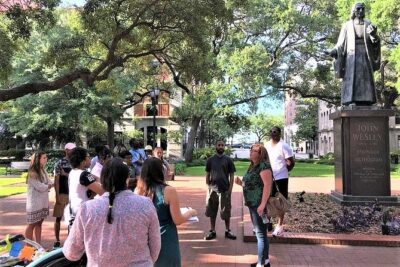
Savannah starts telling stories the moment you step into Reynolds Square. This 90-minute walking tour is a friendly, structured way to get your bearings in the Historic District, with pauses at major churches, cemeteries, and squares like Reynolds Square itself, plus time to hear how Savannah’s port shaped the American Revolution and the Civil War. I especially like how the route uses the city’s layout (squares, shade, and sightlines) to make history feel real, and I like the free-to-enter stops that let you focus on learning instead of extra tickets. One drawback to consider: the tour’s emphasis is more on colonial founding and military-era Savannah, so if you’re looking for a heavy, detailed focus on slavery and Civil Rights, you may want a specialized alternate tour.
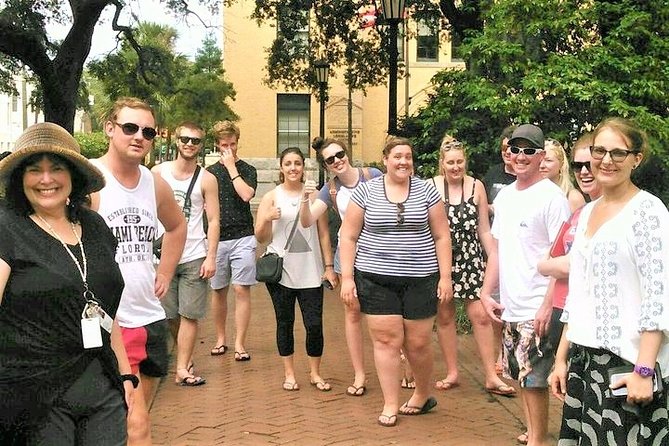
You’ll meet at 24 Habersham St, Savannah, GA 31401, and you’ll end back near the start area. The tour runs in English with a maximum group size of 30, and you’ll get a professional guide who keeps the pace as a steady stroll—people often call out how organized and entertaining guides like Brad, William Spinks, and Zach can be. Wear comfortable shoes, because even with shade and breaks, it’s still a walk.
In This Review
- Key things to love about Savannah Stroll
- Reynolds Square Orientation: Your 90-Minute Map of “Hostess City”
- The Square System: Why Savannah Feels Different When You Walk It
- Stop by Stop: What You’ll See and Why Each Stop Matters
- Cathedral of St. John the Baptist: A Landmark Start to the Past
- Colonial Park Cemetery: Meeting History in a Quiet Place
- Johnson Square and Warren Square: The City’s Calm Intermissions
- Oglethorpe Square and Chippewa Square: Streets, Shade, and Story Beats
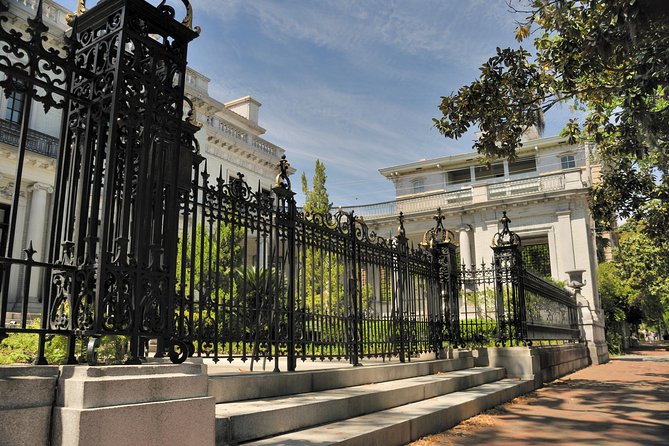
- Historic Homes Stop Sequence: Green-Meldrim House, Owens-Thomas, Olde Pink House, Andrew Low
- Juliette Gordon Low Birthplace Museum: A Different Kind of Historic Power
- Savannah Historic District and Savannah Walks: Where the City Becomes the Exhibit
- Independent Presbyterian Church: Civic Life Beyond the Squares
- Guides, Group Size, and Pacing: What to Expect in Real Life
- Price and Value: Why Free Entry Stops Matter
- Who This Savannah Walk Is For (and Who Should Rethink It)
- Should You Book Savannah Stroll?
Key things to love about Savannah Stroll
- Reynolds Square as your anchor point, with colonial-era context that helps the whole city “click”
- A one-and-a-half-hour format that’s long enough for real stories, short enough to stay engaged
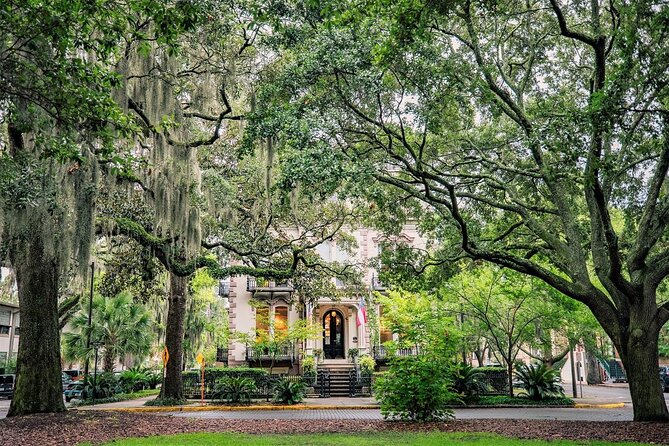
- Park-like squares and tree canopies that make Savannah feel walkable even on warm days
- Landmark stops that cover multiple eras, from the colonial period to Revolutionary and Civil War themes
- Professional guiding plus practical tips, including suggestions for shopping and dining in the downtown/Old Savannah area
- Free admission at the included sites, so you’re not stacking extra entry fees onto your day
Reynolds Square Orientation: Your 90-Minute Map of “Hostess City”
Your tour kicks off at Reynolds Square, a central hub that makes it easier to understand Savannah’s famous square system. The guide frames the square as the center of colonial government in the 1700s, and connects it to key moments like the first reading of the Declaration of Independence in Georgia. That early context matters, because Savannah’s beauty can distract you from what you’re seeing, and this tour gives you a lens.
Then you start moving—slowly, on purpose. The walk is designed to show you how squares connect like rooms in a house, with streets acting as hallways. You’ll get lots of pauses for photos and quick explanations, not a nonstop march.
If you’re the type who likes to know what you’re looking at before you wander off on your own, this format is a big win. Guides also tend to answer questions that pop up mid-walk, and many people specifically mention how friendly and on-top-of-it that Q&A feels.
You can also read our reviews of more walking tours in Savannah



The Square System: Why Savannah Feels Different When You Walk It
Savannah’s downtown layout can look confusing at first, especially if you’re used to grid cities. Here, the squares organize the streets, and the tour uses that structure to keep you oriented. You’re not just seeing buildings; you’re learning how the city was planned to be used.
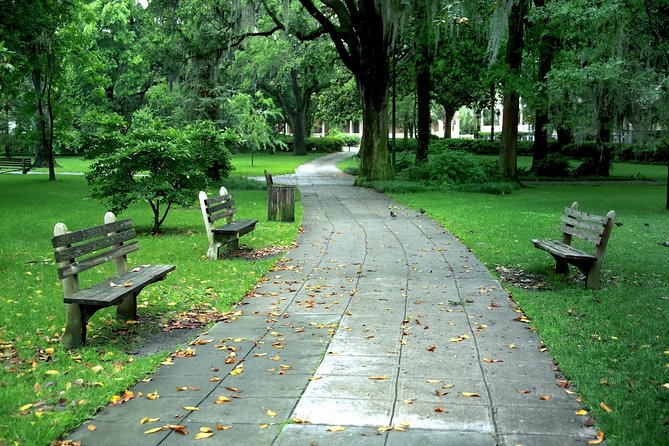
Between stops, you’ll notice the park-like feel: tree canopies, floral landscaping, and the way sunlight and shade shift block by block. That becomes practical advice for your own sightseeing later. Once you understand where the squares “land,” you can build a low-stress route through Old Savannah without second-guessing every turn.
A common comfort theme from past walks: the route often gives you shade and may include a brief air-conditioned break halfway through, which is useful if you’re visiting during warmer months. Even if you’re not planning a midday outing, that pacing reminder helps you plan your day around heat.
Stop by Stop: What You’ll See and Why Each Stop Matters
This tour is a sequence of recognizable Savannah moments. Some are architectural highlights, some are civic landmarks, and some connect to the larger story of the city’s role in major U.S. events. Here’s how each part of the walk tends to feel in practice.
Cathedral of St. John the Baptist: A Landmark Start to the Past
Near the beginning, you’ll get a stop at the Cathedral of St. John the Baptist. Even if you’re not a cathedral person, this is a useful early moment because it sets a tone: Savannah didn’t grow only through commerce and politics—it also grew through community institutions. Your guide typically explains what you’re looking at and how these landmarks fit into the broader time period they’re teaching.
If you like architecture, this is one of those stops where you can quietly notice details while the guide puts names and dates to what you’re seeing.
Colonial Park Cemetery: Meeting History in a Quiet Place
Next up is Colonial Park Cemetery. Cemeteries can feel like a detour—until someone connects them to the people and power that shaped a city. This stop is where the tour’s historical storytelling often gets more personal, because cemeteries are where a city’s residents literally leave traces.
Even without long speeches, it’s a strong contrast to the lively squares. You’ll come out of this stop with a different kind of respect for the city.
You can also read our reviews of more guided tours in Savannah





Johnson Square and Warren Square: The City’s Calm Intermissions
You’ll pause at Johnson Square and Warren Square, both part of the historic square experience that makes Savannah special. These stops work as breaks in the walk while still moving the story forward—think of them as chapters that keep the pace from getting heavy.
Because these squares are central visual anchors, they’re also helpful for your later self-guided strolls. You’ll start to recognize where you are just by looking around.
Oglethorpe Square and Chippewa Square: Streets, Shade, and Story Beats
Then comes Oglethorpe Square followed by Chippewa Square. The tour’s focus on Revolutionary and Civil War themes makes these stops more than postcard scenery. Your guide ties what you’re seeing to Savannah’s strategic role, especially the importance of the port and how events played out locally.
Chippewa Square is also a practical end-of-walk landmark for many routes. Even if your tour finishes back near the start area, you’ll likely appreciate having clear directions for how to walk the final small segment.
Historic Homes Stop Sequence: Green-Meldrim House, Owens-Thomas, Olde Pink House, Andrew Low
One reason people rate this tour highly is the balance between public landmarks and private-life history. You’ll hit several major homes and house museums:
- Green-Meldrim House
- Owens-Thomas House & Slave Quarters
- Olde Pink House
- Andrew Low House Museum
Each one helps you understand how wealth, politics, and daily life showed up in Savannah’s physical spaces. With Owens-Thomas, the site name alone signals you’ll be in territory connected to slavery-era history. The tour’s coverage can be more or less detailed depending on the guide and your interests, so if slavery and its aftereffects are a top priority for you, plan to ask questions directly at that stop.
The Olde Pink House is the type of place where architecture and story tend to overlap. And Andrew Low House Museum adds another layer, reminding you that Savannah wasn’t only defined by war and government—it also shaped social life and local influence through institutions and prominent families.
Juliette Gordon Low Birthplace Museum: A Different Kind of Historic Power
The Juliette Gordon Low Birthplace Museum stop shifts the focus from colonial government and war to a more personal, civic story. Your guide connects what you’re looking at to the bigger narrative of Savannah’s impact beyond the city limits.
This is a good stop for families and for anyone who wants the tour to feel like more than a single political timeline. It adds variety without breaking the walking flow.
Savannah Historic District and Savannah Walks: Where the City Becomes the Exhibit
You’ll also spend time on the Savannah Historic District, one of the largest National Historic Landmark Districts in the U.S. This part is about recognition and context: you’re learning how to read the city as a historic environment rather than a collection of individual sites.
There’s also a stop labeled Savannah Walks, which can function like a reset point in the middle of the experience. Depending on timing, it’s often where a guide’s practical guidance shines—suggestions for where to go next, what to look for, and how to avoid wasting time on detours.
Independent Presbyterian Church: Civic Life Beyond the Squares
Finally, you’ll end with Independent Presbyterian Church. Churches in Savannah are not only architectural stops; they’re cues to how communities organized themselves over time. Your guide typically wraps up themes here—tying the walk together with Savannah’s changing role from colonial times through the Civil War era.
If you’re someone who likes closure, this stop can feel like the last piece of a puzzle.
Guides, Group Size, and Pacing: What to Expect in Real Life
The tour caps at 30 people, which keeps things from turning into a moving crowd. In the best cases, groups are small enough that the guide can answer questions without feeling rushed. A number of people specifically liked how guides handled different group needs and kept a comfortable stroll pace.
You should also expect that timing is generally tight. Many guides start on time, and the walk is structured for about 90 minutes of content—not two hours of aimless wandering. That’s good value if you’re also planning a riverboat ride, dinner reservations, or a second activity later in the day.
Two practical notes from real-world experiences:
- City noise can happen near the start; one guide handled this by shifting the group to quieter areas when needed.
- If weather is severe, plans can change. That can mean a different start time or, occasionally, a different guide if someone falls ill right before departure.
If you’re trying to keep your schedule rigid, it’s smart to build in flexibility for the day. Savannah can be lovely, but weather and timing are part of the deal.
Price and Value: Why Free Entry Stops Matter
The tour includes a mobile ticket and features free admission at the stops listed in the experience. That’s a real value piece, because historic Savannah can get expensive fast once you start paying for multiple house museums and attractions back-to-back.
You’re also paying for something less visible but essential: a guide who can connect the squares, the buildings, and the city’s port-based role in major U.S. events. The strongest versions of this tour feel like you get a map of ideas, not just photos.
One caution on expectations: this stroll is history-forward, but it isn’t positioned as a single-issue deep study of every painful chapter in detail. It focuses on colonial government and Savannah’s Revolutionary and Civil War role as a strategic port city. If you want an in-depth, heavy look at slavery and later civil rights history, you may want to choose a tour that’s built specifically for that subject.
Who This Savannah Walk Is For (and Who Should Rethink It)
This tour is a great match if you:
- Want a first visit orientation to Savannah’s squares and historic layout
- Like walking tours that mix architecture with stories
- Prefer a short, focused experience that doesn’t eat your whole afternoon
- Enjoy practical tips for what to do next, including shopping and dining ideas from your guide
It may not be the best fit if you:
- Want a very detailed, all-in discussion of slavery, Reconstruction, or Civil Rights history in the same way a specialized tour would
- Need a tour that covers those topics with the same depth as a dedicated Civil War or human-history focus
If that last point matters to you, consider pairing this stroll with another experience that targets those subjects more directly.
Should You Book Savannah Stroll?
Book this tour if you want the fastest way to understand Savannah’s structure and early American history without getting stuck in museum lines. The Reynolds Square start gives you a clear foundation, and the 90-minute length makes it easy to fit into a busy travel day.
Skip it (or plan to supplement) if your main goal is a deep, sustained look at slavery and Civil Rights history. This walk includes stops tied to those themes by location and site names, but the emphasis is broader than that.
If your ideal trip is: learn fast, walk in the shade, see iconic squares, and leave with a sense of direction, then Savannah Stroll is a strong choice.