REVIEW · SAVANNAH
Narrated Historic Savannah Sightseeing Trolley Tour
Book on Viator →Operated by Old Savannah Tours · Bookable on Viator
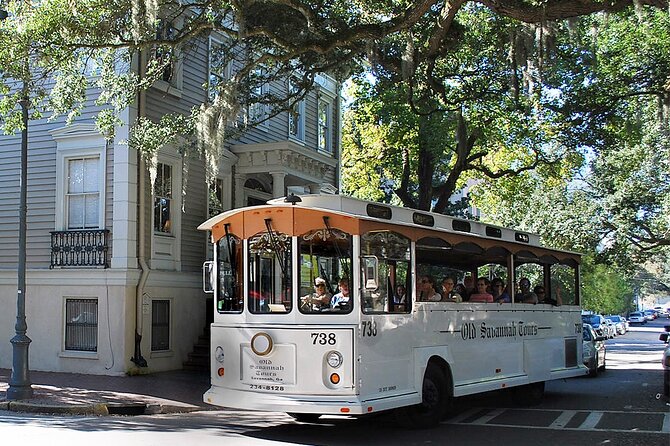
Savannah’s history moves fast on a trolley. This narrated loop threads through cobblestone streets and mossy oak shade while a guide brings 270 years of stories to life.
I especially like the easy-going pace. It’s long enough to hit a stack of major landmarks, but short enough that you can still plan your own evening on foot.
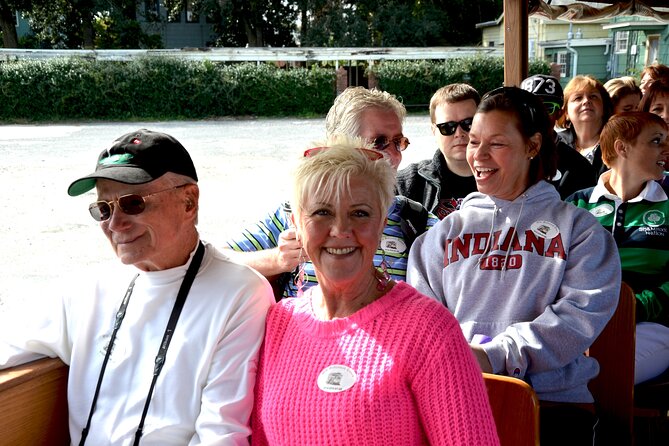
One thing to keep in mind: it’s a non-stop tour, so you’ll mainly see sights from the trolley window. Also, dress for the weather—some trips can feel chilly in cooler months since you’re out in the open air.
In This Review
- Key highlights worth timing your trip for
- Why this 75-minute trolley loop is such a smart first stop
- Price and what you actually get for $35.26
- Getting on at 217 W Boundary St, and picking the right departure
- What the live guide does (and why it matters more than you expect)
- Chippewa Square and the downtown anchors you’ll want to revisit
- Forsyth Park: the photo stop with real timing value
- Massie Heritage Center and the schoolroom connection
- St. John the Baptist Cathedral and Lafayette Square views
- Mansions and the harder side of Savannah’s story
- Reynolds Square and the other reasons you’ll love the walk afterward
- Art without the hassle: Jepson Center and Telfair Academy
- Pirates’ House, the Market feeling, and the downtown heartbeat
- Exchange Bell, City Hall dome, and Franklin Square
- Comfort, timing, and what to bring on a non-stop ride
- Should you book this trolley tour?
- FAQ
- How long is the narrated trolley tour?
- How much does the tour cost?
- Where does the tour start?
- Is the tour offered in English?
- Do I need to print a ticket?
- Are service animals allowed?
- Are pets or emotional support animals allowed?
- Is the trolley accessible for strollers?
- What’s the maximum group size?
- What if the weather is bad?
- What is the cancellation policy?
Key highlights worth timing your trip for
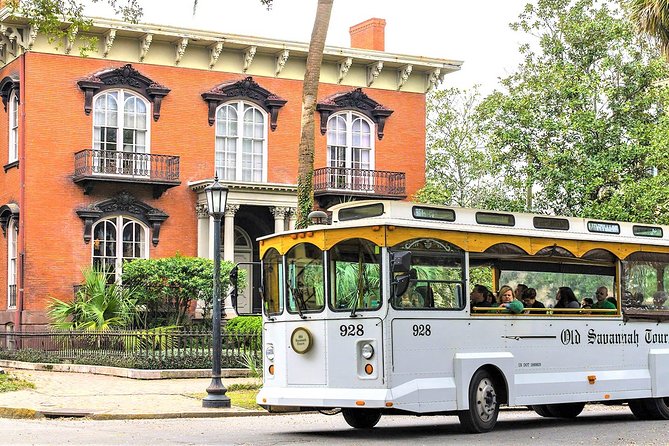
- Orientation in 75 minutes: a quick map of Savannah’s layout and biggest landmarks
- Moss-draped oak + cobblestones: the scenery is part of the story
- Humor mixed with facts: guides like Meaghan, Crystal, Tony, and Denise are known for keeping it fun
- Iconic squares and river views: the tour pulls you toward the city’s signature scenes
- Mobile ticket, English narration: simple, straightforward for first-timers
- Service animals welcome: clear policy if you’re traveling with one
Why this 75-minute trolley loop is such a smart first stop
If you’re new to Savannah, this is one of the fastest ways to understand the city without doing homework first. You ride through one of the country’s largest National Urban Historic Landmark districts, and the route gives you a real sense of where the big sights cluster—especially the squares, mansions, and downtown waterfront.
The real value is how the narration turns landmarks into place names you’ll remember. A stroll through Savannah can feel like a blur of pretty streets. From the trolley, the guide stitches together what you’re seeing—so when you later walk to the places that catch your eye, you already know what they are and why they matter.
You can also read our reviews of more historical tours in Savannah



Price and what you actually get for $35.26
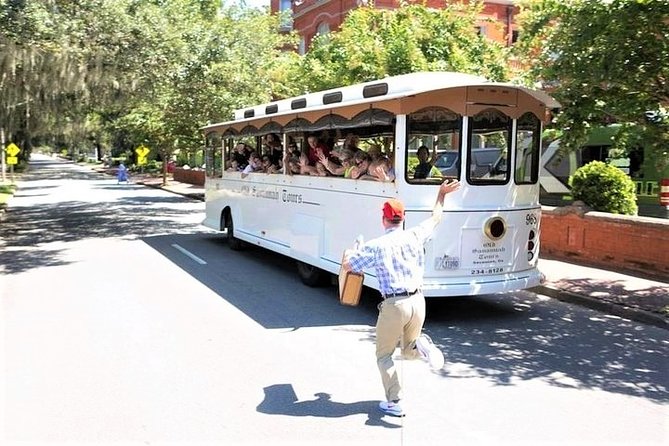
At about $35.26 per person for roughly 1 hour 15 minutes, it’s not a budget bargain. But it also isn’t overpriced when you look at what’s included: live narration, a guided route that covers many of the city’s headline stops, and the chance to reduce “should we go there?” indecision.
Think of it as paying for orientation and time. Instead of spending your first day zig-zagging between sites that may or may not match your interests, you get a guided overview in one shot. If your schedule is tight—say you have less than a full day—this can help you decide what deserves a closer visit after the tour.
Also, the tour ends back at the starting point. That makes it easy to keep exploring right away, usually with less backtracking than you’d expect on your own.
Getting on at 217 W Boundary St, and picking the right departure
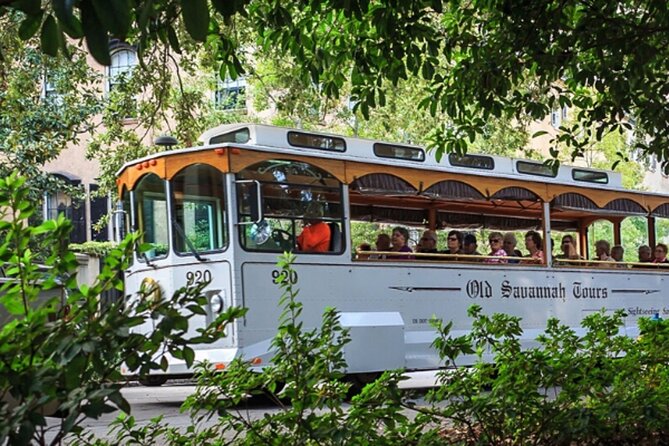
You’ll meet at 217 W Boundary St, Savannah, GA 31401, and the trolley returns you there at the end. The tour runs at different scheduled times during the day from this central area, so you can pick a departure that fits your day plan.
It’s a mobile ticket experience, and the narration is in English, so there’s no language barrier to trip you up. The tour cap is up to 38 travelers, which helps keep the ride from feeling like a packed bus with no personal space—at least in terms of crowd flow.
If you’re traveling with kids, plan around the requirement that children must be accompanied by an adult. Strollers are accommodated with a fold-up stroller accessibility note, which is useful if you’re traveling with a push chair and want to avoid logistics headaches.
What the live guide does (and why it matters more than you expect)
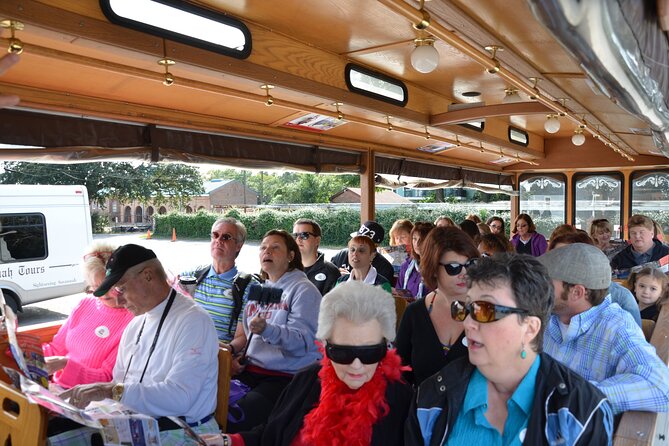
This isn’t a dry lecture. The guides are known for mixing humor and historical storytelling, and that makes a difference because Savannah’s past is layered. You’ll hear about major events and key figures, but the narration also helps explain the feel of the neighborhoods—why the streets are the way they are, why the squares matter, and how the mansions connect to the city’s growth.
Some guides stand out by style. I’ve seen the names Meaghan, Crystal, Tony, and Denise tied to great experiences—often praised for being fun, engaging, and not overly stiff. Even if you don’t care about every detail, the best part is that you come away with a mental map.
One more practical benefit: the guide often gives you extra context that helps you choose what to do next. When you only have limited time, that “what should we do after?” guidance is worth its weight in gold.
Chippewa Square and the downtown anchors you’ll want to revisit
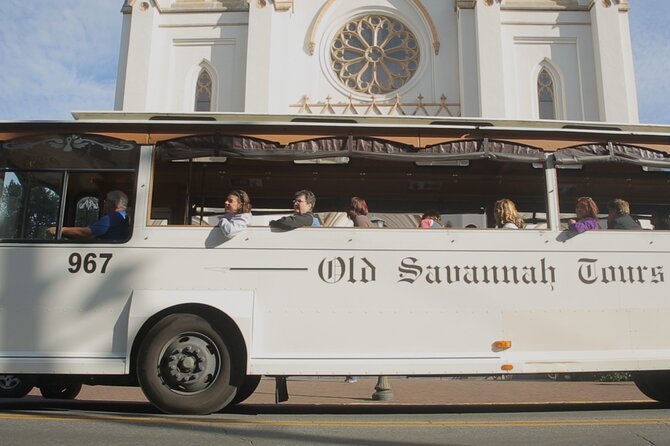
The tour makes a stop around Chippewa Square, one of Savannah’s most recognizable landmarks. Here’s the twist you’ll hear while you’re on board: it’s famous partly because of pop culture, but it doesn’t match the movie detail people expect. It’s still an important photo spot and a good reference point for walking later.
You’ll also pass by the Savannah Theatre, which opened in 1818 and remains active with nightly shows. Even if you’re not attending a performance, this kind of stop helps you see how Savannah mixes living culture with preserved buildings.
From there, the route continues through the city’s classic downtown pattern: squares, streets, and key corners that make it easy to build an itinerary afterward. If you like “see it first, then decide,” this section delivers.





Forsyth Park: the photo stop with real timing value
Forsyth Park is one of those places that looks like a postcard—and that’s exactly why it’s worth knowing where it is. The fountain is the headline, and it has a special seasonal identity: it turns green around St. Patrick’s Day, which locals and visitors connect to the big parade energy.
Even though you’re not likely doing a long walk during a trolley ride, you’ll get the “where and what” so you can plan a better second visit. If the weather cooperates, this is one of the best areas to follow up with a stretch of time on foot, because the park’s greenery and open layout make it feel different from the tighter historic streets.
Massie Heritage Center and the schoolroom connection
The tour passes Massie Heritage Center, described as Georgia’s oldest school in continuous operation, opened in 1856. The big highlight here is the Nineteenth Century Classroom, where the experience is designed to feel like students are in the late-1800s.
Even if you don’t sit through an extra program, this stop adds depth. Savannah isn’t only mansions and romance. A place like Massie helps you understand what daily life and education looked like in a city that was growing—and changing—over time.
St. John the Baptist Cathedral and Lafayette Square views
You’ll also ride past the Cathedral of St. John the Baptist, known for its role in the annual St. Patrick’s Day parade and as a popular wedding venue location. The cathedral overlooks Lafayette Square, so it’s a natural “open sightline” stop in the route.
There’s also a practical visitor note: if there’s no ceremony or mass taking place, visitors are allowed to tour the cathedral, stand beneath its stained-glass windows, and wander the pews. That means this is one of the places you can consider for a timed visit after the trolley ride—especially if you like architecture and interior details.
Mansions and the harder side of Savannah’s story
Savannah is famous for pretty façades, but the tour doesn’t ignore the complicated chapters.
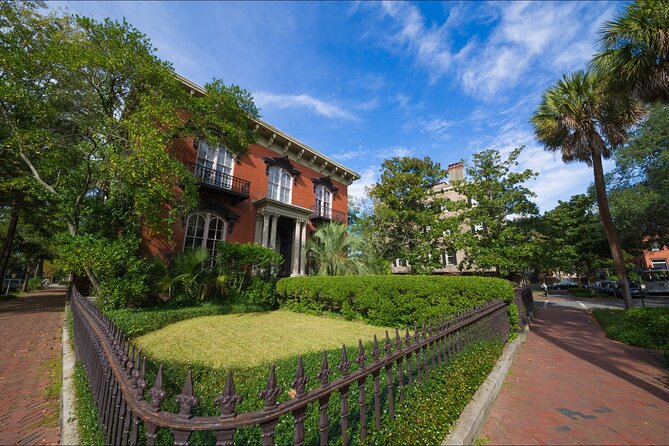
One of the standout stops is the Sorrel Weed House, listed as one of the most haunted houses in the country. It’s also presented as an important architectural example of the antebellum period, so you’re not only seeing a spooky legend—you’re seeing a period building connected to the region’s darker storytelling.
Then you’ll pass the Owens-Thomas House complex, including slave quarters, a carriage house, and gardens built in 1819. The narration invites you to learn about the unfortunate, complicated relationship between those with and without power. This stop is valuable because it adds honesty, not just aesthetics.
If you want your Savannah experience to be more than “pretty streets and photos,” these two mansion-related moments help balance the city’s image.
Reynolds Square and the other reasons you’ll love the walk afterward
Reynolds Square is one of Savannah’s square-stops that feels instantly iconic. Moss-covered live oaks frame the space, and there’s a statue of John Wesley (founder of Methodism). The square’s name, though, comes from Georgia’s first governor, John Reynolds, which adds a layer of “don’t assume” context you can carry into your own exploring.
This area is also loaded with practical “walk right from here” extras. You’ll be near Leopold’s Ice Cream, the Ole Pink House, and the Lucas Theatre. Even if you don’t plan a full afternoon in this exact spot, it’s a great place to stop for a treat after the trolley returns you downtown.
Art without the hassle: Jepson Center and Telfair Academy
The route includes the Telfair Museum family, which makes the tour more than a history sampler. You’ll see the Jepson Center, described as Savannah’s art museum with a modern building and both permanent and temporary collections.
If you’re traveling with kids, you’ll likely appreciate the mention of interactive spaces like Artzeum and Techspace—designed for hands-on engagement rather than just looking.
The trolley also covers the Telfair Academy, which is another art museum but with rooms decorated in 19th-century décor, plus 19th and 20th century American and European art. This is a strong combo for people who like variety: you get both history-flavored settings and the chance to see art in very different styles.
Pirates’ House, the Market feeling, and the downtown heartbeat
Savannah’s downtown energy comes through in the stops that connect to everyday life.
The Pirates’ House is a memorable one because it opened in 1753 and is tied to travelers and sailors resting after time at sea. It’s not pirate territory anymore, but the building now functions as a restaurant, so it still carries that boisterous, social vibe.
You’ll also pass an open-air market that mirrors the style of a market from the 1800s. Today, of course, cars replace horse-and-buggy transport, but the point is the atmosphere of wandering aisles and checking out local vendors. This is the kind of area where you can easily build a snack-and-shop plan after your trolley ride.
Exchange Bell, City Hall dome, and Franklin Square
A few of the most “Savannah-ish” details come from city landmarks.
The Exchange Bell is said to be the oldest bell in Georgia, with the year 1802 imprinted on it. You’ll learn it was used to signal the end of the day, a celebration, the closing time of shops, and to alert citizens of fires. It’s a small object with big meaning, and this kind of detail is exactly what a narration-driven tour does well.
Then there’s City Hall, opened in 1905, with a distinctive gold dome that was originally copper. The location is convenient—off Bay Street and Factors Walk—so it sits right near other downtown highlights like City Market and Ellis Square.
Finally, you’ll pass Franklin Square, designed in 1790 and named for Benjamin Franklin. It’s adjacent to City Market and Ellis Square, and just a few blocks up from Bay Street and River Street, which makes it an easy “starting point” for your next walk.
Comfort, timing, and what to bring on a non-stop ride
This is a 75-minute continuous non-stop tour, so you’re on the trolley for the whole time. Plan for that. If you want lingering time in specific places, treat the tour as your routing tool and save the slow strolling for after.
Weather matters. The tour operates in all weather conditions, but it still says good weather is required and it may be canceled if conditions are poor. Either way, you’ll want to dress appropriately. A real-world practical note from the experience: in cooler months, people sometimes find the ride chilly since it’s described like an open window trolley style for viewing.
So bring layers you can adjust. Sunglasses help too, because Savannah’s sunlight can make the squares and mansions pop.
Should you book this trolley tour?
Book it if you’re:
- Visiting Savannah for the first time and want a fast mental map
- Short on time and want the city’s big sights in one ride
- Traveling with mixed interests—history lovers, architecture fans, and people who just want great viewpoints
Skip it if:
- You want long stops and guided interior visits during the tour itself
- You already know Savannah well and only need specific niche details
My take: for the money and the time, this trolley tour is a strong value when you use it the right way. Treat it like your Savannah orientation session, then pick one or two places from the route for a deeper walk after you’re back on your feet.
FAQ
How long is the narrated trolley tour?
It runs for about 1 hour 15 minutes and is described as a 75-minute continuous non-stop tour.
How much does the tour cost?
The price is $35.26 per person.
Where does the tour start?
It starts at 217 W Boundary St, Savannah, GA 31401, and it ends back at the same meeting point.
Is the tour offered in English?
Yes, it is offered in English.
Do I need to print a ticket?
No. A mobile ticket is included.
Are service animals allowed?
Yes, service animals are allowed.
Are pets or emotional support animals allowed?
Pets and emotional support animals are not allowed.
Is the trolley accessible for strollers?
A fold-up stroller is accessible.
What’s the maximum group size?
The tour has a maximum of 38 travelers.
What if the weather is bad?
The tour operates in all weather conditions, but the experience requires good weather. If it is canceled due to poor weather, you’ll be offered a different date or a full refund.
What is the cancellation policy?
You can cancel for a full refund up to 24 hours in advance. If you cancel within 24 hours of the experience start time, you will not get a refund.