REVIEW · SAVANNAH
Savannah Historic District Walking Tour
Book on Viator →Operated by Bonnie Blue Walking Tours of Savannah · Bookable on Viator
A morning walk through Savannah squares feels like a guided time machine. This 3-hour historic district tour threads big U.S. turning points into the actual streets, courtyards, and monuments you see today. You’ll hear the stories from Bonnie, a lifelong Savannah resident, and you’ll get practical ideas for what to do next.
What I like most is the way the tour connects the landmarks to the people who lived, fought, traded, and built their fortunes here. Two standout stops for me are Franklin Square (with its Haitian monument and the First African Baptist Church) and the City Market area around Ellis Square, where the conversation turns toward restoration and the economic role of African Americans. A good heads-up: this is story-heavy, and the guide’s interpretation may feel pointed if you prefer strictly neutral framing, so keep your expectations aligned with a vivid local storyteller.
Finally, a single note for comfort: you’re walking in all weather and you’re on your feet for about three hours, so bring solid shoes and dress for heat, sun, or rain—Savannah does not do gentle weather on command.
In This Review
- Key highlights to look for
- Savannah’s historic district, paced for real walking
- Telfair Square: Mary Telfair and the museum story that starts the morning
- Franklin Square: Haitian Revolutionary links and the First African Baptist Church
- The City Market stroll around Ellis Square: loss, restoration, and who built the economy
- Johnson Square and Wright Square: Revolutionary hero stories plus monuments with contrast
- Chippewa Square: Oglethorpe, founder context, and why it matters before Madison Square
- Madison Square: Jasper, the Battle of Savannah, and Civil War landmarks in view
- Monterey Square: Pulaski at the base of the monument and the view people brag about
- Why the guide’s style makes a huge difference
- What you really get for $46.16 (and who it’s a bargain for)
- Weather, shoes, and how to make the most of the 3-hour route
- Should you book this Savannah Historic District Walking Tour?
- FAQ
- How long is the Savannah Historic District Walking Tour?
- What is the price per person?
- What’s included in the tour price?
- Where does the tour start and end?
- Does the tour include food or drinks?
- What is the cancellation policy?
Key highlights to look for
- A small group (max 10) makes it easier to ask questions and hear the details without shouting over everyone
- Franklin Square’s Haitian monument plus the First African Baptist Church gives you U.S. history with real local roots
- City Market and Ellis Square covers restoration and what African Americans contributed to antebellum Savannah’s economy
- A true square-by-square founder and war story through Chippewa, Madison, and Monterey—Oglethorpe, Jasper, and Pulaski
- A café break built in so the tour isn’t only walking, especially helpful on warmer mornings
Savannah’s historic district, paced for real walking
The best thing about this tour is that it doesn’t try to cram the whole city into 180 minutes. You start at Telfair Square on 121 Barnard St at 9:00 am, and you end at Monterey Square near 11 W Gordon St. That steady route works because Savannah is built for square-hopping: every block gives you a new view, and every square gives you a new chapter.
You’re also not dealing with a huge crowd. With up to 10 people, you can actually follow the guide’s flow and hear explanations about architecture, monuments, and events that match what you’re standing next to. And the walking is straightforward: it’s on flat surfaces, which matters in a city where cobblestones can turn into a surprise obstacle course.
You can also read our reviews of more walking tours in Savannah



Telfair Square: Mary Telfair and the museum story that starts the morning
Your first stop is Telfair Square, where you’ll hear about Mary Telfair and the history tied to the Telfair Museum. This is a smart opening, because it shifts your mindset from “old buildings” to “Savannah’s cultural engine.” It’s not just a picturesque plaza moment; it’s a reminder that people in Savannah built institutions as well as houses.
Expect the guide to connect what you’re seeing—open space, surrounding civic-minded buildings, and the way the square functions—to the kind of community values that shaped the city. The visit is about 15 minutes, so you don’t get stuck in one spot too long before moving on.
Franklin Square: Haitian Revolutionary links and the First African Baptist Church
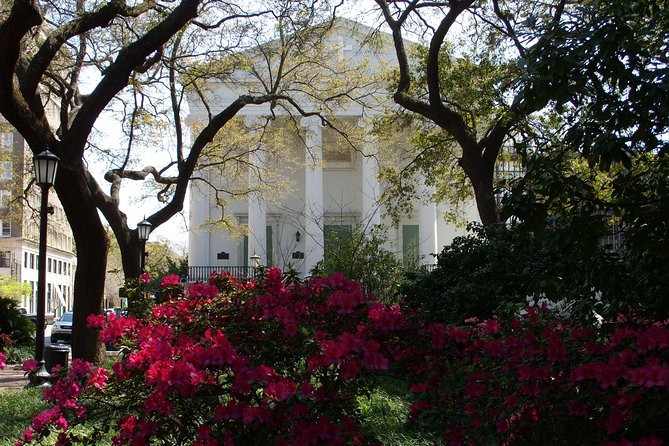
If you want your Savannah history lesson to feel larger than Georgia, this is the square for you. Franklin Square is where you’ll see the Haitian monument and hear about the Haitian regiment that fought during the Revolution. It’s the kind of detail that makes the American story feel wider and more human, because it’s not just European armies and famous names in textbooks.
Right after that, the tour turns to the First African Baptist Church, described on the tour as the oldest Black Baptist congregation in America. That matters because it places a major faith community directly into the historic landscape you’re walking through. You’re not hearing history in the abstract—you’re standing in the same city fabric where those lives unfolded.
This stop lasts about 20 minutes, and it’s paced well. You’ll have enough time to look at the monument elements and take in the church area without feeling rushed.
The City Market stroll around Ellis Square: loss, restoration, and who built the economy
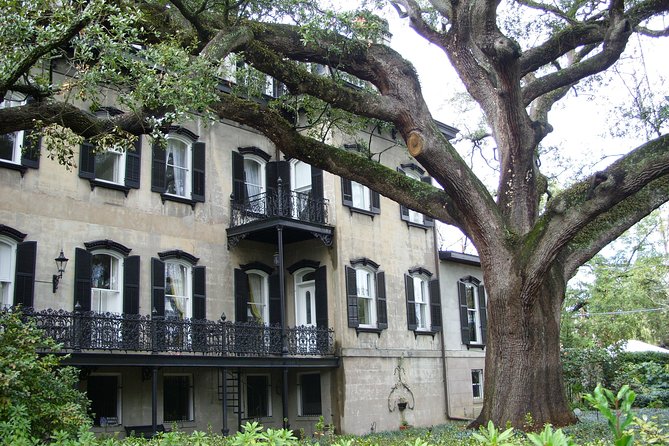
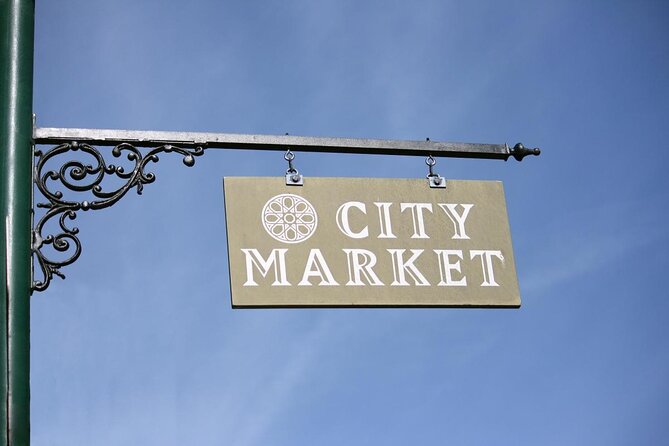
Next, you get a different vibe: a stroll down Savannah’s City Market neighborhood with recommendations for shops, restaurants, and attractions. Then the focus comes back to Ellis Square, where the guide explains the square’s history, its loss, and the recent restoration.
This is also where the tour gets more pointed about economics. You’ll learn about African Americans’ contributions to antebellum Savannah’s economy, both as free people and as enslaved people. That doesn’t happen by accident. The guide uses the physical location—square to market to streets—to show how commerce and labor weren’t side notes. They were central to how the city grew.
The Ellis Square component is about 15 minutes, which keeps the momentum. Still, it’s long enough for the tour to give you a clear takeaway: the restored spaces you enjoy now sit on top of complex histories.
Johnson Square and Wright Square: Revolutionary hero stories plus monuments with contrast

In Johnson Square, you’ll view the monument to Nathanael Greene, a key war hero, and hear how his widow altered the U.S. economy and history. This is one of those stories where the guide ties military reputation to real-world consequences afterward, so it doesn’t end when the fighting stops. About 20 minutes here gives you time to focus on the monument, then follow the human thread behind it.
Then comes Wright Square, which adds variety through monuments with different cultural meanings. You’ll learn about two: one honoring a railroad magnate, and one honoring a Native American chief. Looking at both in the same space helps you see how Savannah marks power—sometimes through wealth, sometimes through leadership recognized in very different ways.
Wright Square also includes a break at a local cafe (around 30 minutes total for this stop). Since food and drinks are not included, you’ll be the one choosing what you want—coffee, tea, something sweet, or a quick sit-down reset. This break is a practical gift. It turns a long walk into something you can actually enjoy without feeling wiped out.
You can also read our reviews of more historical tours in Savannah






Chippewa Square: Oglethorpe, founder context, and why it matters before Madison Square
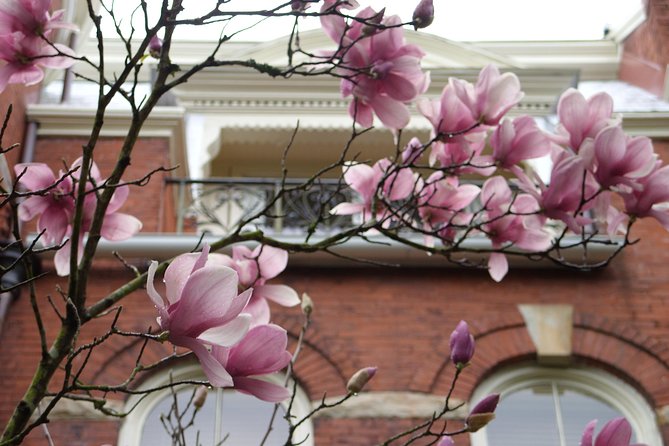
Before Savannah’s Civil War-era stories start stacking up, you get the founder layer at Chippewa Square. The guide explains James Oglethorpe, Savannah’s founder, and you’ll tie him to the layout of the city and what that means for why the squares exist the way they do.
This is about 20 minutes, and it functions like a grounding chapter. If you’re new to Savannah, you’ll appreciate this because the later monuments make more sense when you understand the city’s founding goals and early structure. If you already know Oglethorpe, you’ll still pick up connections between the people and the urban plan.
Madison Square: Jasper, the Battle of Savannah, and Civil War landmarks in view
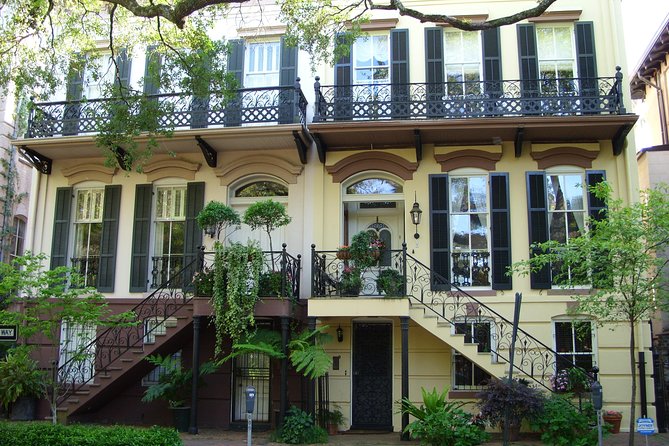
Now you hit Madison Square. This stop focuses on the Jasper monument, with discussion of heroic deeds in the Battle of Savannah. The guide also points out two historic houses nearby: the Sorrel-Weed House and the Green-Meldrim House. The connection here is location-based storytelling—why these houses matter, and how their presence fits into the bigger timeline.
Then the conversation widens to Savannah during the Civil War, which is where many people realize the city isn’t only “Revolutionary and quaint.” The guide gives you the on-the-ground sense of what changes when a city becomes strategically important, and how that shows up in what you see.
Madison Square runs about 25 minutes. That’s a longer block, but it’s justified because the topic range is wider—monument story, architecture/houses, then Civil War context.
Monterey Square: Pulaski at the base of the monument and the view people brag about
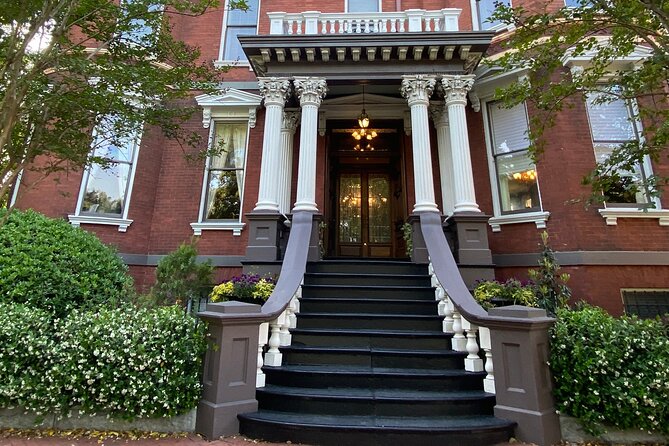
You finish with Monterey Square, which includes the part many people remember: the view. The guide tells you about Casimir Pulaski, explaining that he is buried at the base of his monument. That is one of those details that turns a photo-op into something more physical and specific.
This stop is about 15 minutes, and it lands the tour on a satisfying note. You’ll leave with a clear “last image” of the district—square, monument, and the feeling that Savannah’s history isn’t hidden in museums only. It’s placed right where you can’t miss it.
Why the guide’s style makes a huge difference
A walking tour lives or dies by pacing and clarity. Here’s what you can count on from Bonnie Blue Walking Tours of Savannah:
- The pace is leisurely, not frantic. On a city walk, speed is the enemy of understanding.
- The guide talks a lot—one of the strongest themes in the feedback is that the stories and facts keep coming. For many people, that’s exactly the point. If you prefer silence and only minimal explanation, this may feel like too much.
- You’ll get food and attraction suggestions during the route, including places to stop for coffee or tea and where to keep exploring after the tour ends.
One other practical note: construction noise can intrude in an outdoor city. When that happens, it’s a reminder to plan for small interruptions. The good news is that the tour remains square-focused, so you aren’t derailed for long.
What you really get for $46.16 (and who it’s a bargain for)
At $46.16 per person for about 3 hours, this isn’t a cheap “stroll and go” experience. It’s paying for a local guide who connects multiple squares into one story, and the stops are free to view (the tour lists free admission at each square segment).
For your money, you’re buying three practical things:
- Orientation fast. In one morning, you learn which squares matter and what each one is pointing you toward. That helps with planning the rest of your trip.
- Context you can use. Instead of memorizing dates, you’ll understand why monuments were made and what events meant to Savannah.
- Time efficiency. Three hours walking with someone who knows the connections beats trying to piece it together from a map and a handful of plaques.
This is a solid fit for people who like history told as stories, not as a worksheet. It’s also a good choice if you want to start your trip with structure before you wander on your own.
Weather, shoes, and how to make the most of the 3-hour route
Savannah can be hot, humid, breezy, sunny, or rainy with little warning. This tour runs in all weather conditions, so you’ll want to show up prepared.
My practical checklist:
- Wear comfortable walking shoes. Even with flat routes, the district involves curbs and uneven stones.
- Bring a light layer for morning shade, then consider sun protection if you’re out after the clouds burn off.
- If you’re sensitive to heat, treat the cafe stop as a real recovery moment, not a casual pause.
Also, because it’s near public transportation, you can fit it into your day without needing a car. And since it uses a mobile ticket and confirmation happens at booking, it’s usually easy to manage day-of.
Should you book this Savannah Historic District Walking Tour?
I’d book it if you want a guided walk that gives you both major Revolutionary and Civil War connections and local Black heritage landmarks, all anchored to the squares you’ll keep seeing around town. The small group size and the pace make it feel manageable, and the café break is genuinely helpful.
I’d skip or adjust expectations if you dislike tours where the guide’s narrative style is very present, or if you’re looking for quiet sightseeing with minimal interpretation. This one is about stories, and the guide’s viewpoint is part of the package.
If you’re only choosing one early-day activity in Savannah’s historic core, this is a strong candidate.
FAQ
How long is the Savannah Historic District Walking Tour?
It runs for about 3 hours.
What is the price per person?
The price is $46.16 per person.
What’s included in the tour price?
A local guide is included.
Where does the tour start and end?
It starts at Telfair Square, 121 Barnard St, Savannah, GA 31401 and ends at Monterey Square, 11 W Gordon St, Savannah, GA 31401.
Does the tour include food or drinks?
No. Food and drinks are not included, but there is a break at a local cafe during the walk.
What is the cancellation policy?
You can cancel for a full refund if you cancel at least 24 hours before the start time. If you cancel less than 24 hours before, the amount paid will not be refunded. If the tour is canceled due to poor weather, you’ll be offered a different date or a full refund.