REVIEW · SAVANNAH
Savannah: Civil War Walking Tour
Book on GetYourGuide →Operated by The Savannah Walks · Bookable on GetYourGuide
Street-level Civil War drama in Savannah.
This 105-minute walking tour threads the American Civil War through real Savannah addresses, from prominent Confederate leaders’ homes to Gen. Sherman’s area of command. You’ll learn how Savannah mattered in the war, with a guide who connects military strategy to the human cost of brother against brother.
I love the specific stops—William Hardee and James Bartow’s homes, plus Gen. Joseph E. Johnston—because the city layout makes decisions feel real. I also like how the tour lands at Sherman’s headquarters area and discusses Field Order #14, the promise of 40 acres and a mule for freed enslaved people. One consideration: you’re walking on uneven sidewalks, and the pace can feel brisk when the group is moving between stops.
In This Review
- Key takeaways before you go
- Why this Savannah Civil War tour works at walking speed
- Warren Square meeting point and how to start smoothly
- Stop-by-stop: how the tour reads like a map of command
- William Hardee’s and James Bartow’s homes: power you can still see
- Gen. Joseph E. Johnston’s story: command, pressure, and consequences
- Passing Sherman’s headquarters area: where orders met reality
- Field Order #14 in Savannah: 40 acres and a mule, explained clearly
- What the guides do well (and what to watch for)
- Price and value: what $20 buys you in 105 minutes
- Practical logistics you’ll actually want to know
- Who should book this Savannah Civil War walk
- Should you book the Savannah Civil War walking tour?
- FAQ
- How long is the Savannah Civil War Walking Tour?
- Where does the tour meet?
- How much does it cost?
- Is transportation included?
- Is the tour offered in English?
- Are tips included in the price?
- Can I cancel and get a refund?
- Is there free parking nearby?
- What should I wear or bring?
- What sites does the tour cover?
Key takeaways before you go
- Confederate commanders on their home turf: see houses tied to William Hardee, James Bartow, and Gen. Joseph E. Johnston
- Sherman HQ area and Field Order #14: learn how an order first decreed in Savannah shaped Black freedom hopes
- Strategy explained in plain terms: you’ll hear how military planning worked on the ground
- Stories with humor and questions welcome: guides like Cathy and Zack are praised for lively, interactive delivery
- You get more than a typical trolley stop: this is about detail and context on foot
Why this Savannah Civil War tour works at walking speed
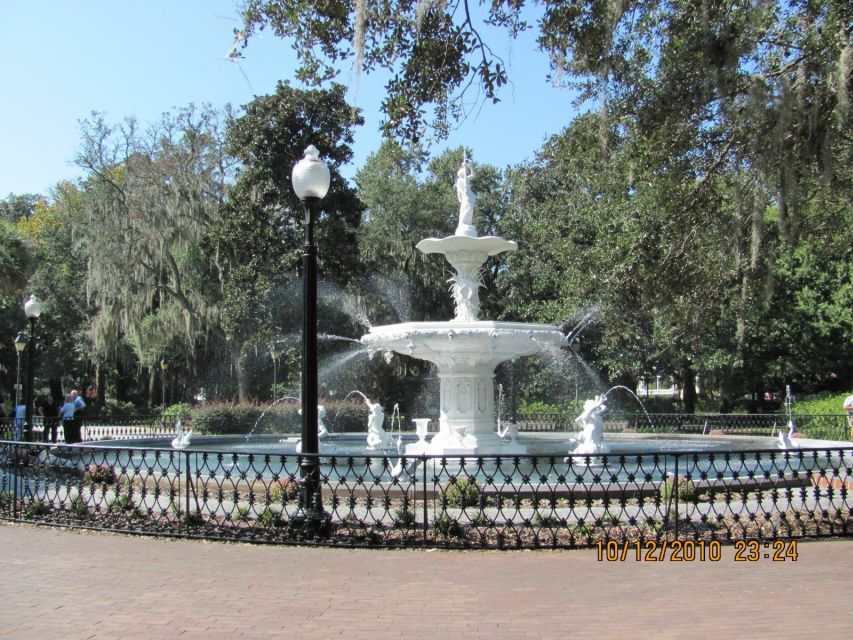
Savannah is the kind of city where big stories live in small places. On this tour, you’re not just hearing dates—you’re looking at the places tied to power, command, and consequence. A walking route matters because the buildings and blocks give you the right scale for thinking about who controlled what, and how fast events could shift.
The tone is educational, but not stiff. You’ll hear about military strategies, intrigue, and the horror of internal conflict in the United States—right alongside the uncomfortable politics that followed and echoed for decades. That mix is exactly what makes a themed walking tour worth your time: it turns architecture into understanding.
You can also read our reviews of more walking tours in Savannah



Warren Square meeting point and how to start smoothly
The tour departs from Warren Square, 22 Habersham St, Savannah, GA 31401, enclosed by Congress and Habersham Street. If you’re arriving a few minutes early, you’ll feel less rushed when it’s time to gather and start moving.
Parking around the squares can be tight, but you’ve got options nearby. There are metered spots around where tours depart, and there’s a parking garage about a block from Reynolds Square (a couple blocks east of Warren Square). That garage is at Drayton and E. Bryan, with entrances on Drayton and Abercorn, and it’s priced at $1.00 for the first hour and $0.50 for each additional hour (up to $4.00/day).
A practical tip: bring a little patience with yourself. Old Savannah sidewalks can be uneven, and you’ll be on your feet the whole time. If you’re using a stroller, expect it to be harder than you’d like—one guide-run experience noted that strollers are not easy here.
Stop-by-stop: how the tour reads like a map of command
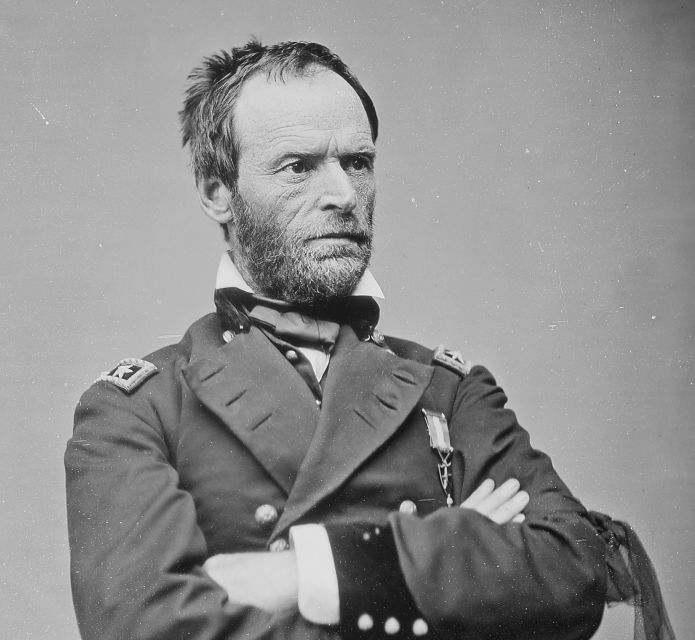
This is a walking tour with about 105 minutes of story time, so each location matters. The route isn’t trying to do everything; it’s focused on turning a handful of key sites into a coherent view of Savannah’s Civil War role.
William Hardee’s and James Bartow’s homes: power you can still see
One of the big appeals is that you get to connect names to buildings. You’ll see the houses of Southern leaders tied to early Confederate command, including William Hardee and James Bartow. Seeing these addresses in real life changes how you absorb history. It’s one thing to read about leaders; it’s another to stand near a house and think about the world that allowed that command structure to exist.
At this stage, the tour generally starts building your mental framework: who these men were, why their decisions mattered, and how Savannah’s position affected the war’s movement. If you like history that explains cause-and-effect, this part is where the story starts clicking.
Drawback to keep in mind: because the sites are tied to private homes and prominent addresses, there’s likely less “look inside” time and more explanation from the sidewalk. You’ll get context through guiding, not through interior visits.
Gen. Joseph E. Johnston’s story: command, pressure, and consequences
Next up is Gen. Joseph E. Johnston, another prominent name connected to Savannah. Johnston is discussed in a way that helps you understand not just the man, but the pressure of leadership during a war that fractured families, neighborhoods, and loyalties.
Why this stop matters for you: it gives you a Confederate leadership viewpoint that isn’t just slogans. The guide’s job here is to connect strategy to geography. Standing in Savannah while hearing the reasoning behind command choices helps you see how war planning worked in practice, not just on paper.






Passing Sherman’s headquarters area: where orders met reality
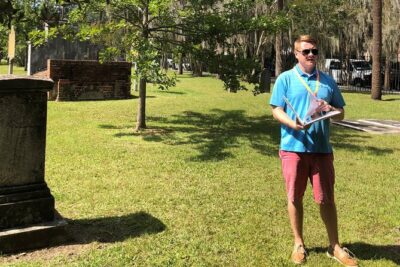
Later, the tour passes by Gen. Sherman’s headquarters. This is the point where the story widens from Confederate command into the Union’s operational side—how the war was pursued with logistics, pressure, and timing.
This section works best if you pay attention to the language around orders and movement. You’ll start hearing the war as a system: instructions flow, commanders react, and the outcomes hit civilians and enslaved people hard.
And yes, the tour is very direct about the cruelty of the conflict. That’s part of the value: you don’t get a sanitized version meant to entertain.
Field Order #14 in Savannah: 40 acres and a mule, explained clearly
The headline moment is the discussion of Field Order #14, first decreed in Savannah. You’ll talk about the promise of 40 acres of good land and a mule to every freed slave in the area.
This part is powerful because it connects battlefield history to the question of freedom after. Even if you’ve heard bits of the phrase 40 acres and a mule before, hearing it anchored to a specific order tied to Savannah helps you understand why it mattered and why it became part of the larger national story.
What you’ll likely come away with: the sense that policy decisions were not abstract. They affected real people right after emancipation, and the aftermath became part of the political ramifications that shaped how Americans talked about the Civil War long after the fighting ended.
What the guides do well (and what to watch for)
The success of this type of tour comes down to delivery. In past tour experiences, guides like Cathy and Zack have been praised for humor, friendly engagement, and a clear educator background. One coordinator, Brad, also earned good marks for communication before the tour.
Here’s what you should expect in a positive run:
- The guide keeps the story moving without turning it into a lecture marathon
- You can ask questions and get relevant, supplemental answers
- You get small, concrete details that make the route stick
One possible downside to consider: in one experience, the guide was late by about 15 minutes, and there was a comment described as casual about the group makeup. That doesn’t mean every departure is like that, but it’s worth noting that the tour is guided by people, so start with a flexible mindset and a good attitude.
Price and value: what $20 buys you in 105 minutes
At $20 per person for roughly 105 minutes, this is a value play compared with larger, less focused tours. You’re paying for a concentrated, guided walk that links multiple key addresses—Hardee, Bartow, Johnston, and Sherman’s area—plus a very specific teaching moment around Field Order #14.
What makes the price feel fair is the tight story arc. You’re not wandering for two hours without direction. The tour is designed around Savannah’s role in the war and around military strategy explained in an approachable way.
Also, note what’s not included: transportation. This is a walking tour, so you’re responsible for getting to Warren Square. Once you’re there, you’re set.
And tips aren’t included. If you want to reward a guide who keeps you engaged and answers questions well, plan for that extra cost.
Practical logistics you’ll actually want to know
Bring comfortable walking shoes. That’s not generic advice—it matters because the route is on historic sidewalks that can be uneven. Dress for the weather, since you’re outside for the full 105-minute window.
The tour is live, in English. If you’re traveling with someone who prefers English interpretation for history, this checks that box.
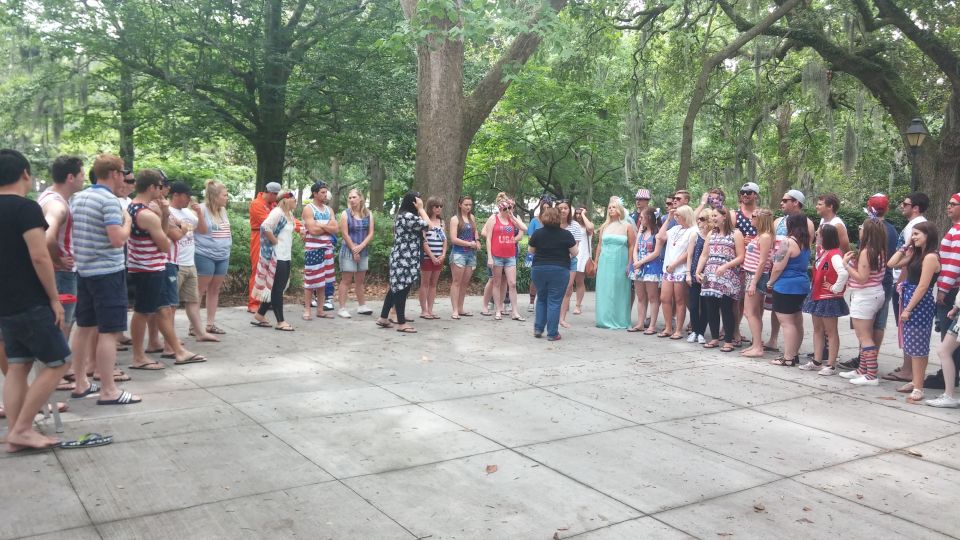
Group size can vary. Some experiences have felt like a small group or even closer to a conversation than a lecture when numbers are low. If you like asking questions and getting back-and-forth answers, a smaller group dynamic can be a big plus.
Who should book this Savannah Civil War walk
This tour is a good fit if you:
- Like history that connects people and decisions to actual street locations
- Want Civil War context that includes the aftermath and Black freedom policy ideas tied to Field Order #14
- Prefer a guided walk where you can ask questions and get specifics
If you mainly want general Savannah sightseeing, you might find this more intense than you expect. But if you’re the kind of traveler who enjoys turning a city walk into a story with real stakes, this works well.
It’s also a smart add-on for your first visit to Savannah. Even if you later do other tours, this one gives you a framework for understanding why the city’s addresses matter.
Should you book the Savannah Civil War walking tour?
Yes, if you want an on-foot, strategy-focused Civil War story anchored to real Savannah addresses—especially if Field Order #14 and the 40 acres and a mule promise are on your mental list. The guide-driven format, the specific stops tied to named leaders, and the clear explanations about war and its political fallout make the $20 price feel reasonable.
Skip it or think twice if:
- You’re uncomfortable with uneven sidewalks
- You want mostly scenic narration without heavy Civil War focus
- You dislike walking tours where the main value is the guide’s storytelling rather than hands-on access
If you book, arrive a bit early at Warren Square, wear solid shoes, and come ready to ask questions. This is the kind of tour where you leave seeing the same streets with new meaning.
FAQ
How long is the Savannah Civil War Walking Tour?
The tour lasts 105 minutes.
Where does the tour meet?
It meets at Warren Square, 22 Habersham St, Savannah, GA 31401, enclosed by Congress and Habersham Street.
How much does it cost?
The price is $20 per person.
Is transportation included?
No. Transportation is not included.
Is the tour offered in English?
Yes. The live tour guide speaks English.
Are tips included in the price?
No. Tips are not included in the price.
Can I cancel and get a refund?
Yes. You can cancel up to 24 hours in advance for a full refund.
Is there free parking nearby?
You might find metered spots around the meeting area. There is also a city parking garage within a block of Reynolds Square with low daily rates listed for the first few hours.
What should I wear or bring?
Wear comfortable walking shoes and dress for the weather.
What sites does the tour cover?
You’ll see houses connected to prominent Southern generals such as William Hardee, James Bartow, and Gen. Joseph E. Johnston, and you’ll pass by Gen. Sherman’s headquarters, where Field Order #14 is discussed.