REVIEW · SAVANNAH
Savannah’s Finest History Tour: A Walk Through Time
Book on Viator →Operated by History, Haunts, and Hops! · Bookable on Viator
Savannah’s squares make history walkable. This 1 hour 45 minute guided walk knits together landmark monuments, Civil War-era locations, and Savannah’s signature square layout, with short stops timed so you still get a feel for the city without spending your whole day in a group.
I especially like two things about it. First, you get a fast, organized route through 11 named stops—Johnson, Wright, Chippewa, Madison, Calhoun, Monterey, Lafayette, Colonial Park Cemetery, St. John the Baptist Cathedral, Oglethorpe, and Reynolds—so you come away with a mental map of Savannah. Second, the tour includes admission/ticket access at the stops that matter most, including the moment you go inside St. John the Baptist Cathedral.
One drawback to consider: every stop is brief, so if you love lingering, taking photos for 20 minutes, or asking lots of follow-up questions, you may feel slightly rushed. Also, while the tour sounds well structured, there’s at least one reported situation where the operator/guide didn’t show, so I recommend you double-check any email updates close to start time and not assume everything is automatic.
In This Review
- Key highlights worth knowing before you go
- A 10:00 am square-to-square history hit
- Johnson Square and Wright Square: where the story begins and gets dramatic
- Chippewa Square: a pop-culture stop you can actually place
- Madison Square to Calhoun Square: Sherman’s HQ and the 1850s effect
- Monterey and Lafayette: Pulaski, Jim Williams, and the Girl Scouts connection
- Colonial Park Cemetery and St. John’s Cathedral: the emotional core
- Oglethorpe Square and the Owens-Thomas House: regency style in North America
- Reynolds Square and John Wesley: a faith landmark you can pinpoint
- Price and pace: is $35 worth your time?
- Who this tour suits best
- Practical advice for making the most of every stop
- Should you book this Savannah history tour?
Key highlights worth knowing before you go
- A timed square route that keeps the walk moving and helps you cover a lot in under two hours
- Admission/ticket access included at the named stops, including the cathedral interior experience
- Johnson Square to Reynolds Square covers key Revolutionary and later-era landmarks without long detours
- Colonial Park Cemetery adds a more reflective pause to the usual square sightseeing
- St. John the Baptist Cathedral is the standout indoor stop, with a Sistine Chapel of the south feel
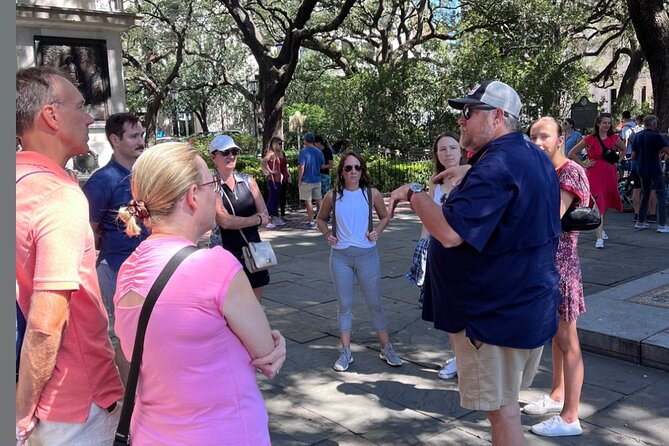
- Small group size (max 30) makes it easier to follow the guide and stay together
A 10:00 am square-to-square history hit
This tour starts at 10:00 am and ends back where you begin, at Johnson Square (2 E Bryan St, Savannah, GA 31401). You’re walking through Savannah at a comfortable city pace, but the whole point is momentum: the tour is about 1 hour 45 minutes, and each stop is allotted roughly 5 to 10 minutes.
The group is capped at 30 travelers, which is big enough that you won’t feel like you’re alone, but small enough that you can generally keep track of what’s next. You’ll also use a mobile ticket, and service animals are allowed. The meeting area is close to public transportation, which helps if you’re combining this with other Savannah walking plans.
There’s also a practical note: the experience is described as requiring good weather, so if conditions look rough, expect the tour to be adjusted or canceled. If you’re visiting in shoulder season or you get surprise Savannah rain, plan a flexible day.
You can also read our reviews of more historical tours in Savannah



Johnson Square and Wright Square: where the story begins and gets dramatic
You kick off at Johnson Square, meeting in front of the monument honoring Nathaniel Greene. This is a smart start because it gives you a clear reference point for the rest of the walk. Once you see the monument and the square layout, it becomes easier to understand why Savannah’s square system matters so much.
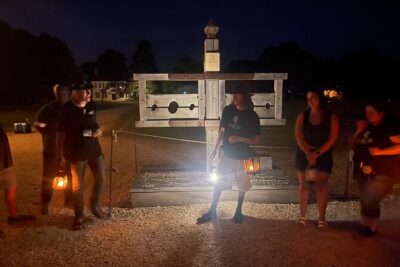
From there you head to Wright Square, known as the hanging square. In other words, this stop leans darker than the postcard-perfect vibe people expect. Even with only about 5 minutes here, it adds emotional contrast to the route—so the city isn’t just pretty geometry. It’s also a place where serious events left marks.
Chippewa Square: a pop-culture stop you can actually place
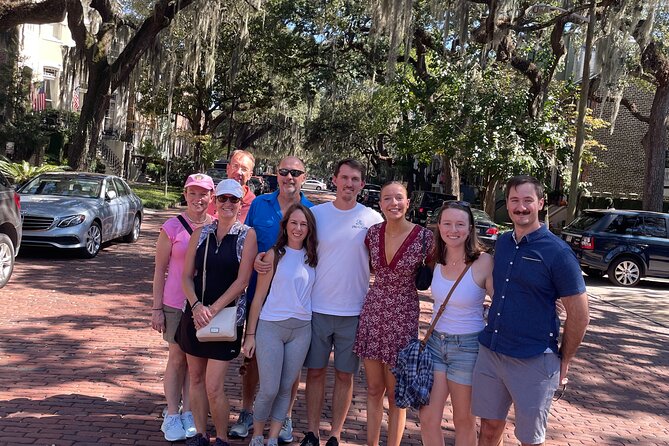
Next up is Chippewa Square, where you’ll see where Forrest Gump told his life story. This is one of those stops that works on two levels. If you know the movie, you’ll connect instantly. If you don’t, you still get a recognizable Savannah landmark, and the guide’s explanation gives you a way to anchor what you’re seeing.
You’ll spend about 10 minutes at Chippewa Square. That’s enough time to notice the square’s look and feel—benches, landscaping, the way the blocks open around you—without turning it into a slow detour. For many people, this is the point where Savannah starts to feel like a place you can orient yourself in.
Madison Square to Calhoun Square: Sherman’s HQ and the 1850s effect

At Madison Square, you’ll learn about where General Sherman set up his headquarters on his march to the sea. This stop is one of the tour’s clearer “big historical name” moments. You get a specific location tied to a specific campaign, and you’re not left wondering what happened—it’s pointed out on the ground.
Then you move to Calhoun Square, described as the last square and the “original” square, with surrounding structures that are original. The guide frames it as walking through Savannah in the 1850s. Even if you’re not a diehard architecture person, that kind of framing helps. It turns the square from scenery into a time capsule you can mentally step into.
In total, these two stops keep the walk in the Civil War / 19th-century lane. Each gets about 10 minutes, which is short, but the square layout helps you retain what you see. You’re not staring at one building for an hour—you’re absorbing a pattern across multiple locations.
Monterey and Lafayette: Pulaski, Jim Williams, and the Girl Scouts connection

Monterey Square brings two memorable elements: the General Pulaski monument and Jim Williams’ home connected to Midnight in the Garden of Good and Evil. This is a perfect example of how Savannah sightseeing often blends layered meaning—war-era symbolism, plus the stories modern visitors recognize.
You’ll have about 10 minutes here. That’s plenty to take in the monument presence and then shift your attention to the home reference point. If you enjoy learning how the city’s past gets reframed through later literature and film, this stop will feel extra satisfying.
Then comes Lafayette Square, where you’ll see the Andrew Low House, home to the first Girl Scouts meeting in 1912. That’s a fun change of pace from military and colonial themes. It’s still history, but it’s history tied to community life.
Lafayette Square also includes a visit to the Cathedral to St. John the Baptist (you’ll go inside more fully later). Even with the stop being listed at 10 minutes, you’re setting yourself up for the “wow” factor at the cathedral by getting oriented to where it sits in the area.






Colonial Park Cemetery and St. John’s Cathedral: the emotional core
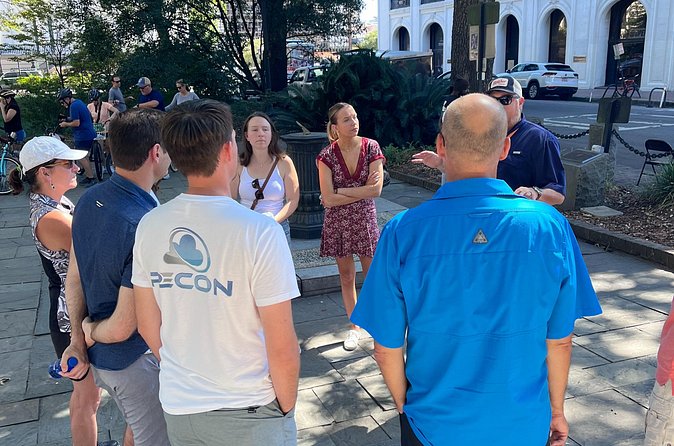
This is where the tour turns heavier—in a good way.
At Colonial Park Cemetery, you’ll visit the oldest graveyard in Savannah and hear how disputes were settled in the colonies. Spend about 10 minutes here. That brief time is long enough to get the key idea and still feel respectful, without rushing the quiet. Even if you’re not used to cemetery visits, the fact that you’re given a theme (disputes, colonial life) gives the stop meaning beyond just dates and stones.
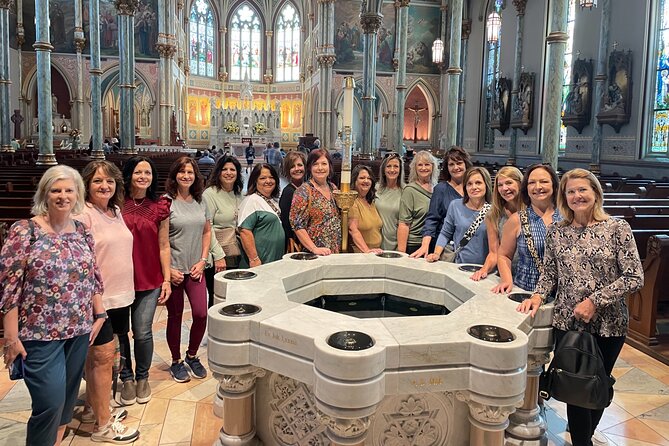
Then you continue to the Cathedral of St. John the Baptist, which is the big indoor highlight. The tour includes going inside and seeing what’s often described as the Sistine Chapel of the south. This is the stop you’ll remember after the rest of the squares blur together.
You get about 10 minutes at the cathedral on this tour, so you’ll want to come ready to focus—look up, look around, and don’t treat it like a quick photo-only stop. The interior can be visually intense, so if you try to capture everything at once, you’ll miss the overall effect. Aim for one or two details you really want to see, then let your eyes relax and take in the rest.
Oglethorpe Square and the Owens-Thomas House: regency style in North America
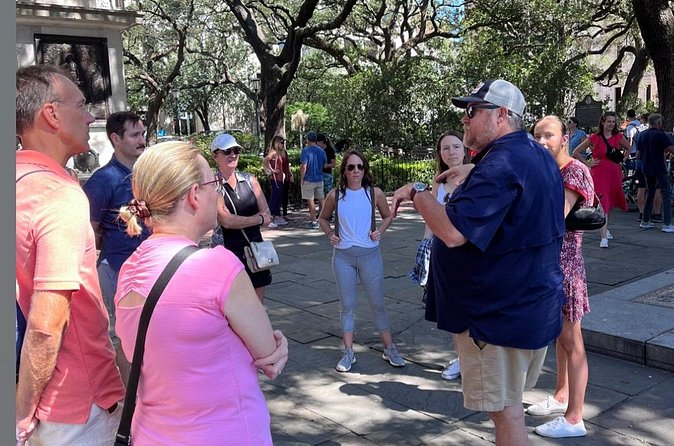
After the cemetery and cathedral, you head to Oglethorpe Square. Here, the focus is one of the prettiest examples of regency style architecture in North America, the Owens-Thomas House.
This is a great “recovery stop” after the solemnity of the cemetery and the intensity of the cathedral. Architecture works like a visual breather. The guide’s framing helps you notice style features rather than only admiring the building as something pretty.
You’ll spend about 10 minutes at this stop. With a timed tour, you won’t get an hour-long walk-through, so prioritize: decide what style cues you want to spot (facade details, symmetry, decorative elements) and let that be your checklist.
Reynolds Square and John Wesley: a faith landmark you can pinpoint
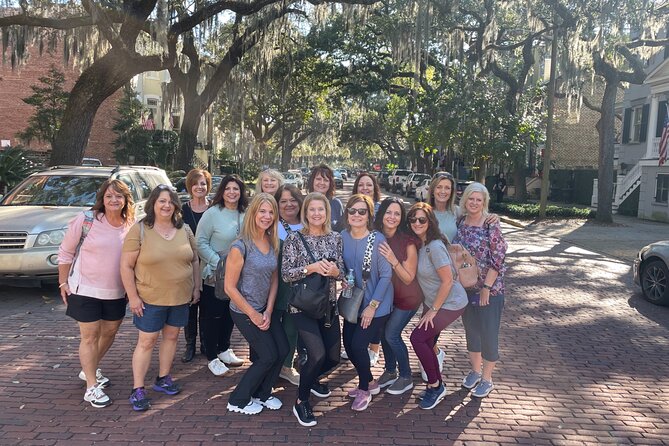
The tour finishes with Reynolds Square, where you’ll see the monument of John Wesley. You’ll also learn that the Methodist Church was founded on his principles. This stop rounds out the walk by adding another kind of influence—religious, civic, and cultural—rather than only political and military storylines.
You get about 10 minutes here, and because it’s a square finish, you’ll have a natural place to look back at what you’ve covered. Once the route ends, you’re brought back to the starting meeting point, making it easy to keep exploring on your own afterward.
Price and pace: is $35 worth your time?
At $35.00 per person, this tour sits in a value zone for a guided walk that moves quickly and includes ticketed admission at the listed stops. The best way to judge value here is not just the dollar amount—it’s what you’re buying:
- 11 named stops in a single afternoon window
- short-guided structure that helps you avoid wasting time figuring out what to see next
- included admissions/tickets at the points that often require entry
If you were to try to assemble all the pieces yourself—multiple squares plus the cathedral interior plus cemetery access—you’d spend real time planning and waiting. This tour compresses that into about 1 hour 45 minutes, with a guide doing the “ordering” for you.
Is it perfect? No. The short stop lengths mean you won’t get a deep, slow conversation at every location. But if your goal is to get your bearings fast and cover the major landmarks tied to Savannah’s story, this price feels like it makes sense.
Who this tour suits best
This tour is a good match if you:
- want an organized introduction to Savannah’s square layout and landmark highlights
- like a route you can follow without having to constantly check your map
- enjoy a mix of military history, colonial references, architecture, and pop-culture ties
It may feel less ideal if you:
- want long unhurried stops where you can wander without time limits
- need a lot of time for accessibility breaks between destinations
- are sensitive to the idea that multiple stops share the same limited time window
Either way, it’s designed so that you still walk away knowing what you saw and why it matters in Savannah’s story.
Practical advice for making the most of every stop
A few small moves will help you enjoy it more:
Wear shoes you’re comfortable walking in for a steady stretch. The whole tour is a square-to-square circuit, so the time adds up even when each stop is short.
At the cathedral, don’t try to rush. Pick one area you want to focus on, then let your eyes rest on the rest. That’s how you get the full effect within a limited stop length.
If you’re coming for the pop-culture connection at Chippewa Square, keep that excitement front and center—then listen closely. The guide’s explanation helps you connect the landmark to the broader city feel.
And because of the earlier no-show/cancellation confusion reported by at least one guest, I’d make a habit of checking your email and confirmation messages before heading out.
Should you book this Savannah history tour?
I’d book it if you want a high-coverage, guided introduction to Savannah that fits into a morning or early day plan. The itinerary is built around what most people come to Savannah for—major squares, key monuments, a cemetery pause, and the cathedral interior—and the included admissions make it efficient.
I’d skip or approach with extra caution if you hate feeling rushed or you need flexible pacing between stops. And since the experience is weather-dependent and has had at least one reported communication issue, confirm updates right before you go.
If you’re aiming to get oriented and see the big-ticket landmark set in one go, this one works.