REVIEW · SAVANNAH
Savannah: Midnight in the Garden of Good and Evil Tour
Book on GetYourGuide →Operated by Savannah Sidewalk Tours LLC · Bookable on GetYourGuide
Savannah turns into a story after dark. I love how the walk maps the famous moments from John Berendt’s Midnight in the Garden of Good and Evil (and Clint Eastwood’s film) onto real streets and squares, and I love that the guide adds the human backstory that makes the places click. One catch: this is an outside-only walking tour, so you’ll want comfortable shoes and good weather.
You start in the heart of the Savannah Historic District and move stop to stop at a pace that feels relaxed but purposeful. It’s designed around up-close viewing—photo stops, short looks at interiors from the sidewalk, and then a storyteller guiding you through what you’re seeing and why it matters.
If you hate standing still while someone talks, plan for that. Even though there are short photo and sightseeing stops, a couple of moments are more “listen and look” than “walk and pass through,” so it helps to bring a calm, patient mindset.
In This Review
- Key highlights to notice on this Midnight tour
- Where the tour starts: Reynolds Square, John Wesley statue, and first impressions
- Reynolds Square to Johnson Square: how the story geography comes alive
- Drayton Street break at 222 Drayton St: a smart pause in the middle
- Colonial Park Cemetery and St. John the Baptist Cathedral: the mood shifts
- Lafayette Square and Monterey Square: elegant views with quieter pauses
- Mercer-Williams House Museum area and Armstrong House: exterior viewing matters here
- Finishing at Forsyth Park: fountain photos, quick stories, and an easy ending
- Price and pacing: does $35 for 2 hours feel fair?
- Who should book this Savannah Midnight in the Garden tour
- Should you book this Midnight in the Garden of Good and Evil Tour?
- FAQ
- How long is the Savannah Midnight in the Garden of Good and Evil Tour?
- Where do I meet the guide?
- What stops will I see during the walk?
- Is admission to Mercer-Williams House Museum included?
- What should I bring?
- Is the tour in English, and can I bring mobility needs?
Key highlights to notice on this Midnight tour
- Reynolds Square to Forsyth Park fountain: the route is built like a story arc
- Johnson Square and Wright Square: public squares with plot-friendly landmarks
- Colonial Park Cemetery and St. John the Baptist Cathedral: darker settings that add context
- Hamilton-Turner Inn, Jones Street, and Monterey Square: quieter scenery in between the big stops
- Mercer-Williams House Museum area (outside viewing): a museum stop without the museum ticket
- A real local journalist guide: you get street-level perspective, not just a script
Where the tour starts: Reynolds Square, John Wesley statue, and first impressions
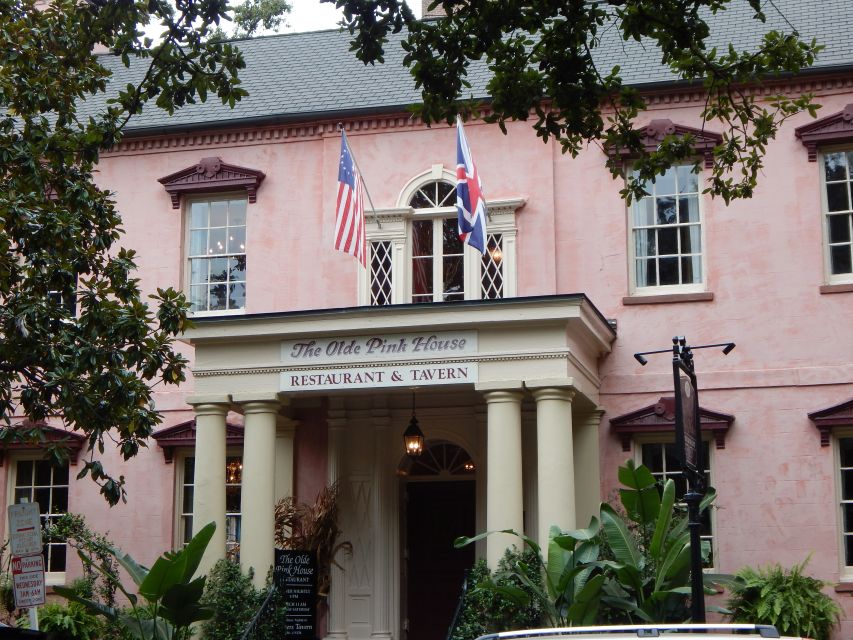
Meet your guide next to the statue of John Wesley in the middle of Reynolds Square. You’ll be right in front of the Olde Pink House Restaurant and Tavern, 23 Abercorn Street (so you can’t miss it once you’re there).
The tour kicks off in a way that makes the rest of the walk easier. Reynolds Square isn’t just a pretty starting point—it’s the kind of place where people slow down, take photos, and naturally start talking. That matters, because the best part of this experience is how the guide links the book and movie to what’s still standing in Savannah.
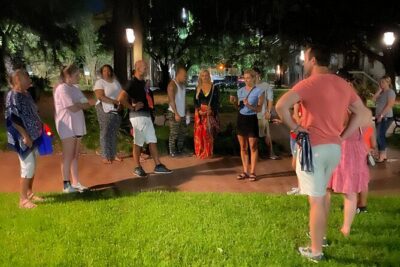
From the start, you get a small-group feel and a journalist-style presentation—clear, story-driven, and focused on the actual streets you’re standing on. One of the strongest names you’ll hear is Martin, a long-time downtown Savannah resident who’s also a real character in the experience (in the best way). He makes the history feel personal rather than like a dry lecture.
What to watch for: since you’re meeting in the center of a busy square, arrive a few minutes early and give yourself time to orient before the group gathers.
You can also read our reviews of more tours and experiences in Savannah.


Reynolds Square to Johnson Square: how the story geography comes alive
After the initial photo and orientation at Reynolds Square (about 10 minutes), the tour moves toward Johnson Square, which is described as Savannah’s oldest public plaza. This stop is one of those “you can see it better in person” moments. The buildings framing the square give you instant context for why the area feels like a stage set.
Next comes another short photo stop at 2 E Broughton St, which helps you connect the dots between what you’ve seen in the film and the real street patterns of downtown. For fans of the movie, these quick stops can feel like “there it is” moments. For non-fans, they still work as visual anchors—places you’ll remember when you look back at your photos later.
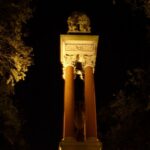
Then you reach Wright Square (about 15 minutes). The standout detail here is the memorial to William Washington Gordon. It’s the kind of detail that makes the tour feel different from a generic sightseeing walk: the guide points out what people typically miss, and suddenly the square becomes more than scenery.
Why it’s valuable: you’re learning the “where” before the “why.” That makes the later, more eventful stops easier to understand because you’ve already built a mental map of the story’s Savannah.
Drayton Street break at 222 Drayton St: a smart pause in the middle
About halfway through, you’ll get a break at 222 Drayton St (listed as 10 minutes). This is a practical win on a 2-hour tour. Savannah heat and humidity can sneak up fast, and having a planned moment to reset keeps the tour enjoyable rather than exhausting.
In practice, this stop is also where you can grab a drink and regroup. One review highlighted that there was time to sit for a cold beverage—exactly the kind of small comfort that turns a nice walk into a great one, especially if you’re touring after lunch.
What I’d do: bring water even if you think you’ll be fine. The tour asks you to bring a bottle of water, and trust that advice. Even in milder weather, you’ll be outside walking more than you expect.
Colonial Park Cemetery and St. John the Baptist Cathedral: the mood shifts
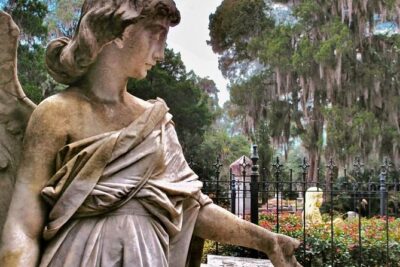
After the break, the tour heads to Colonial Park Cemetery (about 10 minutes). This is where the story tone changes. You’re not just seeing pretty architecture—you’re stepping into a place that makes the whole subject feel grounded. The guide connects what you’re seeing to the broader events surrounding the book and movie, and you get a stronger sense of why certain stories are tied to particular locations.
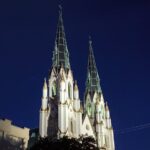
Next is a photo stop at the Cathedral of St. John the Baptist. Another short stop, but it’s a meaningful one. Churches and cemeteries change how you experience the city because they slow your thinking down. Even if you don’t know every detail of the plot, the setting itself gives you a better feel for the era and the atmosphere the book draws on.
Possible drawback to plan for: some stops involve standing in place while the guide talks. If you’re sensitive to long stretches of “listen and look,” it helps to wear supportive shoes and keep expectations realistic for a walking tour.
Lafayette Square and Monterey Square: elegant views with quieter pauses
Lafayette Square is next (around 15 minutes), and it’s another strong visual moment. The tour uses these squares like chapters: you get one pause to photograph, one set of guiding explanations, and then you keep moving before the story gets repetitive.
Then the route includes the area of Hamilton-Turner Inn and Jones Street, with Monterey Square described as a quiet oasis. Even without a long stay, this part of the walk helps break up the heavier stops. It’s the city doing what it does best—offering shade, calm pockets, and scenes that feel distinctly Savannah.
Why I like this structure: it keeps the tour from becoming one long stream of talking. You alternate between:
- story-heavy stops (cemetery, cathedral, character locations), and
- calmer blocks (squares and quiet streets) where you can take photos and let the information settle.


Mercer-Williams House Museum area and Armstrong House: exterior viewing matters here
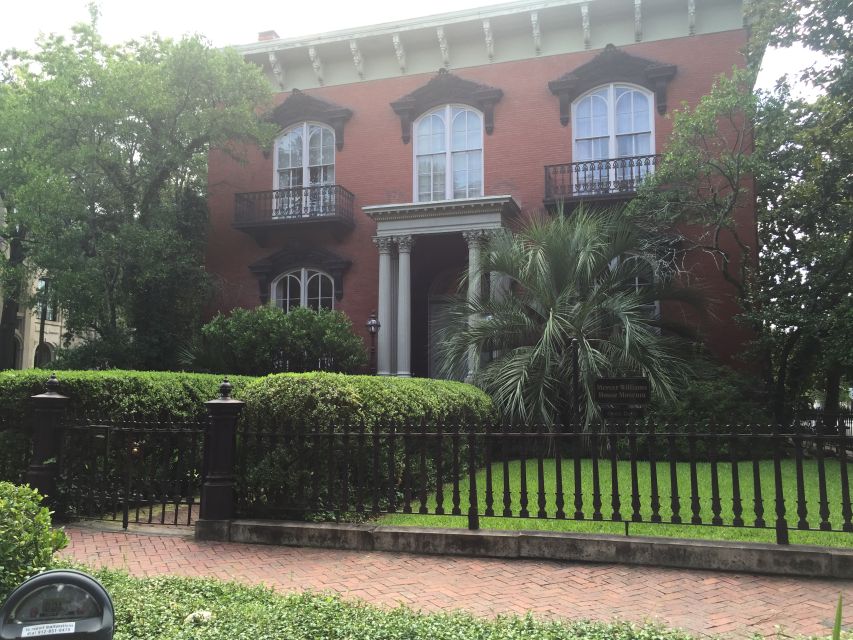
Later, you’ll see the Mercer-Williams House Museum area (photo stop around 15 minutes). The key point for planning: admission to the Mercer Williams House Museum is not included. That means you’re getting the exterior and the guide’s context, not a full museum entry.
The good news is that the stop still works well. The guide ties what you’re seeing to the story world, and even if you don’t go inside, you’ll leave with photos and a better sense of why that kind of landmark matters.
Along the way, you’ll also admire mansion houses such as Mercer Williams House and Armstrong House. This is one of those “look closely” segments. The buildings are elegant, and the guide’s explanations help you see details as you walk past—things you might otherwise scroll right past in a phone photo.
If you’re a die-hard fan: you can decide after the tour whether you want to add museum time on your own. This tour gives you the connections; you decide how far into the real-world artifacts you want to go.
Finishing at Forsyth Park: fountain photos, quick stories, and an easy ending
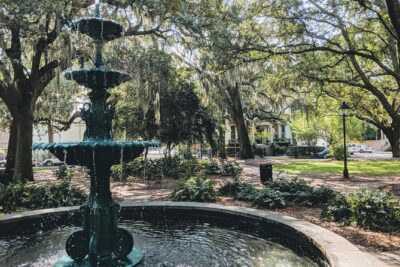
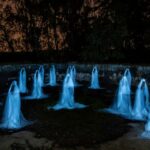
The tour ends at Forsyth Park, specifically near the fountain. This is the perfect finish line for two reasons: it’s photogenic, and it feels like a natural release after a dense stretch of story locations.
One of the most practical touches: the guide is happy to take photos for the group around the Forsyth Park area. That’s not just a nice gesture—it saves you from playing photographer while everyone else stands around waiting.
Also, the guide may point out a spot connected to filming for Forrest Gump bench scenes while you’re in the park area. If you’re a movie person, that kind of extra connection makes the ending feel playful, not just “and that’s it.”
Plan for the ending: the tour does not end where it starts. Your guide will offer directions back to your car or your next stop, so build a little time into your schedule to follow that advice and avoid hunting around.
Price and pacing: does $35 for 2 hours feel fair?
At $35 per person for a 2-hour small-group walking tour, the value comes from concentration. In a short window, you cover a lot of named locations tied directly to the book and film, while also getting real-world context from a local who knows downtown Savannah well.
Here’s how I think about the cost:
- You’re paying for a licensed local guide and a structured route of major sites.
- You’re not paying for transportation, and you’re not paying museum admission (Mercer-Williams House is optional on your own).
- The “product” is the storytelling plus the street-level look at landmarks.
For fans of the story, it’s a strong deal because the guide helps you understand what’s fiction and what’s tied to real people and events. For people who only know the film, it still works because the route gives you a visual map and a clearer sense of how the movie fits into the city.
Who might feel it’s not worth it: if you don’t like walking, or if you only want broad sightseeing without story connections. This tour is built for narrative fans.
Who should book this Savannah Midnight in the Garden tour
This tour is best for you if:
- you’ve read Midnight in the Garden of Good and Evil and want the real locations to make sense,
- you love the movie and want the streets behind the scenes,
- you enjoy character stories and the difference between fiction and real-life inspiration.
It’s also a good pick if you haven’t read the book. Many people still enjoy the experience, especially because the guide’s explanations don’t assume you already know every character. In fact, the tour can be a great way to decide whether the book belongs on your reading list after you see the sites in person.
A practical note from real-world experience: the pace is generally described as easy, and there’s a planned break midway. Still, it’s a walking tour with multiple photo and sightseeing stops, so keep your expectations aligned with two hours outside.
Should you book this Midnight in the Garden of Good and Evil Tour?
Yes—if you want a Savannah walk that feels like a story you can point to. This is not just “see pretty squares.” It’s “see the squares, then understand why they matter,” guided by a long-time downtown resident and journalist-style storytelling.
Skip it (or pair it with lighter plans) if you’re easily worn out by standing and listening, or if you’re visiting at a time when weather might force cancellations. Because it’s outdoors-only, it runs best when conditions are good.
If you’re on the fence, here’s my simple rule: if Midnight is already part of your trip—book it. If you’re only casually curious about Savannah architecture, you might prefer a more general walk first, then return later when you’ve got the story context.
FAQ
How long is the Savannah Midnight in the Garden of Good and Evil Tour?
The tour lasts 2 hours.
Where do I meet the guide?
Meet next to the statue of John Wesley in the middle of Reynolds Square, directly in front of the Olde Pink House Restaurant and Tavern at 23 Abercorn Street, Savannah, GA 31401.
What stops will I see during the walk?
You’ll visit and view a range of downtown Savannah sites, including Reynolds Square, Johnson Square, Wright Square, Colonial Park Cemetery, the Cathedral of St. John the Baptist, Lafayette Square, the Mercer-Williams House Museum area, and you’ll finish at Forsyth Park near the fountain.
Is admission to Mercer-Williams House Museum included?
No. Admission to the Mercer-Williams House Museum is not included, so you’ll typically view it from the outside during the photo stop.
What should I bring?
Wear comfortable shoes and bring weather-appropriate clothing. Bring a bottle of water as well.
Is the tour in English, and can I bring mobility needs?
The tour is in English only. Wheelchair accessibility is listed as available, and the guide can help with directions since the tour does not end where it starts. Pets are also welcome if they’re well-behaved.