REVIEW · SAVANNAH
Savannah History Walking Tour
Book on Viator →Operated by Savannah Tours and Tales · Bookable on Viator
Savannah’s squares tell stories fast. This 2-hour walking tour links the city’s landmarks to the people who shaped them, with an anthropologist guide and a sixth-generation Savannah local at the front of the group. I like how the guide doesn’t just point at buildings; they explain why these places matter and how the town grew around its squares.
Two things I really like: you get an insider perspective that feels personal, and you learn in a conversational way that makes the history easier to remember. It also keeps small-group energy (up to 20 people), so you’re not stuck listening like it’s a lecture.
One possible drawback: it depends on good weather, and you’ll be walking outdoors for about two hours. If you’re sensitive to heat, bring what you need (and plan for bugs in warmer months).
In This Review
- Key Things I’d Know Before You Go
- Why This Savannah History Walk Feels Different Than a Typical Route
- Price and Time: Is $34 Worth It?
- Where the Tour Starts and How the Route Builds Momentum
- Stop 1: Tomochichi’s Boulder and the Story of First Settlers
- Stop 2: Chippewa Square and Oglethorpe’s Square Plan
- Stop 3: Madison Square and the Revolutionary-to-Civil War Thread
- Stop 4: Lafayette Square, St. John the Baptist, and a Girl Scout Moment
- Stop 5: Colonial Park Cemetery and the Stories Beneath the Grass
- Stop 6: Oglethorpe Square and the Significance of an 1819 Home
- What Makes the Guides a Big Deal (Arthur, April, Cody, and More)
- Included Extras: Cathedral Entry When It’s Open
- Practical Tips for a Two-Hour Square Walk
- Who This Tour Suits Best
- Should You Book Savannah History Walking Tour?
Key Things I’d Know Before You Go
- Small group size (max 20) makes questions feel welcome.
- Anthropologist-style storytelling helps you connect people, not just dates.
- Sixth-generation local guide means the context sounds lived-in.
- Square-to-square route keeps the history easy to follow as you walk.
- Colonial Park Cemetery adds darker, memorable stories without getting gloomy.
Why This Savannah History Walk Feels Different Than a Typical Route
Savannah history can sound like a pile of dates. This tour turns it into something you can picture, using the city’s layout as the teaching tool. You’ll move through the squares that define downtown, and every stop has a reason tied to early settlement, war-era events, or daily life.
What makes it work is the guide’s approach. With an anthropologist leading and a sixth-generation Savannahian in charge, you get explanations about why communities formed where they did, not just what happened. I also appreciate how guides like Arthur and April (from past tour groups) are described as friendly, thorough, and easy to talk with, including room for back-and-forth questions.
There’s also a practical side: the tour keeps you focused on walkable, high-impact locations rather than sending you hunting for information on your own. You’ll leave with a mental map of the city’s key squares and what each one represents.
You can also read our reviews of more walking tours in Savannah



Price and Time: Is $34 Worth It?
At $34 per person for about two hours, this tour sits in a sweet spot for value. It’s not trying to replace a full day of museum time; it’s more like a guided orientation you can build on for the rest of your trip.
Here’s why the value feels solid. First, the guide does the heavy lifting of turning Savannah’s “pretty places” into meaning. Second, the pace is long enough to cover multiple squares plus Colonial Park Cemetery, which most self-guided walks skip or barely touch.
If you like planning your days efficiently, this is a good pick. You can pair it with lunch afterward in the area where the tour ends, and you’ll know exactly what you want to revisit.
Also worth noting: it’s often booked about 16 days in advance, so in peak seasons you’ll want to lock in your spot sooner rather than later.
Where the Tour Starts and How the Route Builds Momentum
You’ll start at Wright Square in downtown Savannah. The walk ends at The Gallery Espresso, 234 Bull St, which is a convenient place to grab coffee or a bite before you continue exploring.
The route is structured so the story moves forward as you move around. You begin with early settlement context, then step through key squares tied to major planning ideas and later conflicts, and you end with cemetery stories that add weight to what you’ve already learned.
And yes, you’ll be doing classic Savannah walking—level streets, lots of stopping, and plenty of time to look around. If you’ve ever done a “just meet us by the fountain” tour, this one is more organized than that. You’re given a sequence, but the guide also reacts to what’s going on that day.
Stop 1: Tomochichi’s Boulder and the Story of First Settlers
Your first stop is Tomochichi’s Boulder, connected to the chief of the Yamacraw Tribe during the period when the Georgia colony took shape. This matters because Savannah isn’t just a collection of old buildings; it started with real people already living here and already shaping relationships.
What I like about starting here is that it gives you context before the tour jumps into squares designed by later plans. You’re less likely to view everything through a single, one-sided lens because the opening anchors you in early history.
It’s a short stop, but it sets the tone. You’ll understand that Savannah’s identity isn’t only European architecture; it’s also connected to the community that existed at the time of settlement.
Stop 2: Chippewa Square and Oglethorpe’s Square Plan
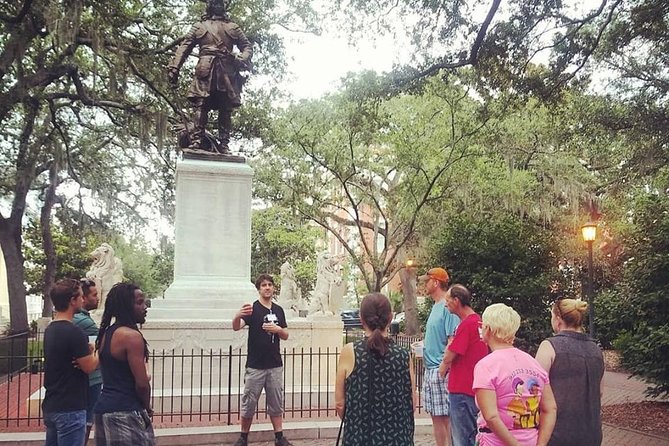
Next you’ll be at Chippewa Square, where the guide connects the layout of Savannah to Oglethorpe’s Square Plan. This is one of those concepts that sounds abstract until you stand in the middle of it and see the city’s geometry make sense.
You’ll learn how the square system functioned as a planning strategy and how it shaped daily movement through the city. For me, this kind of explanation is the difference between “cool town” and “I understand the town.”
If you tend to enjoy city planning, architecture, or how towns are organized, this stop is a highlight. Even if you don’t, it still helps you interpret what you see afterward.
You can also read our reviews of more historical tours in Savannah






Stop 3: Madison Square and the Revolutionary-to-Civil War Thread
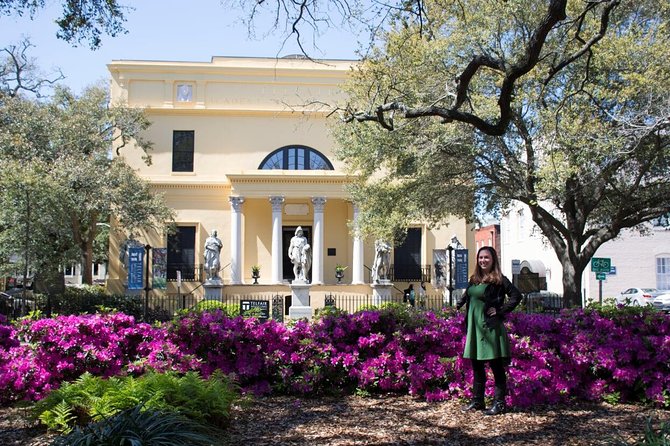
At Madison Square, the tour tackles major conflict history—covering events tied to the American Revolution and reaching forward into the Civil War. The guide helps you connect the dots between different eras instead of treating each period like a separate chapter with no link.
This stop is where the tour feels most like a narrative. You’re not just learning the what; you’re learning the why the story keeps resurfacing in different forms.
The practical takeaway: after Madison Square, you’ll be better at reading Savannah’s landmarks as clues. You’ll start noticing how the city’s past shows up again and again, even when the buildings look calm and unchanged.
Stop 4: Lafayette Square, St. John the Baptist, and a Girl Scout Moment
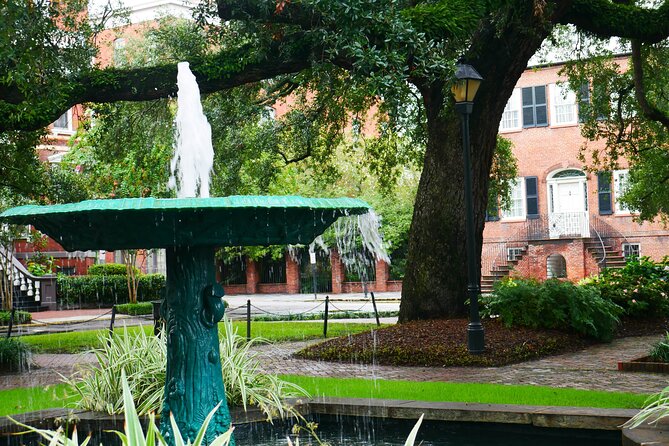
At Lafayette Square, you’ll get a guided look at St. John the Baptist Cathedral when it’s relevant for the day’s flow. This stop also includes two very Savannah details: a mention of the first Girl Scout meeting happening at a home on this square, plus a fountain that’s perfect for photos.
This is a stop with two different moods. You’ll appreciate it socially (the square makes you want to pause), but you’ll also understand it historically through the guide’s framing.
One note: the cathedral entrance is included if it is open on the day and during the tour time. If it’s closed, the guide may adjust the stop timing and focus on nearby points so you still get a full experience.
Stop 5: Colonial Park Cemetery and the Stories Beneath the Grass
Then comes Colonial Park Cemetery, and it’s often the stop that people remember longest. You’ll hear lively stories connected to what happened there—duels, soldiers taking refuge in vaults, and other human moments that make the cemetery feel more like a place of lives than just a garden of names.
This is where I’d tell you to slow down. Cemetery history can become repetitive if the guide is reading notes off a page. Here, the storytelling tone keeps it moving, and the guide’s role as a professional helps keep the explanations grounded.
There’s also a useful lesson built in: cemeteries in older cities are historical archives. When you understand that, you start noticing how the past is still present even in quiet places.
Stop 6: Oglethorpe Square and the Significance of an 1819 Home
Finally, you’ll visit Oglethorpe Square, including a look at a home dating to 1819 and why it matters around the architect and certain guests through the years. This is a nice closing stop because it brings things back to the built environment—how homes, design, and visitor connections fit into the story of Savannah.
It also helps you round out the tour themes. You started with early leadership and settlement context, moved through square planning and war history, and then ended with the people and architecture that shaped later Savannah life.
By the time you finish, you should have a clearer sense of how the city’s identity evolves, not just what it looked like at one point in time.
What Makes the Guides a Big Deal (Arthur, April, Cody, and More)
The tour stands or falls on the guide, and the record here is strong. In past groups, Arthur has been praised for being informative, friendly, and funny in a down-to-earth way. April has been described as thorough and knowledgeable, with a conversational style that encouraged questions and comments.
Another name that pops up is Cody Shelley, recognized for delivering what people call a nonstop history lesson focused tightly on the squares. Even better, one standout detail from an experienced group: when the cathedral wasn’t available at the planned moment, the guide shifted to other nearby landmarks so the tour still felt full.
That adaptability matters. It’s a reminder that history tours should be flexible enough to handle real-world closures without leaving you short.
Included Extras: Cathedral Entry When It’s Open
The tour includes cathedral entrance if it’s open during the day and time of your tour. That’s a practical benefit because it saves you from figuring out schedules while you’re already outdoors walking the route.
But keep your expectations realistic. The inclusion is conditional on opening hours, so the best plan is to treat it as a bonus when available—not the only reason to go.
If you care about seeing inside major Savannah landmarks, it’s still worth it. The overall route covers enough ground that you’ll feel satisfied even if that particular interior visit isn’t possible on your date.
Practical Tips for a Two-Hour Square Walk
This is a walking tour, so your comfort matters. Wear shoes you’re happy to stand and walk in for about two hours, and plan for Savannah weather since the experience is weather-dependent.
In warm months, bring protection against bugs—one past guest specifically flagged that bug spray is a must during summer. Also, have a light layer ready for breeze or sudden weather shifts.
If you’re driving, parking is available around the squares for a fee. And if you’re relying on transit, the tour is near public transportation, which is helpful because downtown can be stop-and-go.
Finally, because the tour caps at 20 travelers, I’d arrive ready to talk. This isn’t a sit-back-and-zones-out kind of experience. The best version of the tour is when you ask questions as you go.
Who This Tour Suits Best
I think this works especially well if you:
- want a fast way to understand Savannah’s square layout and early planning
- enjoy local storytelling that connects people to places
- like a focused walk with minimal decision-making during the day
It also suits travelers who want a structured downtown history lesson without paying museum prices for every stop. And if you’re the type who takes a photo in every square, Lafayette Square’s fountain and the cathedral area make that easy.
If you prefer history only when it’s in a controlled indoor setting, you might find the outdoor walking and cemetery portion less your style. But if you like seeing a city’s past in the open air, this format fits.
Should You Book Savannah History Walking Tour?
If you want a clean, efficient way to learn Savannah from the ground up, I’d book it. The mix of squares, early settlement context at Tomochichi’s Boulder, major historical themes at Madison and Lafayette, and memorable cemetery stories at Colonial Park creates a full picture in just about two hours.
It’s also a strong deal for the price, especially with a guide who brings both local roots and an anthropologist-style lens. The small group size helps, and the guide’s ability to pivot when a site like the cathedral is unavailable is a real quality signal.
Book this tour if you’re heading to Savannah and want your bearings fast. Skip it only if you absolutely hate walking outdoors or you don’t want any cemetery storytelling at all.