REVIEW · SAVANNAH
Rising Voices: Underrepresented History (by Walk With Me Savannah Tours)
Book on Viator →Operated by Walk with Me Savannah Tours · Bookable on Viator
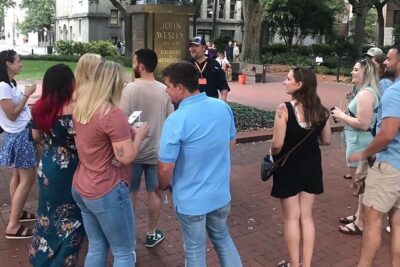
Savannah’s untold stories are on this walk. This alternative history walking tour from Walk With Me Savannah Tours spotlights the Black, queer, female, and Native people whose lives shaped the city but often get left out of standard narratives. You’ll hit big-name stops like Franklin Square, City Market, and Telfair Academy, yet each one comes with a different lens and the kind of detail you rarely see in guidebooks.
I especially like how the tour uses the actual street-corners and monuments to give context, instead of just listing facts. And if you’re lucky enough to get Sargon as the guide, the storytelling feels sharp and responsive, with lots of room for questions and quick pivots on whatever you want to understand next.
One consideration: this is an on-foot experience, and it’s not recommended if you can’t walk or roll for about 15 minutes without stopping, since the route is built around short movement stretches. Also, it runs in good weather, so plan for a bit of flexibility if the forecast turns.
In This Review
- Key highlights worth planning for
- Rising Voices: Why This Savannah Walk Feels Different
- Franklin Square: Haiti’s Revolution Link, Literacy Clashes, and the Underground Railroad
- City Market: Lady Chablis and a Market That Turned Into a School
- Telfair Academy Front: Mary Telfair and What It Means to Preserve
- Wright Square: Tomochichi and Mary Musgrove’s Role in Savannah’s Formation
- Juliette Gordon Low Birthplace: Scouts, Unusual Family Paths, and Hearing Loss
- Chippewa Square: Susie King Taylor, a Haitian Catholic Church Site, and Wartime Teaching
- Madison Square and Field Order 15: Practical Reparations and a Blocked Plan
- Monterey Square Finale: Jim Williams, Restoration Energy, and Pulaski’s Intersex Possibility
- Price, Pace, and Group Size: Getting Value Out of Two Hours
- What to Expect From the Walking Route (and How to Prepare)
- Who Should Book Rising Voices—and Who Might Skip It
- Should You Book Rising Voices, Underrepresented History in Savannah?
- FAQ
- How long is the Rising Voices walking tour?
- How much does the tour cost?
- Where does the tour start and end?
- Do you get a mobile ticket?
- Are there multiple start times?
- What is the group size limit?
- Is this tour suitable if I use a wheelchair or need frequent stopping?
- Can I bring a service animal or a pet?
- What if weather is poor?
- Can I cancel for a refund?
Key highlights worth planning for
- A $40 Savannah alternative-history walking tour that packs two hours of focused stops
- Top squares and landmarks explained through Black, queer, female, and Native perspectives
- Sargon as a guide option, praised for fun, fast storytelling and easy Q&A
- Eight major stop points, so you’ll leave with a new map in your head
- Max group size of 20, which keeps the walk from feeling crowded
- Mobile ticket, plus service animals allowed and pets allowed if well behaved
Rising Voices: Why This Savannah Walk Feels Different
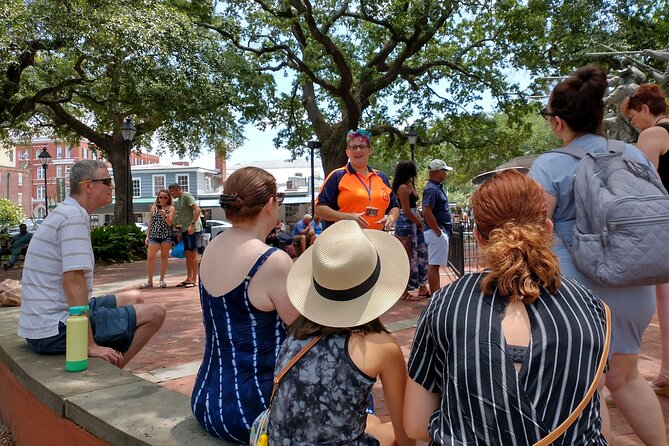
If you think you already know Savannah, this is the tour that quietly changes your mind. The city’s famous squares and historic streets are here, but the stories you hear focus on people who were pushed aside in the usual telling—Black residents, queer icons, Native leaders, and women who refused the limits placed on them.
The price is also part of the point. At $40 per person for about 2 hours, you’re paying for guided interpretation—someone connecting dots between places—rather than paying for another exhibit you might skim and forget. You’ll get a guided narrative that helps you notice what’s right in front of you while you’re still walking.
And the pace works for a standard sightseeing schedule. You can fit it between other plans because you’ll be in and out in about two hours, with multiple start times available so you can choose what best matches your day.
You can also read our reviews of more historical tours in Savannah



Franklin Square: Haiti’s Revolution Link, Literacy Clashes, and the Underground Railroad
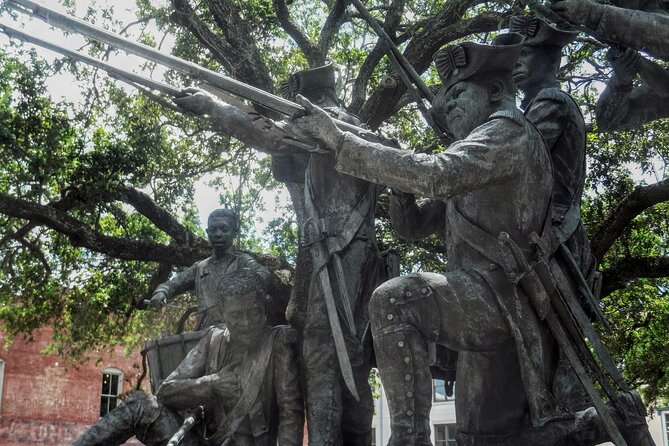
Franklin Square sets the tone fast. You’ll talk about Haiti’s volunteer role during the American Revolution, which reframes Savannah’s Revolutionary-era connections in a way that feels larger than one country fighting another.
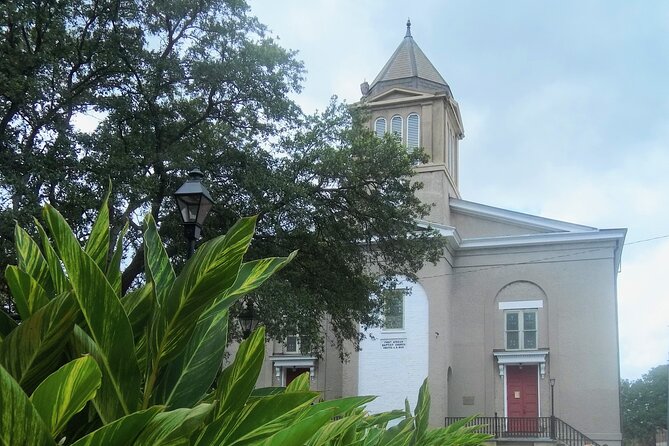
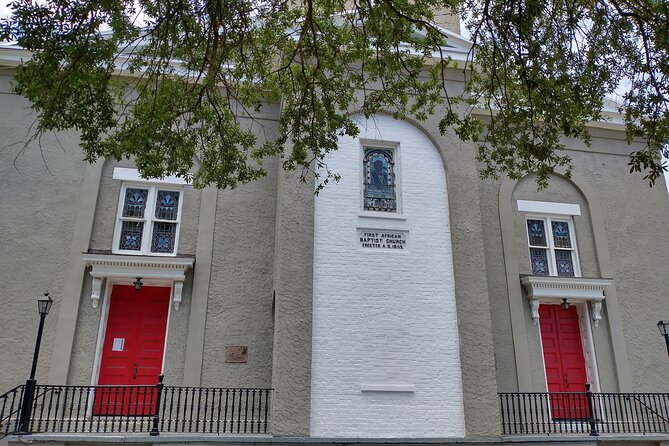
This stop also covers clandestine schools that taught literacy to Black students when education was outlawed, and it connects those barriers to the role of the First African Baptist Church as a foundation for community and survival. From there, you’ll learn how the church’s story ties into the Underground Railroad—so you’re not just hearing tragedy, you’re seeing how people built routes and resilience.
The upside of this stop is that it turns a “pretty square” into a living lesson. The one drawback is that, like many landmark-rich areas, it can get noisy around you, so it helps to keep close to your guide and listen even when cars and pedestrians get loud.
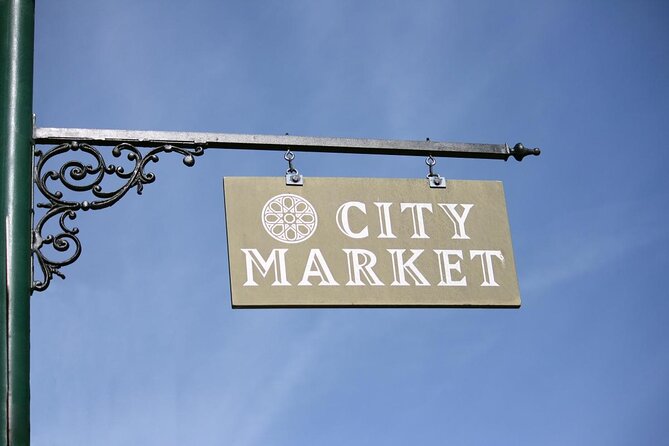
City Market: Lady Chablis and a Market That Turned Into a School
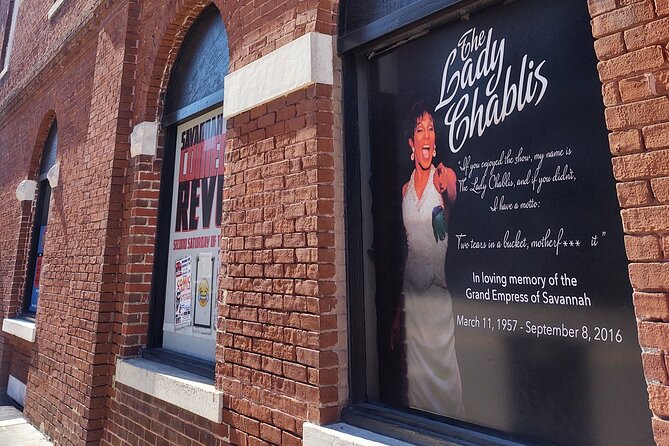
City Market is where the tour’s range shows. You’ll pass by Club One, the performance venue associated with Lady Chablis, a local LGBTQ icon whose influence helped shape Savannah’s modern identity.
Then you’ll move into something heavier: the building that had been used as a place where humans were sold as property. After emancipation, the same area was immediately converted into a freedmen’s school by some of the people who had been enslaved there.
This stop is powerful because it connects past exploitation to real educational transformation right on the same ground. It also gives you a more honest way to read the city’s commercial spaces—places that look like tourism today had very different meanings in the past.
Telfair Academy Front: Mary Telfair and What It Means to Preserve
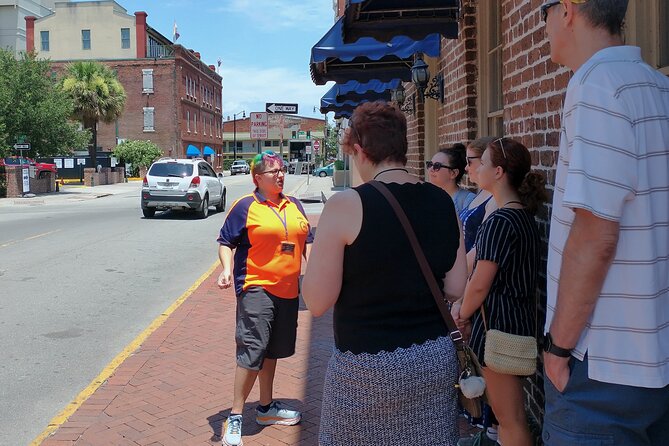
You’ll pause in front of Telfair Academy and hear about Mary Telfair, a woman who pushed back against the gender expectations of her time. The key takeaway here isn’t just that she was interesting; it’s that she started a preservation legacy that still affects how you see Savannah today.
This stop is short, but it matters because it reframes who gets credit for saving history. Instead of assuming preservation just “happened,” you see how individual choices helped shape what remains visible now.
If you prefer tours where every stop is long and detailed, this one might feel brief. But as a pacing reset, it works well, especially because you’ll keep moving to deeper stories.
Wright Square: Tomochichi and Mary Musgrove’s Role in Savannah’s Formation
Wright Square brings Native leadership into the center of the story. You’ll learn about Tomochichi, described as the chief and founder of the Yamacraw tribe, and about Coosaponakeesa (Mary Musgrove), a Creek woman.
The tour frames these figures as instrumental in shaping Savannah as much as the well-known European founders. The effect is practical: once you hear this, you’ll look at Savannah’s origin stories differently, because you’ll understand the negotiations and decisions weren’t one-sided.
The best part of this stop is how it balances recognition. The city often highlights certain names, but this walk insists that Native figures weren’t background characters. The only real consideration is that these stories may be unfamiliar if you’re used to standard “founding myths,” so give yourself room to absorb.





Juliette Gordon Low Birthplace: Scouts, Unusual Family Paths, and Hearing Loss
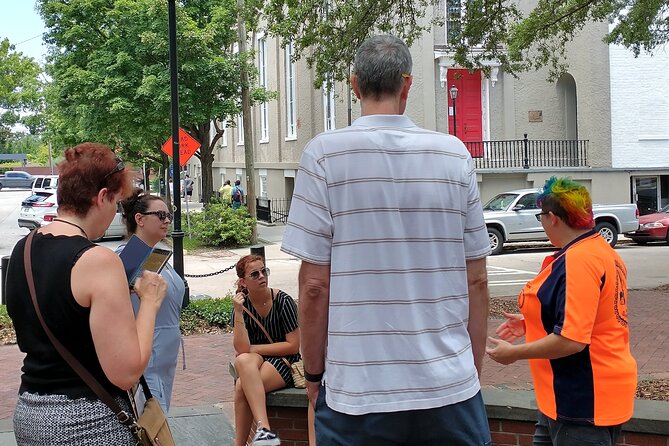
Next you’ll cover Juliette Gordon Low, tied to the founding of the Girl Scouts, but the tour doesn’t stop at the headline. You’ll hear about unconventional female family members and how they influenced the roles women would play later.
There’s also a human detail you won’t get from a standard plaque: the tour touches on Juliette’s hearing loss. It makes the story feel grounded, not just inspirational.
This is a quick stop, so you’ll want to listen closely for the connections the guide makes. If you’re a parent or you’ve got kids with you, this is also one of the easier stops to connect to future-focused themes of leadership and capability.
Chippewa Square: Susie King Taylor, a Haitian Catholic Church Site, and Wartime Teaching
At Chippewa Square, the tour briefly discusses the original site of a Savannah Catholic Church founded by the Haitian community mentioned earlier. It’s a reminder that Haitian influence shows up in more places than you might expect, even when the city’s surface story says otherwise.
Then the focus shifts to Susie King Taylor, described as a self-freed woman who served as a nurse and teacher during the Civil War. You’ll also hear that she published a memoir and helped open a school for Black children just off this area.
This stop lands well because it mixes caregiving, education, and authorship. It answers the question many history tours dodge: not only what happened, but how people built learning and health systems when they were denied basic rights.
Madison Square and Field Order 15: Practical Reparations and a Blocked Plan
Madison Square is where the tour pushes into policy and consequences. You’ll stop in front of the Green-Meldrim house and talk about Field Order 15, a plan issued by General Sherman but formed and negotiated by a group of 20 Black pastors and community leaders led by Garrison Frazier.
The story connects the idea of reparations to something concrete and procedural. And then you’ll learn why implementation was prevented, which gives the stop an unsettling clarity: the gap between promises and outcomes wasn’t random.
This is one of the more thought-provoking parts of the walk, especially if you like history that relates to present-day debates. You’ll likely want to keep questions handy, because this topic invites follow-ups.
Monterey Square Finale: Jim Williams, Restoration Energy, and Pulaski’s Intersex Possibility
The walk ends in Monterey Square near the Count Casimir Pulaski monument, and the finale ties Savannah’s identity to people who shaped its future. You’ll hear about Jim Williams, known from Midnight in the Garden of Good and Evil, but also recognized here as a prominent Savannah gay man who helped begin the city’s restoration movement.
Then the tour pivots to the Count Casimir Pulaski monument story with a surprising update: recent discovery suggests he was likely an intersex person. The tour uses that information to broaden how you think about historical labels and what we assume from appearances.
This ending works because it loops you back to the theme of the whole tour: people often get reduced to a single story, while the real life behind the person is more complex. It also leaves you with a “now I notice this” feeling that continues after the tour is over.
Price, Pace, and Group Size: Getting Value Out of Two Hours
For $40, you’re getting a compact, guided route that hits eight stops in about two hours. That’s not a long time, so the guide has to make every pause count—which is often exactly what you want on a vacation day.
The group size cap of 20 travelers is meaningful. A smaller group makes it easier to hear the guide, ask questions, and keep pace without feeling like you’re herding cats. In the reviews, Sargon is specifically praised for being easy to hear even when there’s road noise around the squares, which you’ll appreciate once you’re out there.
You’ll also have a mobile ticket, which is convenient when your phone is already your wallet, map, and camera. Since it’s near public transportation, you can plan a simple route to and from the start without a big detour.
What to Expect From the Walking Route (and How to Prepare)
This tour is designed for walking between squares and landmarks, with short segments where you’ll likely stop and listen. The key constraint is the ability to walk or roll for around 15 minutes without stopping—so bring that into your planning.
Practical prep tips:
- Wear comfortable shoes that handle cobblestones and uneven sidewalk sections.
- Bring water, especially in warmer months.
- If you’re sensitive to noise, position yourself where you can hear the guide clearly at each stop.
- If you use a mobility aid, you’ll want to plan ahead based on that 15-minute movement guideline.
One thing I like about this style of tour is that it’s built around observation. Even if you don’t know the names yet, you’ll leave knowing what to look for next time you walk past the same squares.
Who Should Book Rising Voices—and Who Might Skip It
This tour is best for you if you want Savannah with context and you like your history human, not sanitized. It’s also a smart choice if you’re the kind of traveler who spends time reading plaques and noticing details, because the guide turns those details into a story you can carry forward.
It’s also a strong fit for people who like LGBTQ history, Black history, and Native history in a walkable format, rather than only through museums. And if you value discussion, the guide’s tone is reported as friendly and question-friendly, with the ability to adjust based on what the group wants to know.
Skip it if your day requires long rides instead of walking, because the route depends on movement between stops. And if weather is bad, expect the tour to be rescheduled or refunded, since it requires good conditions to run.
Should You Book Rising Voices, Underrepresented History in Savannah?
If you want the Savannah experience that goes beyond postcards, I’d book this. The value is in the way the guide connects place to people—Haiti’s revolutionary ties, clandestine schools, Lady Chablis, Tomochichi and Mary Musgrove, Susie King Taylor, reparations efforts tied to Field Order 15, and a restoration story that ends with Pulaski’s complicated identity.
At $40 for about two hours, it’s a well-priced way to see the city with new eyes. Just be sure you’re comfortable with the walking requirement and that you can be flexible if the weather doesn’t cooperate.
FAQ
How long is the Rising Voices walking tour?
It runs for about 2 hours.
How much does the tour cost?
The price is $40.00 per person.
Where does the tour start and end?
It starts at 901 W Saint Julian Street, Savannah, GA 31401, and ends at Monterey Square (11 W Gordon St, Savannah, GA 31401).
Do you get a mobile ticket?
Yes, the tour uses a mobile ticket.
Are there multiple start times?
Yes, you can choose from start times to fit your schedule.
What is the group size limit?
The tour has a maximum of 20 travelers.
Is this tour suitable if I use a wheelchair or need frequent stopping?
It’s not recommended for guests who cannot walk or roll for 15 minutes without stopping.
Can I bring a service animal or a pet?
Service animals are allowed. Well-behaved pets are allowed.
What if weather is poor?
The experience requires good weather. If it’s canceled due to poor weather, you’ll be offered a different date or a full refund.
Can I cancel for a refund?
Yes. You can cancel up to 24 hours in advance for a full refund.