REVIEW · SAVANNAH
2 Hours Savannah Architectural Tour
Book on Viator →Operated by Noble Jones Tours, LLC · Bookable on Viator
Savannah reads like a textbook in stone. In two hours, this small-group walk uses long-range audio to make the architectural stories easy to follow, and you leave with a landmark map to guide your next self-walk.
The big win here is that you’re not just looking at pretty buildings. You’re learning who designed them, why they survived, and how Savannah’s layout helped shape what you see today.
One catch: it’s outdoor-only, so you won’t enter the house museums during the tour.
In This Review
- Key things you’ll notice on this tour
- Why Savannah’s architects are the real story
- Price and what $50 buys you in Savannah time
- Route flow: from 124 Abercorn St to Lafayette Square fountain
- Listening clearly: headphones and 150-foot talk tech
- Stop-by-stop: nine architectural lessons in walking distance
- Stop 1: Juliette Gordon Low Birthplace Museum and William Jay
- Stop 2: Harper Fowlkes House and Charles Klusky
- Stop 3: Orleans Square and the Bullochs House site
- Stop 4: SCADstory and Savannah’s original armory
- Stop 5: Gryphon Tea Room and the Scottish Rights Temple
- Stop 6: Mercer Williams House Museum and architect John Norris
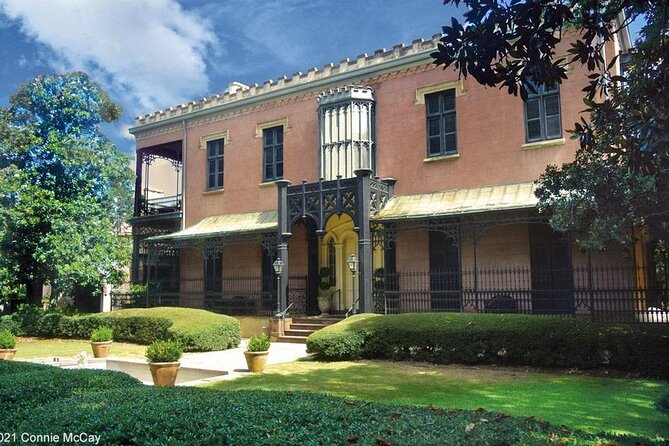
- Stop 7: Green-Meldrim House and John Norris again
- Stop 8: Girl Scout First Headquarters and Andrew Low
- Stop 9: Lafayette Square, St. John the Baptist Cathedral, and Hamilton-Turner House
- The landmark map: how to keep exploring after the walk ends
- What the guide experience tends to feel like
- Things to watch for before you book
- Who this tour suits best
- Should you book this 2-hour Savannah architectural tour?
- FAQ
- How long is the Savannah Architectural Tour?
- What is the price per person?
- Is admission to the house museums included?
- Does the tour use headphones or an audio system?
- Where does the tour start and end?
- Is the tour offered in English?
- What is the maximum group size?
- What is the cancellation policy if weather is bad or plans change?
Key things you’ll notice on this tour
- Long-range listen-to-talk audio keeps the guide clear even down the sidewalk
- A take-home landmark map helps you keep seeing on your own right after
- Smaller group size (max 10) means questions are welcome and easier to answer
- Architects and master builders get the spotlight, not just famous squares
- Exterior-only viewing at places that are often inside-ticket attractions
- A route through quieter residential streets, so you feel less tour-busy
Why Savannah’s architects are the real story
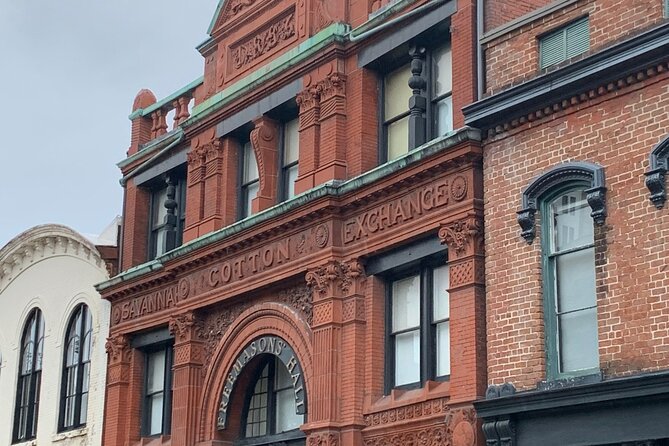
If you love Savannah’s look—those sculpted facades, the courtyards, the square-and-street geometry—this tour gives you the “who and why” behind it. I like that it treats architecture like a puzzle with clues. You learn names, but you also learn the design logic: materials, layout choices, and what it took to preserve buildings through centuries of change.
The tour also makes a point about the city’s preservation mindset. You’ll hear how certain homes and institutions managed to survive when development and time could have erased them. That context matters. Without it, you might just think you’re seeing old stuff. With it, you start seeing decisions.
You can also read our reviews of more tours and experiences in Savannah



Price and what $50 buys you in Savannah time

At $50 per person for about two hours, this is priced for serious walkers who want a guided framework. The value isn’t only the route. It’s the way the tour is built to keep you connected to the guide—especially when you’re moving through busy streets and across squares.
Two details make the cost feel more justified:
- You get a take-home landmark map so the tour keeps paying off after it ends.
- The guide uses an audio system designed to be heard up to 150 feet away, with optional headphones.
If you’re the type who hates piecing together your own architecture route, this can save time. You get a curated path through key stops that many general walking tours skip.
Route flow: from 124 Abercorn St to Lafayette Square fountain
The walk starts at 124 Abercorn St and finishes at 330 Abercorn St, ending at Lafayette Square in front of the fountain. That matters because you’re not just walking “in circles.” You’re working from one anchor point toward a natural end in one of Savannah’s most iconic squares.
Along the way, the route mixes institutional buildings, residential-style masterpieces, and landmarks that people often walk past without noticing their architectural fingerprints. You’ll also cover some ground through areas that feel calmer than the most crowded downtown blocks.
And yes, it’s a walking tour. You should expect to spend the bulk of the two hours outside, on city sidewalks, while learning and moving.
Listening clearly: headphones and 150-foot talk tech
Savannah’s charm can also mean noise. Cars, street chatter, and wind can make outdoor tours frustrating.
This one uses a listen-to-talk system that’s designed so you can hear the guide clearly up to 150 feet away, and headphones are optional. I like this approach because it doesn’t rely on everyone standing close enough to hear. It’s also helpful for mixed groups—pairs spread out a bit, people stopping for photos, and the occasional question that takes an extra minute.
Stop-by-stop: nine architectural lessons in walking distance
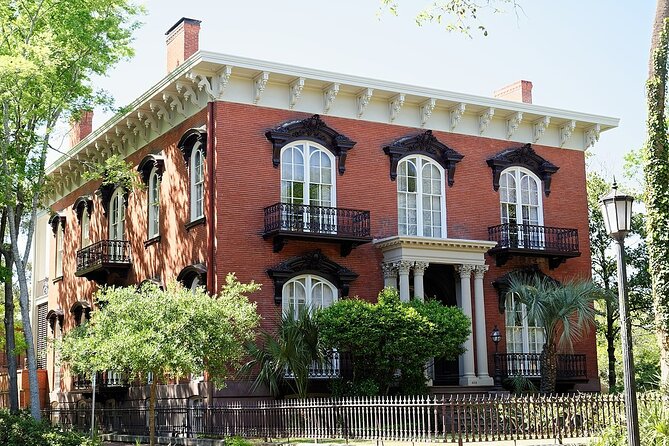






Stop 1: Juliette Gordon Low Birthplace Museum and William Jay
You begin with the Juliette Gordon Low Birthplace Museum area and a discussion that ties Savannah’s architectural identity to William Jay—often described as a major figure behind the city’s architectural direction. This opening stop sets a theme for the rest of the tour: you’ll keep noticing how certain architects shaped what “belongs” in Savannah’s squares.
Even if you’re not stepping inside, the talk helps you read what you’re looking at with more intention. The time here is about 10 minutes.
Practical tip: Use this first stop to spot the details the guide points out. If you miss a term early, you can catch up quickly here.
Stop 2: Harper Fowlkes House and Charles Klusky
Next comes the Harper Fowlkes House, where the focus shifts to Charles Klusky. This is the kind of stop that feels like a reward for looking a little closer. Instead of being only about a single famous square, you start connecting architects to specific building characters.
The stop runs around 10 minutes.
Possible drawback: Because it stays outdoor-only, you’ll mainly get exterior reading and story context, not the full interior experience you might associate with a museum stop.
Stop 3: Orleans Square and the Bullochs House site
At Orleans Square, the conversation expands from one building to what the area used to contain. You’ll hear about the Harper Folkes House and the site of what was once The Bullochs House. This is where Savannah starts to feel like layers—because a square isn’t just a pretty backdrop. It’s a record of what stood there, what changed, and what lasted.
This stop is about 10 minutes.
Why it’s valuable: Squares are the visual map of Savannah. Learning the site stories makes the geometry feel meaningful, not just decorative.
Stop 4: SCADstory and Savannah’s original armory
Then you’ll reach SCADstory, with a discussion about Savannah’s original armory and William Gibbons Preston. Armory buildings often carry a different architectural message than private homes: sturdier intentions, more civic presence, and a design language tied to function.
This stop is about 15 minutes, which signals how much narrative the guide packs into it.
Tip: Listen for how the guide contrasts the building’s purpose with its architectural form. That contrast helps you recognize patterns you can later spot on your own.
Stop 5: Gryphon Tea Room and the Scottish Rights Temple
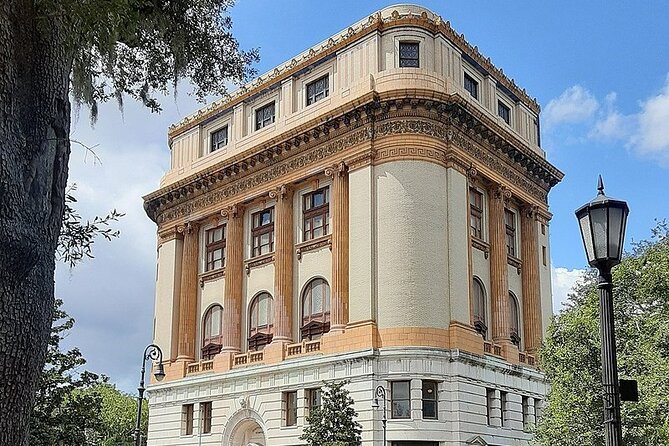
At the Gryphon Tea Room, the talk moves into a fascinating side of Savannah architecture: the Scottish Rights Temple, described as an appendage of the Freemasons, with architect Hyman Witcover in the mix.
This stop is about symbolism as much as structure. Fraternal organizations shaped meeting spaces, and those spaces often left architectural fingerprints. You’ll start noticing how civic and social groups influence what gets built, not just who gets the credit.
Time here is about 15 minutes.
Consideration: If you’re only here for house styles and squares, this could feel like a slightly left turn. But if you want the full picture of who shaped Savannah, it’s one of the more memorable stops.
Stop 6: Mercer Williams House Museum and architect John Norris
Next is the Mercer Williams House Museum, with discussion tied to architect John Norris and preservationist Jim Williams. Here, the tour’s preservation theme becomes more than background noise. You’ll hear how survival often depends on people who fight for the building, not just what the building is made of.
This stop runs about 15 minutes.
Why it matters: When you connect design to preservation, you stop treating old buildings like static objects. You start seeing them as living legacies.
Stop 7: Green-Meldrim House and John Norris again
At the Green-Meldrim House, the focus stays on John Norris, giving you a chance to compare his architectural fingerprints across different projects. This is a clever pacing move. Repeating an architect helps your brain learn faster: you’re not just collecting names; you’re building recognition.
This stop is about 15 minutes.
Tip for photos: Look for repeat motifs. The guide’s commentary will steer you to details you might otherwise overlook.
Stop 8: Girl Scout First Headquarters and Andrew Low
Then the tour shifts into a Savannah landmark with Girl Scout First Headquarters and discussion that ties Andrew Low and architect John Norris together. This stop blends architectural reading with social history. You’re reminded that buildings aren’t only about style—they also house movements and missions.
Time here is about 10 minutes.
Practical note: If you like architecture but also like people stories, this stop is a nice change of pace from strictly residential mansion talk.
Stop 9: Lafayette Square, St. John the Baptist Cathedral, and Hamilton-Turner House
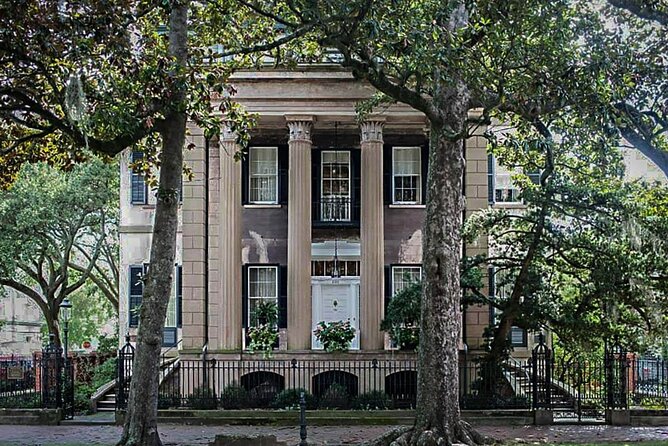
Your final stop brings you to Lafayette Square, where the guide connects St John the Baptist Cathedral with J.D. Hall’s Hamilton-Turner House. This is a satisfying way to end: you finish in the center of the visual system that defines Savannah’s downtown—squares, set pieces, and architectural contrasts.
Time here is about 10 minutes, and it’s also where the walk ends in front of the fountain.
Why the ending works: You’re not dumped at a random corner. Lafayette Square gives you a place to orient yourself for whatever you choose next.
The landmark map: how to keep exploring after the walk ends
You leave with a take-home landmark map, designed to help you guide yourself immediately after the tour. I like this because it turns a guided experience into an ongoing plan.
Use it in a simple way:
- Mark a couple of extra exterior stops you want to see on your own
- Plan around your next meal or museum timing
- Re-walk the route segments you found most interesting (architects, squares, or institutional buildings)
If you’ve got only one or two extra hours after, the map helps you keep your time focused instead of wandering.
What the guide experience tends to feel like
The tour runs with small groups—maximum 10 travelers—and the guide actively invites questions. In past departures, guides such as Kelsey (including Kelsey Palko) and Mike have been specifically mentioned for mixing architectural explanations with conversational back-and-forth.
That small-group size matters because Savannah’s architecture can get detailed fast. A bigger group can turn into a march. Here, you can slow down for a point or an answer without losing the whole group’s momentum.
Some guides also show practical care on tough days. For example, there’s been mention of a guide bringing supplies like water on hot days and even umbrellas if weather shifts. That’s not something to count on, but it’s a sign the guides pay attention.
Things to watch for before you book
This is a straightforward outdoor walk, so plan accordingly:
- It’s outdoor-only: house museum admissions are not included, and the tour doesn’t enter interiors.
- It needs good weather. If poor weather forces cancellation, you’ll be offered another date or a full refund.
- There’s a minimum number of travelers requirement, so if it doesn’t meet the threshold, you’ll be offered a different option or a full refund.
If you’re hoping for a museum entry circuit, this won’t be the right fit. If you want a focused architecture education while walking through key exterior stops, it’s a strong match.
Who this tour suits best
This works especially well if:
- You love architecture and want names, styles, and design reasons tied together
- You’ve visited Savannah before and want a version that goes beyond the most obvious stops
- You like learning outdoors at a calm pace, with time for questions
- You want an efficient route in about two hours without planning it yourself
It may not fit if:
- You specifically want interior rooms during the tour
- You’re very sensitive to walking time across uneven sidewalks
- You don’t want architect-focused content (the whole structure is built around that lens)
Should you book this 2-hour Savannah architectural tour?
I’d book it if you want the fastest path to understanding why Savannah looks the way it does. The combination of audio clarity, small group size, and a take-home map makes it practical. And the stop mix—William Jay, John Norris, preservation stories, and even fraternal architecture—gives you more variety than a generic city stroll.
Skip it only if interior access is your main goal. Since it’s exterior-only, you’ll need separate plans if you want to go inside houses and museums.
If you’re walking anyway, this turns your stroll into a real education—with a map that helps you keep that momentum after you reach the fountain at Lafayette Square.
FAQ
How long is the Savannah Architectural Tour?
It runs about 2 hours.
What is the price per person?
The price is $50.00 per person.
Is admission to the house museums included?
No. This is an outdoor walking tour, so admission to house museums is not included.
Does the tour use headphones or an audio system?
Yes. The tour provides listen-to-talk technology, with optional headphones, designed so you can hear the guide up to 150 feet away.
Where does the tour start and end?
It starts at 124 Abercorn St, Savannah, GA 31401 and ends at 330 Abercorn St, at Lafayette Square in front of the fountain.
Is the tour offered in English?
Yes, it’s offered in English.
What is the maximum group size?
The tour has a maximum of 10 travelers.
What is the cancellation policy if weather is bad or plans change?
You can cancel for a full refund up to 24 hours in advance. If poor weather cancels the tour, you’ll be offered a different date or a full refund.