REVIEW · SAVANNAH
History of Savannah Walking Tour
Book on Viator →Operated by Sarah Johnson · Bookable on Viator
Savannah can feel like a maze. This walking tour turns it into a story, with Sarah Johnson guiding you square by square. You’ll cover major landmarks in about 90 minutes, finishing at Forsyth Park’s famous fountain.
I especially like that the tour keeps moving while still giving you context for what you’re seeing. Second, you get stop-by-stop history across the founding era, the Revolution, slavery, the Victorian period, Irish influence, and the Civil War—without sitting in a classroom.
The main thing to watch is that it’s still a walking tour: expect uneven sidewalks and you won’t be going inside museums or paid sites, so you’ll rely on the guide’s explanations and quick exterior views.
In This Review
- Key highlights worth marking on your map
- From Chippewa Square to Forsyth Park: the quick orientation you’ll reuse all trip
- Why the 15-person limit is a real quality factor
- The stop-by-stop route: what each place teaches you
- Stop 1: Chippewa Square
- Stop 2: Juliette Gordon Low Birthplace Museum (quick look)
- Stop 3: Wright Square
- Stop 4: Owens-Thomas House & Slave Quarters (outside discussion)
- Stop 5: Colonial Park Cemetery
- Stop 6: Cathedral of St. John the Baptist
- Stop 7: Green-Meldrim House
- Stop 8: Jones Street
- Stop 9: Monterey Square
- Stop 10: Forsyth Park (end at the fountain)
- What’s included (and what you should plan on doing yourself)
- Pacing, comfort, and practical tips for a smooth walk
- Price and value: why $35 feels fair here
- Who should book this walking tour
- Should you book? My quick decision guide
- FAQ
- How long is the Savannah walking tour?
- Where does the tour start?
- Where does the tour end?
- How much does it cost?
- Is the tour offered in English?
- Is admission to museums or paid sites included?
- Is there a limit to the group size?
- Does this tour require good weather?
- Are service animals allowed?
- Is there free cancellation?
Key highlights worth marking on your map
- A tight 1.5-hour route that covers Savannah’s core squares and landmarks in a practical loop
- Sarah Johnson’s storytelling that connects people, places, and major turning points in the city’s past
- No museum entry time while still stopping near major sites like the Girl Scouts birthplace area
- Architecture + folklore vibes, including fun stories and lighter moments alongside the heavier topics
- A small group (max 15), which makes it easier to ask questions and keep the pace comfortable
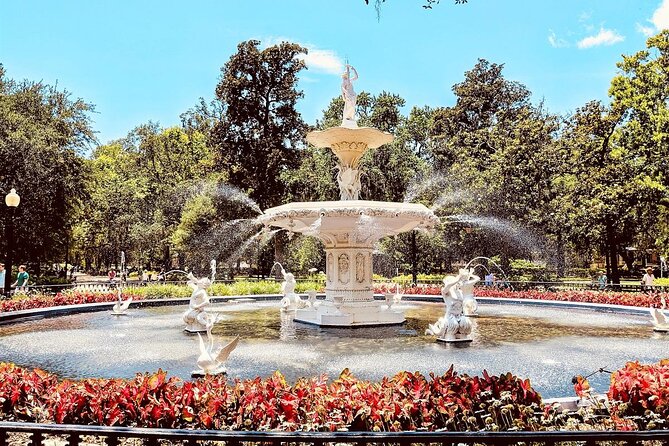
- Easy finish at Forsyth Park, so you can keep strolling after the tour ends at the fountain
From Chippewa Square to Forsyth Park: the quick orientation you’ll reuse all trip
If you’re trying to understand Savannah fast, this is the kind of tour that pays off later. You don’t just see pretty buildings and named squares—you learn how the city was laid out and why these places matter. Afterward, you’ll be able to look at a street, a church, or a cemetery gate and know what to look for.
The route is built around the Historic District’s “decision points”: squares, the streets you’ll keep hearing about, and the major civic and cultural landmarks. That matters because Savannah’s beauty is tied to its planning. When you understand the planning, the city stops feeling random.
And because it’s small-group paced, it tends to feel like a walk with a local historian—not a rushed herd. You’ll have time to ask questions, and you’re not trapped in a bus-style timeline.
You can also read our reviews of more walking tours in Savannah



Why the 15-person limit is a real quality factor
Small groups change the feel in two ways. First, your guide can slow down for the questions that actually interest you. Second, it’s easier to keep together on sidewalks that can be crowded, especially near popular squares.
If you’re the type who likes to stop and ask, this format fits. If you need total quiet, it still works—just know the tour includes commentary and conversation.
The stop-by-stop route: what each place teaches you
This tour is designed as a sequence. Each stop adds a chapter, and the next one lands better because you just learned the setup.
Stop 1: Chippewa Square
You start in Chippewa Square, where your guide talks about James Oglethorpe and the founding of Savannah. It’s a smart opener because it gives you the “why” before you look at the “what.”
You’ll also learn how the city’s early goals shaped the layout you’re about to walk through. This first stop is brief, but it sets the tone for everything that follows.
Stop 2: Juliette Gordon Low Birthplace Museum (quick look)
Next comes a stop near the birthplace area of Juliette Gordon Low, with a short discussion of how the Girl Scouts were founded. Even without museum entry, this reminder is useful because it adds a later layer of Savannah’s identity beyond the colonial and war eras.
Think of this as a cultural checkpoint: Savannah isn’t only old brick—it’s also where American stories kept growing.
You can also read our reviews of more historical tours in Savannah





Stop 3: Wright Square
At Wright Square, you’ll hear about Tomochichi and the Native American tribe who helped support the early colony. This is one of those stops that makes the founding story feel more human and less like a textbook.
The takeaway you should expect: early survival wasn’t only about European plans. It depended on relationships that shaped what Savannah became.
Stop 4: Owens-Thomas House & Slave Quarters (outside discussion)
Then you’ll stand by the Owens-Thomas house area and slave quarters to talk about how slavery impacted early Savannah history. This is a heavier topic, but it’s handled as part of the city’s real timeline, not as an afterthought.
If you come to Savannah expecting only romantic photos, this stop is the correction you need. It also helps you interpret other sites afterward, because you’ll start connecting the dots between wealth, labor, and architecture.
Stop 5: Colonial Park Cemetery
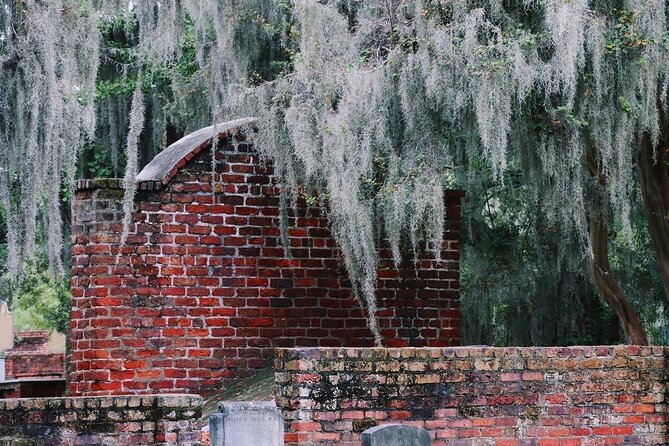
Colonial Park Cemetery is where the tour slows in a good way. You’ll hear what life—and death—could look like during the Victorian era in Savannah.
A memorable detail from the tour’s storytelling is the explanation of the phrase dead ringer, which comes up in a discussion that ties language to what people saw and feared. If you like history with small human hooks, this stop is one to look forward to.
Stop 6: Cathedral of St. John the Baptist
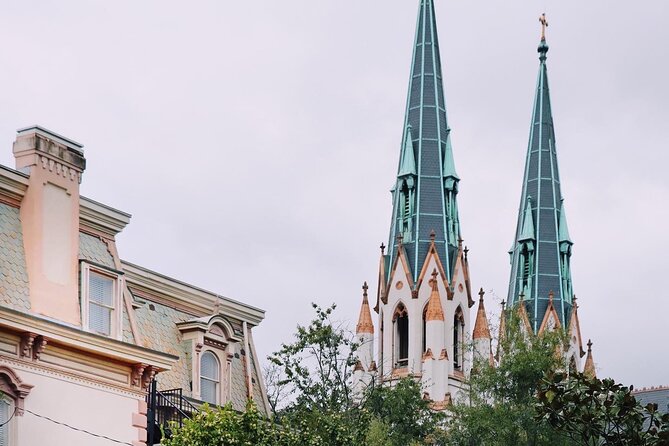
At the Cathedral of St. John the Baptist, the guide talks about the influence a large Irish community had on Savannah. This helps explain why you see certain religious buildings and cultural patterns in the city.
It also keeps the tour from feeling like it only covers one era. You’re seeing how different immigrant communities added to Savannah’s public life.
Stop 7: Green-Meldrim House
Next is the Green-Meldrim House, with a discussion of Savannah’s role during the American Civil War. The value here isn’t just the date. It’s learning what the city meant during the conflict and how that shows up in the physical place around you.
If you plan to do any independent reading afterward, this stop gives you a foundation so you’re not piecing together disconnected facts.
Stop 8: Jones Street
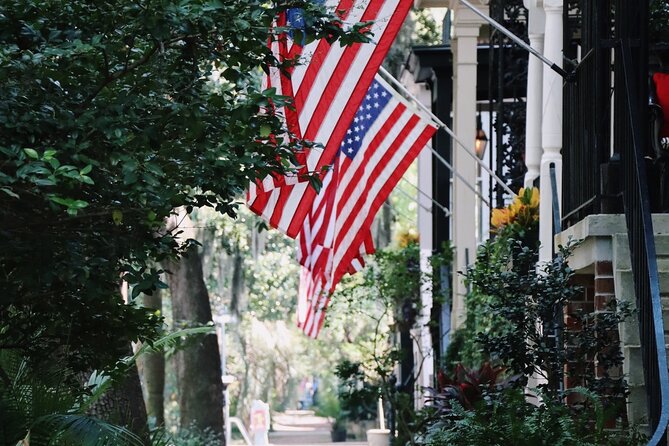
Then you’ll walk along Jones Street, widely considered the most beautiful street in America. You’ll get quick context for why people say that, but the main point is visual.
This is one of those pauses where you can look up at the houses, notice the spacing, and start seeing the square-and-street rhythm that makes Savannah work.
Stop 9: Monterey Square
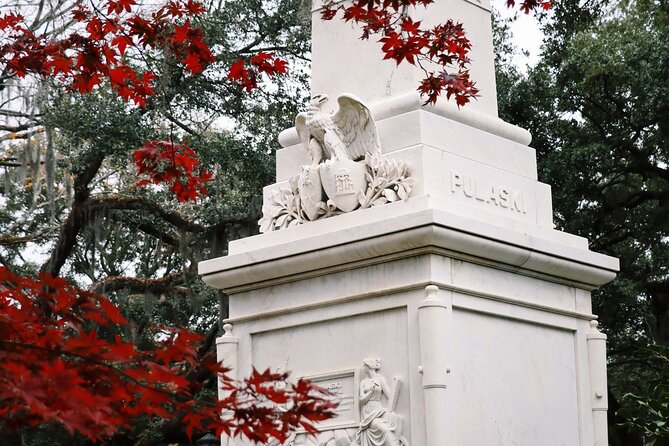
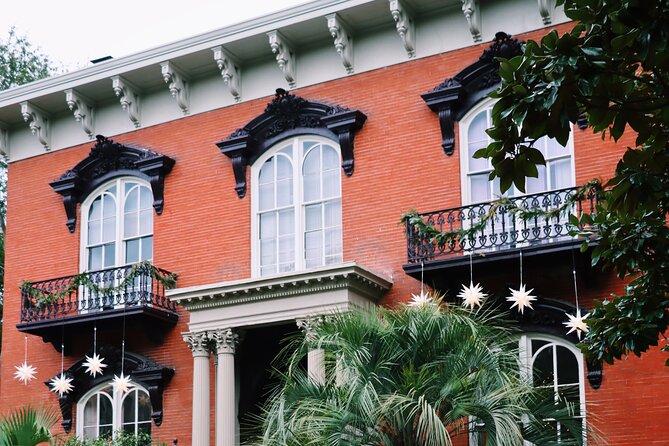
In Monterey Square, the guide discusses the Mercer-Williams House and the role General Pulaski played in the Revolutionary War. This is where the Revolutionary era story connects with the city’s notable residents and buildings.
If you’re into Revolutionary War details, this stop helps you keep them straight. If you’re not, it still works as a “major player” explanation that makes the square feel more important.
Stop 10: Forsyth Park (end at the fountain)
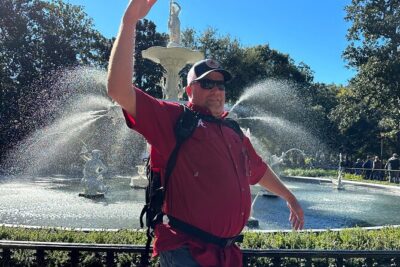
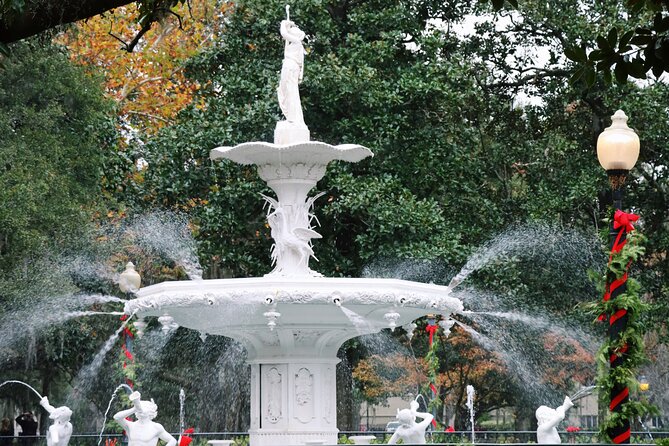
The tour ends at Forsyth Park, after you view the famous fountain. It’s a clean finish. You’re not stuck trying to catch a ride right away, and you can keep wandering at your own pace.
Because it’s an open-air, iconic space, it also gives your brain a place to land after the faster history stops. You can take photos, grab a snack nearby, and decide what to do next.
What’s included (and what you should plan on doing yourself)
This is a walking tour with exterior stops—so you’re not entering paid museums or businesses during the tour.
That’s not a downside if you plan your day right. It means you’re spending your time on orientation and explanations, not lining up and buying tickets. It also means you can later choose the one or two sites you most want to go inside, without being locked into a schedule.
If you’re the type who loves to read interpretive signs, you’ll find this tour pairs nicely with that. The guide gives you a framework, then you can confirm details at your own pace.
Pacing, comfort, and practical tips for a smooth walk
Duration is listed at about 1 hour 30 minutes. In real life, tours can run a touch longer when questions come fast or the group stays engaged—so I’d plan for roughly a couple hours total once you factor in movement and brief explanations.
Savannah sidewalks can be uneven. If you’re wearing slick shoes, you’ll feel it. Comfortable walking shoes matter more than you’d think for this one.
Also, bring your curiosity. The guide encourages questions and tends to keep the tone friendly, with some fun storytelling mixed in. On some tours, you might also hear light folklore or spooky side notes, which works well if you want history without a heavy lecture feeling.
Price and value: why $35 feels fair here
At $35 per person, this tour sits in the “worth it if it saves you time” category. You’re paying for three things:
- A guided route that covers key squares and landmarks in a tight loop
- Context that helps you understand what you’re looking at
- A guide-led pace for about 90 minutes without museum ticketing
If you’ve already done a hop-on/hop-off style bus tour, this tends to be the missing piece. The bus gets you around; the walking tour gives meaning to the buildings and squares you otherwise see without explanations.
And because the group max is 15, you’re not just buying content—you’re buying attention. That’s where the value shows up.
One more small planning tip: the tour is commonly booked about 21 days in advance. If you have travel dates tied to school breaks, weekends, or popular weather windows, booking ahead helps you avoid being stuck with a less ideal time slot.
Who should book this walking tour
This fits best if you want:
- An overview of Savannah’s founding and major eras without committing to multiple museums
- A guide who can answer questions as you walk
- A route that helps you get bearings quickly in the Historic District
- A mix of serious topics (including slavery and war) plus lighter storytelling moments
It’s also a good pick for first-time Savannah visitors. If it’s your first day and you’re trying to understand the city’s layout, this can set you up for better choices the rest of the trip.
Should you book? My quick decision guide
Book it if you want an efficient, square-by-square introduction that makes Savannah feel understandable. The $35 price makes sense because you’re not buying museum time—you’re buying a guided storyline, plus the chance to ask questions.
Skip (or pair differently) if you hate walking, don’t enjoy hearing about slavery or war, or you want deeper access inside museums during your main activity. Since the tour does not include entering paid businesses, you’ll need to plan separate museum stops if that’s your priority.
If you’re on the fence, here’s the practical rule: if you’ll be walking around Savannah anyway, get the guided orientation first. It helps everything you do afterward feel less like wandering and more like seeing.
FAQ
How long is the Savannah walking tour?
The tour is listed at about 1 hour 30 minutes.
Where does the tour start?
It starts in Chippewa Square, Savannah, GA 31401, USA.
Where does the tour end?
It ends at the big fountain in Forsyth Park, Savannah, GA 31401, USA.
How much does it cost?
The price is $35.00 per person.
Is the tour offered in English?
Yes, it is offered in English.
Is admission to museums or paid sites included?
No. The tour does not enter paid businesses or museums during the walk.
Is there a limit to the group size?
Yes. The maximum group size is 15 travelers.
Does this tour require good weather?
Yes. It requires good weather, and if it’s canceled due to poor weather, you’ll be offered a different date or a full refund.
Are service animals allowed?
Yes, service animals are allowed.
Is there free cancellation?
Free cancellation is available. You can cancel up to 24 hours in advance for a full refund, with local time cutoffs and no refund if you cancel less than 24 hours before the start time.