REVIEW · SAVANNAH
Explore Savannah Sightseeing Trolley Tour with Bonus Unlimited Shuttle Service
Book on Viator →Operated by Gray Line Savannah · Bookable on Viator
Savannah moves fast on a trolley. This 90-minute circuit helps you get your bearings in the Historic District while you roll past major landmarks like the Cathedral of St. John the Baptist and River Street. The biggest perk is the combination of an open-air ride and live narration, so you’re not just seeing pretty streets—you’re learning why they matter.
I especially like the way this tour covers a lot of ground without tiring you out. You’ll also get free hotel pickup (for hotels in the Historic District), which cuts down on the “how do I get there” stress before you even start.
One drawback to think about: audio and visibility can make or break the experience on an open trolley. A few people reported microphone issues and cloudy or smudged window panels, so if crisp photos and clear sound are a priority for you, plan accordingly.
In This Review
- Key things that make this trolley tour worth your time
- Where the Tour Starts: Martin Luther King Jr Blvd and a Simple 90-Minute Plan
- Rolling Past Savannah’s Big Names on the Historic District Circuit
- Forsyth Park: Live Oaks, Azaleas, and Why It’s the Photo Stop People Remember
- River Street’s Ballast Stones: The Waterfront Detail That Changes How You Look at It
- Savannah’s Famous Squares: Oglethorpe’s Grid and the Story of Chippewa Square
- Guides, Microphones, and the Pace: What to Watch for So You Enjoy the Ride
- Price and Value: Why $32.10 Can Still Feel Like a Deal
- Open-Air Comfort: Weather Planning and How to Get Better Photos
- Who This Tour Fits Best in Savannah
- Should You Book This Trolley Tour?
- FAQ
- FAQ
- How long is the Savannah trolley tour?
- Where does the tour start and end?
- Is hotel pickup included?
- What landmarks are included in the sightseeing route?
- Is the trolley open-air?
- How many people are on the tour at most?
- Can I bring a service animal?
- What if the tour is canceled due to weather?
Key things that make this trolley tour worth your time
- Open-air views with live commentary as you roll through the Historic District
- Historic District grid plan with 20+ squares traced back to 1733
- Forsyth Park’s iconic scenery: live oaks and azaleas, plus Victorian-era mansion backdrops
- River Street’s ballast-stone story that explains the look and history of the waterfront
- Small maximum group size (up to 35 travelers), which helps the tour feel less chaotic
- Hotel pickup in the Historic District plus a bonus shuttle option mentioned in the experience
Where the Tour Starts: Martin Luther King Jr Blvd and a Simple 90-Minute Plan
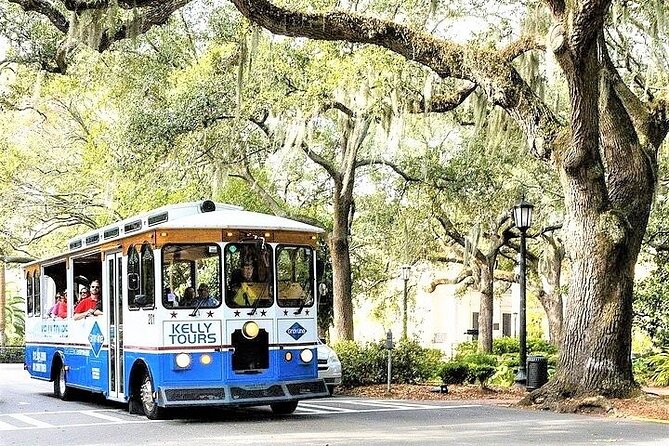
The tour meets at 301 Martin Luther King Jr Blvd and ends back at the same meeting point. That round-trip setup matters because it keeps the experience tight: you’re not navigating multiple transfers or trying to time your own rides across town.
The trip runs about 1 hour 30 minutes. That duration is a sweet spot for first-time visitors. You’ll see several major areas of Savannah, but you’ll still have plenty of time afterward to slow down and explore on your own (especially around the squares and the waterfront).
You’ll use a mobile ticket, which is convenient if you’re traveling light and don’t want paper clutter. And since the tour follows CDC guidelines and allows service animals, it’s built for general visitor comfort and practical logistics.
You can also read our reviews of more tours and experiences in Savannah.



Rolling Past Savannah’s Big Names on the Historic District Circuit
The core idea here is that the trolley lets you scan a wide swath of the Historic District without walking every block. Your guide points out famous homes, buildings, monuments, and squares as you ride through the city streets.
The tour highlights include stops and views connected to the Cathedral of St. John the Baptist, Forsyth Park, Historic River Street, and the Andrew Low House. Even if you don’t get out to linger at each place, you’ll get the “mental map” you’ll need later. That’s the real value of a trolley tour like this: it turns Savannah from a postcard into a place with connected stories and locations.
One note that helps you set expectations: the narration is delivered live, so the quality of the experience often tracks how clearly your guide’s audio works and how comfortable you are with the pace. A few guides got major praise by name—people specifically mentioned John, Dan, Steve, Stefanie, Chris, and Kathleen—and that’s a good sign. Still, if you’re sensitive to fast talking or strained microphones, keep reading for practical ways to handle that.
Forsyth Park: Live Oaks, Azaleas, and Why It’s the Photo Stop People Remember
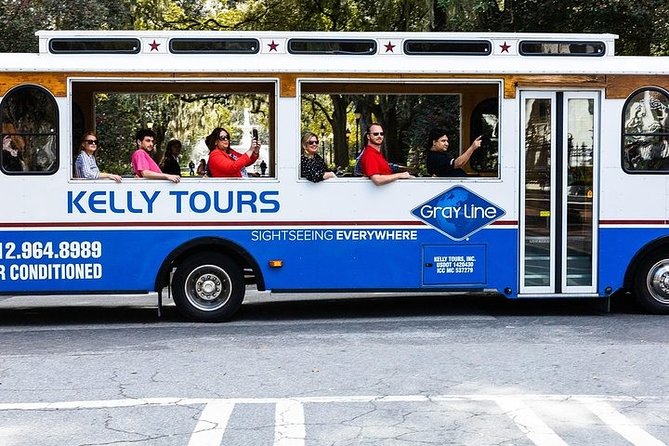
Forsyth Park is one of those places in Savannah that feels instantly recognizable, even if it’s your first time here. During the tour, you’ll get the visual sweep of 30 acres of live oak trees and lush azaleas, framed by ornate Victorian mansion scenery.
What I like about having Forsyth Park in the trolley route is that it gives you context. In a city of squares and side streets, it’s easy to feel like you’re only seeing neighborhoods as you pass them. Forsyth Park works like a reset button: you can look across open space, see the scale of Savannah’s greenery, and then connect it to what you’ll notice on later walks.
A practical consideration: because this is an open-air trolley, weather and sun angle can affect comfort. On warmer days, you’ll get that outdoor feel. On cooler days, the enclosed trolley sections (when used) can feel warmer. Either way, bring a layer you can adjust, and think about where the sun will hit when you want photos.
River Street’s Ballast Stones: The Waterfront Detail That Changes How You Look at It
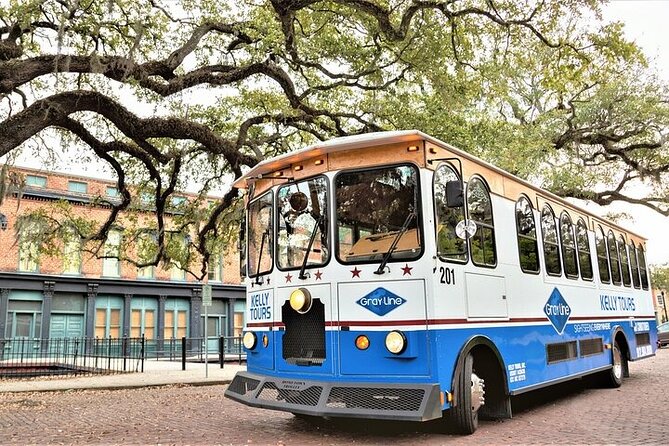
River Street is where Savannah’s history becomes something you can physically walk through. The tour calls out that the street is paved with 200-year-old ballast stones, originally used to weigh down cotton ships. That’s the kind of detail that makes you look again when you’re standing in front of the waterfront restaurants and boutiques.
Here’s the payoff for your time: once you understand the ballast-stone origin, River Street’s texture and character make more sense. You’re not just strolling a scenic strip—you’re moving across material that connects trade, ships, and the way the riverfront developed.
During the trolley portion, you also get an orientation to what River Street is today: dining, shopping, and historical monuments along the water. That’s useful even if you plan to spend your real time there later. The trolley helps you decide what direction to wander and what to prioritize when you’re off the vehicle.
Savannah’s Famous Squares: Oglethorpe’s Grid and the Story of Chippewa Square
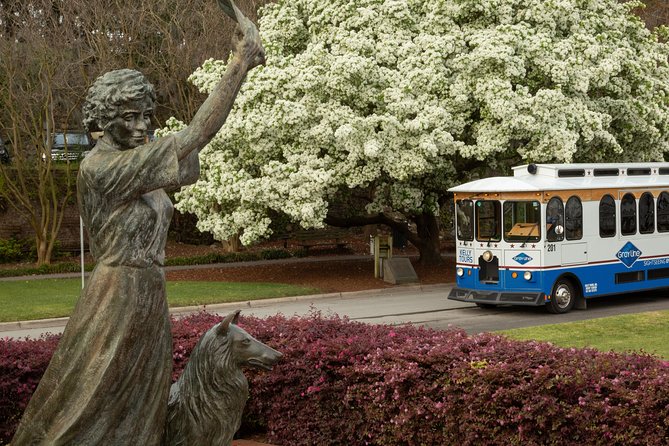
Savannah’s Historic District isn’t random. It’s built on a plan, and this tour gives you the “why” behind what you’ll see walking.
You’ll hear that the Historic District includes more than 20 city squares, laid out in a distinctive grid pattern by General James E. Oglethorpe in 1733. This matters because if you only walk without context, squares can blur together. With the Oglethorpe grid in mind, you start to recognize the structure behind the charm.
Two square stories that stand out from the tour content are Chippewa Square and Lafayette Square. Chippewa Square is named for an event near Canada’s border: the Battle of Chippewa in 1814, where American forces emerged victorious over the British near Niagara Falls. The square itself was built in 1815. It’s a neat example of how Savannah’s landscape names preserve history far beyond Georgia.
As for Lafayette Square, the tour references a historic home located on Lafayette Square, and it also frames the square as a commercial and social center of downtown Savannah. If you like to connect architecture to daily life, this is the section that helps you understand the city’s “today” alongside its “then.”



Guides, Microphones, and the Pace: What to Watch for So You Enjoy the Ride
This is the area where the tour can swing from great to frustrating. Many people praised their guide’s energy and storytelling, with named mentions like John and Dan and others such as Stefanie and Steve. That kind of recognition usually means the narration felt clear, fun, and genuinely useful for first-time orientation.
But you should also know what can go wrong. A few negative notes focused on two issues:
- Audio problems, including microphone malfunction or cracking.
- Pacing and clarity, with at least one report of speed-talk and difficulty understanding.
If you’re planning this as your main way to learn Savannah, I’d treat the narration as the product, not the bonus. You can improve your odds by choosing seating that helps you face the guide’s speaking direction and by keeping an eye on audio clarity early in the ride. If you wear hearing aids or you’re prone to missing speech in loud settings, bringing your own small listening aid can help.
There was also feedback about window visibility on the trolley. On some days, plastic panels or tarp-like window coverings can reduce clarity, especially with late-afternoon sun reflecting on smudges. If photography matters to you, plan to wipe off your expectations: shoot fewer perfect close-ups and more “I was here” angles, and focus on the big architectural views.
Price and Value: Why $32.10 Can Still Feel Like a Deal
At $32.10 per person for about 90 minutes, this tour sits in the “good value when it saves effort” category. The cost makes sense if you’re:
- short on time,
- new to Savannah,
- and want a guided map before you start walking.
Two items push the value up. First, you get live narration, which is what turns a drive-by into an actual orientation. Second, free hotel pickup is included for hotels in the Historic District. That saves time and reduces stress, especially if you’re juggling heat, parking, and where you’ll stand once you arrive.
Parking fees aren’t included, and there’s also a reminder that transportation for hotels outside the Historic District isn’t part of the deal. If you’re staying just outside the core, this can mean extra legwork or an added ride cost. Still, the overall structure tends to work well because the tour itself is efficient: it covers multiple landmark areas in a single sitting.
One extra value angle comes up in the experience context: some people referenced a bonus unlimited shuttle and also said their ticket worked for two days. Since that may vary by how the promotion applies to your booking, I’d confirm what’s active for your exact ticket. If it is included, it can turn the tour from one-and-done into a flexible city pass style advantage.
Open-Air Comfort: Weather Planning and How to Get Better Photos
Because it’s an open-air trolley, comfort depends on the day. You’ll want to think about sun, wind, and timing. The route is designed for sightseeing, but you’re still outdoors in an open vehicle, so dress like you’re going to spend real time outside.
Practical photo tip: don’t rely on perfect window clarity if the trolley has panels that can scratch or smear. Instead, use the ride for wide views—big facades, squares from a distance, and the long lines of streets. Save the close-up details for when you’re on foot afterward.
Also, remember the trolley is a moving viewing platform. If you want photos of signage or fine architectural details, take a few shots at predictable pull-in points during the route, then be ready to swap back to just watching and listening for the guide’s story beats.
Who This Tour Fits Best in Savannah
This trolley tour is a strong match if you want to:
- get your bearings fast in the Historic District,
- learn how squares, parks, and streets connect,
- and avoid the fatigue of walking every major area on day one.
Families often like it because the pace is manageable and the vehicle does the heavy lifting. Couples also tend to value it because it compresses a lot of Savannah into one easy chunk, leaving the rest of the day open for strolling with intention.
If you’re the type who dislikes narration, or you’re extremely picky about audio quality, you might want a different plan. But if you enjoy a guide’s storytelling, you’re likely to get your money’s worth—especially since named guides like Chris, Kathleen, John, and Stefanie show up in positive feedback.
Should You Book This Trolley Tour?
I’d book it if you’re arriving in Savannah and want a simple, organized way to understand the Historic District quickly. The best reason to choose it is that the trolley doesn’t just show pretty spots—it ties major locations to the city’s structure, including the Oglethorpe grid and the square naming stories like Chippewa Square.
I’d pause before booking if clear audio and crystal-clear photos are your top two priorities, because open trolley setups can vary day to day. In that case, consider dressing for weather, bringing your patience, and using the ride for wide views and orientation rather than trying to capture museum-grade detail through panels.
Overall: if you want a fast Savannah map with live storytelling and included Historic District hotel pickup, this is one of the more practical ways to start your trip. If the bonus shuttle is active for your ticket, it can add even more flexibility after the tour ends.
FAQ
FAQ
How long is the Savannah trolley tour?
It runs about 90 minutes (approximately 1 hour 30 minutes).
Where does the tour start and end?
It starts at 301 Martin Luther King Jr Blvd, Savannah, GA 31401, USA, and ends back at the meeting point.
Is hotel pickup included?
Yes, free hotel pickup is included from Historic District hotels.
What landmarks are included in the sightseeing route?
The tour includes views and mentions tied to the Cathedral of St. John the Baptist, Forsyth Park, Historic River Street, and the Andrew Low House, along with many homes, buildings, and squares.
Is the trolley open-air?
Yes, it’s described as an open-air trolley with views while you ride.
How many people are on the tour at most?
The tour has a maximum of 35 travelers.
Can I bring a service animal?
Yes, service animals are allowed.
What if the tour is canceled due to weather?
If it’s canceled due to poor weather, you’ll be offered a different date or a full refund.