REVIEW · SAVANNAH
Savannah 101, a History Tour (by Walk With Me Savannah Tours)
Book on Viator →Operated by Walk with Me Savannah Tours · Bookable on Viator
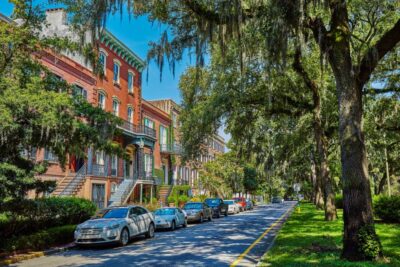
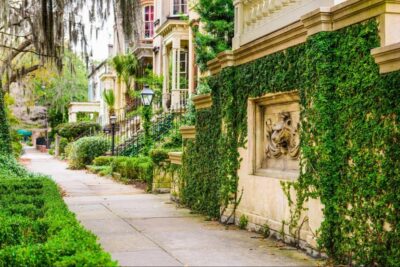
Savannah’s squares tell stories if you know where to look. This 2-hour walking tour strings together major landmarks with clear context on how people, wars, and architecture shaped the city. I like the local guide approach and how the route is built around Savannah’s layout of squares and famous blocks, which makes the whole place easier to understand fast.
I also like that you get architecture plus real-world history, not just a list of names. You’ll hear about everything from the city’s founding plan at Johnson Square to Civil War impacts, slavery-era trade connections along the waterfront, and later stories tied to major figures like Juliette Gordon Lowe and Flannery O’Connor.
The one drawback to consider is pace: this is a walking tour, and it’s not recommended if you can’t walk about 0.25 mile without resting. If you have mobility limits or want long stops to go inside places, you’ll probably want to pair it with optional add-ons.
In This Review
- Key Points You’ll Feel on This Tour
- Savannah’s Squares Are the Best Way to Learn the City
- Starting at Johnson Square: Founding Plans and Nathaniel Greene
- From the Waterfront Axis to River-Trade Power: Factors Walk and River Street
- Reynolds Square: John Wesley, the Olde Pink House, and Early Experiments
- Owens-Thomas House & Slave Quarters: Architectural Genius With an Important Choice
- Colonial Park Cemetery: Burial Practices and Union Occupation Clues
- Cathedral of St. John the Baptist: Catholic Congregations and Construction History
- Lafayette Square: Electricity, Flannery O’Connor, and Juliette Gordon Lowe
- Madison Square and Chippewa Square: Governance, Valor, and Local Institutions
- Green-Meldrim House: Sherman, Field Order 15, and the Aftermath for Black Communities
- Wright Square Finish: Juliette Gordon Low and Colonial Footprints
- How the Walk Works in Real Life (Time, Group Size, Tickets)
- Price and Value: Why $40 Can Be Worth It Here
- Who Should Book Savannah 101, and Who Might Skip It
- Should You Book This Savannah History Walk?
- FAQ
- How long is Savannah 101, and what’s the walking time like?
- Where does the tour start and end?
- How much does it cost?
- Is the ticket mobile?
- Are there stops inside buildings, or is it all outside?
- Are pets or service animals allowed?
Key Points You’ll Feel on This Tour
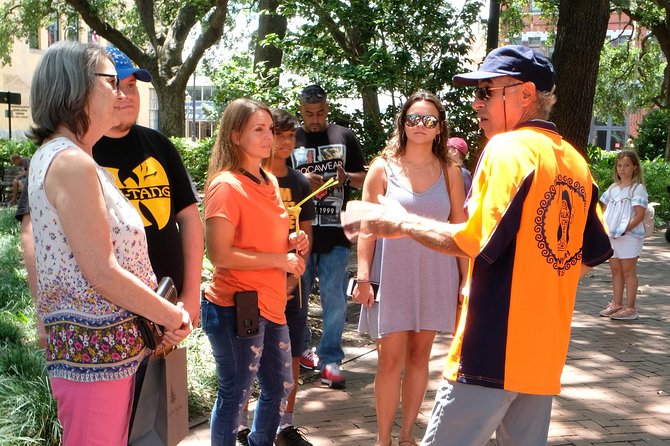
- A tight 2-hour loop from Johnson Square to Wright Square, designed for quick orientation
- Architecture stops with human stories, including the Owens-Thomas House and Slave Quarters area
- Civil War era context shown through cemeteries and the Union occupation
- Faith and cultural threads via the Cathedral of St. John the Baptist and neighborhood history
- Famous-life connections to Flannery O’Connor and Juliette Gordon Lowe
Savannah’s Squares Are the Best Way to Learn the City
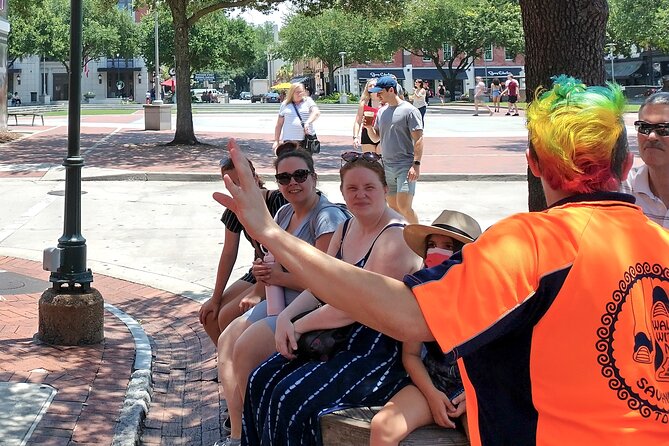
Savannah is easiest when you move square to square, not block to block. This tour leans into that. Starting at Johnson Square and ending at Wright Square keeps you in the historic core so your brain builds a map while you walk.
I like that the guide’s job is to connect the architecture and the people to bigger turning points. You’ll hear how the city layout grew from the founding plan, then how later waves of change—economic, social, and military—left marks you can still see.
It’s also a good “first or second day” style activity. If you’ve got limited time, this tour gives you names, themes, and sight anchors so you can enjoy the rest of Savannah with less confusion.
You can also read our reviews of more historical tours in Savannah



Starting at Johnson Square: Founding Plans and Nathaniel Greene
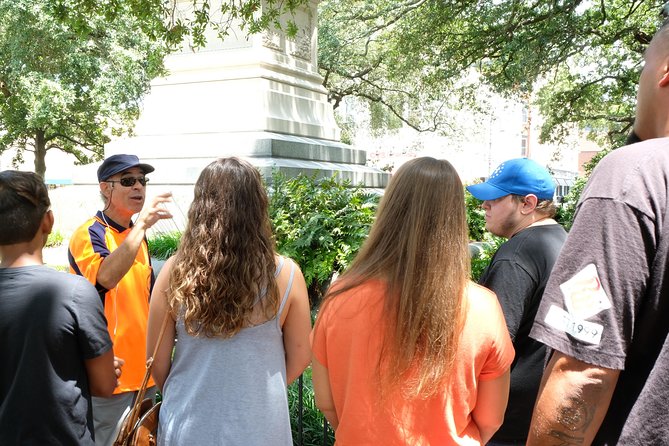
You begin at Johnson Square, the kind of place where you can almost feel the city’s original logic. Expect your guide to walk you through Savannah’s founding and the layout of the city—why the squares matter and how that design affected everyday life.
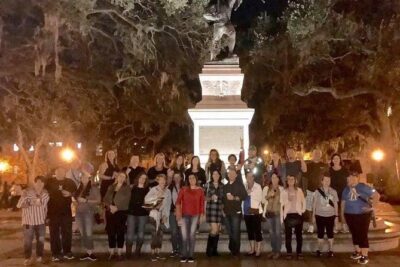
This stop also ties in Nathaniel Greene and his monument. Even if monuments aren’t your usual focus, it helps to know who gets honored and why in a city like Savannah, where Revolutionary and Civil War stories overlap through the same streets.
One practical note: Johnson Square is the ideal “warm-up” spot. It’s a strong start before you start moving toward the waterfront and the trade stories.
From the Waterfront Axis to River-Trade Power: Factors Walk and River Street
As you continue, you’ll get a guided look at the connection between Factors Walk and River Street. This part matters because it explains how Savannah’s economy ran through the river.
Your guide discusses the role of Georgia cotton trade and how that connected to the economy, the slave trade, and the Civil War. This is where the tour becomes more than pretty architecture. It shows how wealth systems and human suffering were tied to the city’s growth.
If you’re hoping for a gentle history walk only focused on buildings, this section may feel weightier. It’s still presented in a way that fits the walking pace, but it’s clearly not avoiding tough topics.
Reynolds Square: John Wesley, the Olde Pink House, and Early Experiments
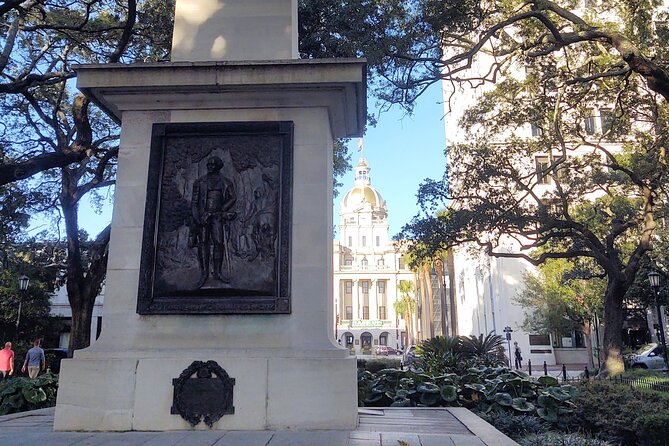
Next up is Reynolds Square. Here the tour shifts toward a mix of religion, architecture, and early Georgia ambition.
You’ll hear about John Wesley, and then you’ll also get context for the Olde Pink House. The tour also points to early agricultural experiments in Georgia, which helps connect the city to the surrounding landscape of the colony and what people were trying to make work.
This stop is one I’d recommend even if you’re not an architecture nerd. It shows how Savannah’s stories aren’t only about the river and wars; they’re also about ideas people tested when they were building a life in a new place.
Owens-Thomas House & Slave Quarters: Architectural Genius With an Important Choice
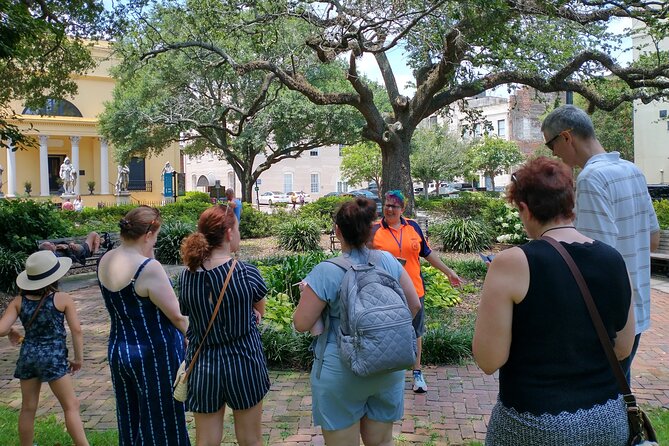
At the Owens-Thomas House & Slave Quarters area, you’ll get architecture-focused commentary about the house and architect William Jay. This works well as a “bridge” stop because the exterior can set the stage for deeper understanding.
Then comes the key decision point: the tour includes the walking discussion, but the inside house tour is not included. The information you hear outside is a strong match for the interior tour, and the house tour is described as highly recommended.
If you can spare extra time and you want the full effect, I’d plan ahead to add the inside visit. If not, don’t worry—you’ll still get meaningful context from the exterior stop. Just know that the story gets bigger once you step inside.






Colonial Park Cemetery: Burial Practices and Union Occupation Clues
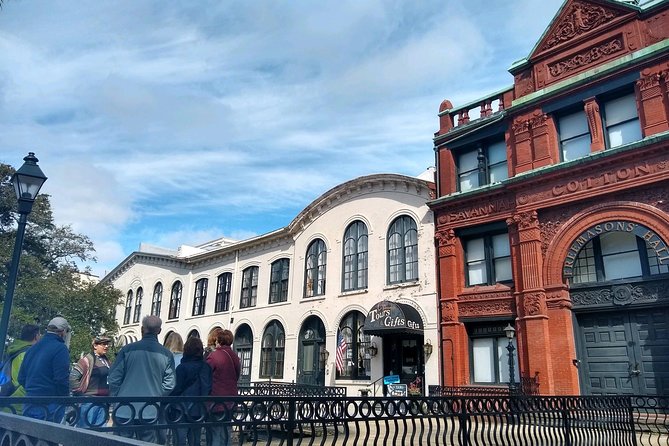
Colonial Park Cemetery is one of those stops where the setting does half the work. Your guide explains how Savannah treated cemeteries and common burial practices, which helps you read the place instead of just looking at it.
This stop also touches on disasters that befell the city and brings the Civil War era into view through the Union occupation of Savannah.
Cemeteries can feel like a pause from sightseeing, but in this tour they function like a historical timeline. You’ll leave this stop with a better sense of how Savannah coped with crisis and how the city changed under pressure.
Cathedral of St. John the Baptist: Catholic Congregations and Construction History
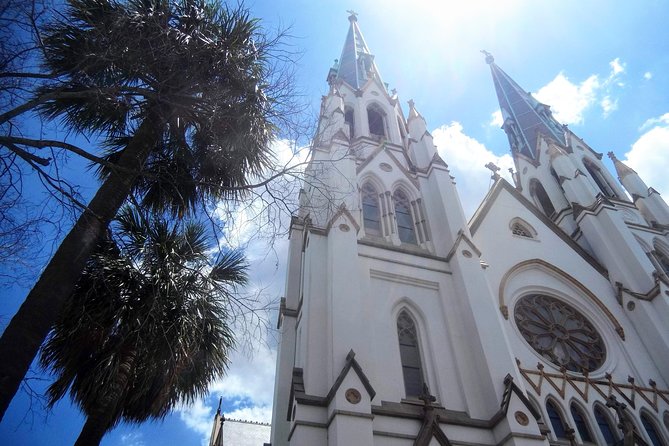
The Cathedral of St. John the Baptist stop is brief but meaningful. You’ll learn about Savannah’s Catholic congregations and the construction history of the cathedral, plus the guide will point out features you might otherwise miss.
Even if you’re not Catholic, this works because it explains how religious communities grew in Savannah and how that growth showed up in brick-and-stone form.
Because it’s a short stop, I’d treat it like a snapshot. If religious architecture is your thing, you’ll likely want to follow up later with a deeper independent visit.
Lafayette Square: Electricity, Flannery O’Connor, and Juliette Gordon Lowe
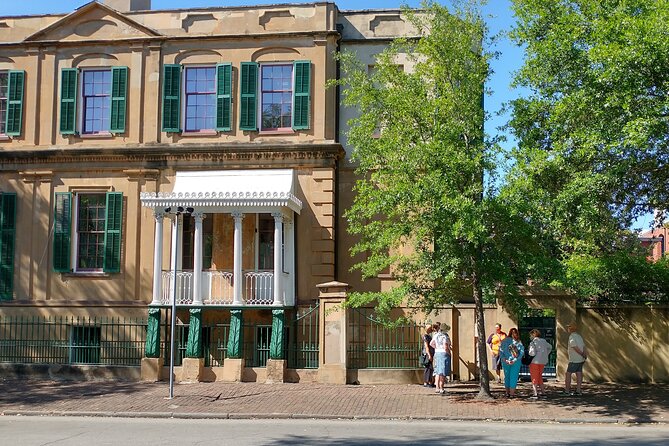
Lafayette Square is a great “people stories” moment. The guide discusses the Hamilton-Turner Inn, noted as the first home in Savannah to have electricity.
That little detail is more than trivia. It helps you see Savannah as a city that didn’t just preserve the past; it adopted new technology and lifestyles in its own way.
This stop also connects to literature and social history. You’ll hear about the childhood home of Flannery O’Connor, and you’ll also get context for Juliette Gordon Lowe’s childhood home and her later life. Juliette Gordon Lowe is a major name in the story of the Girl Scouts, and the tour uses the square to make that connection feel local and real.
Madison Square and Chippewa Square: Governance, Valor, and Local Institutions
After Lafayette Square, you’ll move through more squares where the tour keeps balancing politics, war, and architecture.
At Madison Square, the focus includes the Savannah Volunteer Guards’ Armory and the Scottish Rite Temple, plus a monument to Sergeant Jasper and his moments of Valor in the Revolutionary War. It’s a reminder that Savannah’s conflicts stretch back long before the Civil War.
Then you’ll reach Chippewa Square. Here you’ll hear about Oglethorpe’s role in governing the colony of Georgia and the implications of starting as a non-royal colony. The guide also briefly covers fires in Savannah, along with the Savannah Theater and the Independent Presbyterian Church.
This area is where the tour becomes especially useful for orientation. Once you understand why these institutions and monuments exist, you start noticing the same themes everywhere else in town.
Green-Meldrim House: Sherman, Field Order 15, and the Aftermath for Black Communities
The Green-Meldrim House stop shifts the story squarely into the Union occupation period. You’ll hear about the house’s innovative architecture, then about Sherman’s residency in Savannah.
The tour also addresses Field Order 15 and its impact on black communities both before and after its repeal. That’s a lot of important ground, and it’s handled as part of the exterior conversation rather than a long classroom lecture.
If you want a clear takeaway, it’s this: big national policies didn’t stay abstract. They affected real people living in real houses, including in Savannah.
This is one of the stops that can feel heavy. Give it your full attention, and if you need a breather afterward, the remainder of the route keeps a smoother rhythm.
Wright Square Finish: Juliette Gordon Low and Colonial Footprints
You end at Wright Square. The guide discusses the childhood home of Juliette Gordon Low and connects her life to the extended family and their accomplishments.
Then the stop widens again, covering historical use of the lots around Wright Square and the role and impact of Tomochichi and Mary Musgrove. It’s a helpful closing move because it brings the story back to people—who lived here, who influenced decisions, and how those influences shaped the city.
The route finishing a square away from where you started also makes logistics easier. You’re still in the same historic zone, and it’s simple to keep exploring afterward.
How the Walk Works in Real Life (Time, Group Size, Tickets)
This is about a 2-hour guided walking experience, and the stops are spaced so you can absorb the main points without spending the whole day in one place.
The tour has a maximum of 20 travelers, which keeps things from turning into a shuffle. If you prefer to hear clearly and ask small questions when the guide slows down, that group cap helps.
You’ll also use a mobile ticket, which is convenient in a city where you might be moving between attractions fast.
Walking comfort is the big practical factor. The guidance says it’s not recommended for those who can’t walk or roll about 0.25 miles without resting. If your endurance is limited, you’ll want to plan for short breaks on your own schedule—or choose a different format.
One more small planning tip: since the tour depends on good weather, check conditions before you head out. Savannah walking in heat and humidity can feel harder than the distance suggests.
Price and Value: Why $40 Can Be Worth It Here
At $40 per person for roughly two hours, you’re paying for a local guide plus structured context at key points around Savannah’s historic core. That’s not just “someone points and chats.” The content is clearly organized around themes: founding and layout, economy tied to slavery and war, and architecture connected to specific people.
This is where the value makes sense. Savannah can be overwhelming if you try to do everything solo. The tour gives you a framework: squares as anchors, major buildings as story carriers, and historical events as the reason all those features exist.
It also helps because the tour covers both architecture and the human stories that explain why the buildings look the way they do. If you like history that connects to what you see on the sidewalk, you’ll feel like the price is doing its job.
Who Should Book Savannah 101, and Who Might Skip It
I’d book this tour if you want a fast orientation to Savannah’s layout of squares and historic neighborhoods. It’s especially good for people who enjoy walking with a narrative thread instead of collecting facts one stop at a time.
It’s also a strong fit if you’re interested in how architecture reflects social change, from early experiments and religious institutions to the effects of Union occupation. The tour makes those connections without turning the entire walk into a textbook.
If you can’t handle a walking pace, or you need frequent long breaks, this might not be your best match. And if you’re already deep into Savannah history, you may still learn useful local connections, but the highlights may feel less “new” than for a first-time visit.
Should You Book This Savannah History Walk?
Yes, if you want a guided, two-hour way to understand Savannah fast, this is one of the simpler bets in town. Start with Johnson Square, follow the squares through the key institutions and houses, and end at Wright Square with a clearer picture of how Savannah’s story fits together.
I’d particularly recommend booking early in your trip if you’re trying to build a mental map. You’ll walk out with names and themes you can use all day, whether you’re heading to museums, cafés, or more square-to-square wandering.
FAQ
How long is Savannah 101, and what’s the walking time like?
The tour runs about 2 hours. It’s a walking tour through Savannah’s squares, and it isn’t recommended if you can’t walk or roll about 0.25 mile without resting.
Where does the tour start and end?
It starts at Johnson Square, Savannah, GA 31401 and ends at Wright Square, Savannah, GA 31401.
How much does it cost?
The price is $40.00 per person.
Is the ticket mobile?
Yes, the experience uses a mobile ticket.
Are there stops inside buildings, or is it all outside?
It’s primarily an outside walking tour with guided stops. The Owens-Thomas House & Slave Quarters house tour is highly recommended but not included.
Are pets or service animals allowed?
Service animals are allowed. Well-behaved pets are allowed as well.